




Why Your Houston Lawn Keeps Failing — And How to Fix It for Good
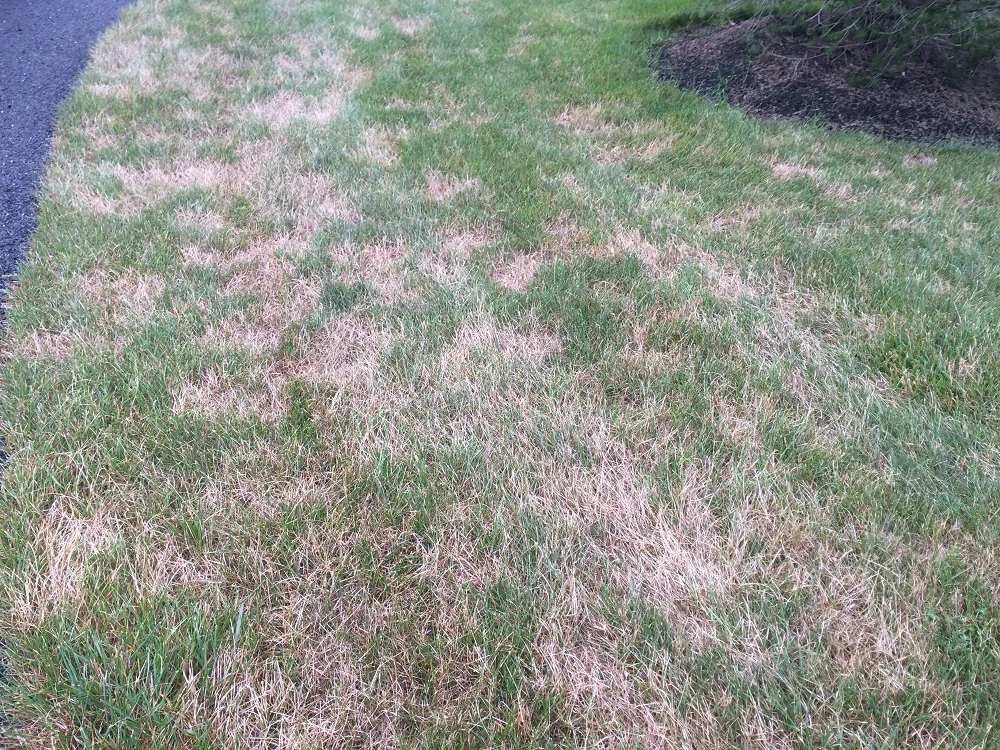
Have you replaced sod, fertilized consistently, adjusted your irrigation, and tried every product at the hardware store — and your Houston lawn still looks the same or worse every summer? You are not doing anything wrong. The lawn is failing for reasons that none of those interventions address — and until those underlying reasons are identified and corrected, every surface treatment produces the same disappointing result because it is treating symptoms rather than causes.
Houston lawn failure is one of the most frustrating experiences in residential property ownership — partly because the failure is visible to every neighbor and visitor, and partly because the solutions that feel logical — more water, more fertilizer, better sod — consistently fail to produce the lasting improvement that homeowners are spending time and money trying to achieve. The disconnect between the effort invested and the results produced is almost always explained by the same set of underlying conditions that standard lawn care advice does not address specifically enough for Houston's demanding environment.
At Gulf Reserve Landscape & Pools, the assessment conversation that precedes every sod installation and full landscape makeover we execute is the conversation that identifies why the previous lawn failed and what needs to change before the next installation can succeed. Here is what is actually causing Houston lawns to fail — and what fixing it permanently looks like.
Root Cause 1 — Soil pH That Has Never Been Corrected
The most common underlying cause of persistent Houston lawn failure — the condition that makes every surface treatment less effective than it should be — is soil pH that has never been tested and corrected for Houston's specific alkaline conditions. As Blog 01 establishes comprehensively, Houston's native soil pH of 7.5 to 8.2 creates the nutrient lockout that prevents grass plants from absorbing the iron, manganese, and micronutrients they need regardless of how much fertilizer is applied — because the nutrients are present in the soil but chemically unavailable at high pH levels.
The Houston lawn that looks chronically yellow despite regular fertilization, that never develops the deep green color that well-maintained lawns in other parts of the country achieve, and that struggles through every summer regardless of irrigation frequency is almost always a lawn growing in soil with pH too high for the grass to access the nutrients the soil contains. The fertilizer that goes on top does not fix this problem — it adds nutrients that join the already-present but inaccessible pool of soil nutrients that alkaline pH is locking out.
What fixing it looks like: Soil testing through the Texas A&M AgriLife Extension laboratory — a 50-dollar investment that reveals the actual pH, nutrient levels, and organic matter content of your specific Houston soil. Elemental sulfur applications at the rate the test results indicate — not the standard "one size fits all" recommendation but the site-specific rate that will produce meaningful pH reduction for the tested starting point. Chelated iron applications that provide immediately available iron to the grass while the longer-term sulfur program corrects the underlying pH. This is not a one-time fix — pH management in Houston is an ongoing program — but it is the program that produces the dark green, dense lawn that all the fertilizer and irrigation in the world cannot achieve over pH that has never been addressed.
Root Cause 2 — Compaction That Roots Cannot Penetrate
The Houston lawn that thins progressively despite adequate irrigation and fertilization — developing the shallow, spongy feel underfoot and the dry patches that appear within days of stopping irrigation — is almost always a lawn whose root system cannot penetrate below the compaction layer that years of maintenance equipment, foot traffic, and clay consolidation have created at 2 to 4 inches below the surface.
Compaction in Houston lawn soil creates a physical barrier that grass roots cannot penetrate regardless of soil chemistry — a layer of consolidated clay so dense that root tips simply deflect horizontally rather than growing downward into the deeper soil moisture reserves that protect against drought stress. The Houston lawn growing in compacted soil is a lawn permanently dependent on frequent irrigation because its root system cannot access the deeper soil moisture that drought tolerance requires — a lawn that will always thin and stress when irrigation is reduced or when Houston's dry periods extend beyond a few days.
What fixing it looks like: Core aeration at aggressive spacing — 2 to 3 inches between cores rather than the 4 to 6 inches of standard maintenance aeration — followed by quality compost top-dressing that fills the aeration channels with organic matter that improves soil structure as it decomposes. This process takes multiple seasons to produce full results in severely compacted Houston soil — but the root depth development that each successive aeration and top-dressing cycle enables progressively improves the lawn's drought tolerance, density, and overall performance.
Root Cause 3 — Drainage Problems That Keep Roots Wet Between Rain Events
The Houston lawn with persistent bare spots and thin areas in low-lying zones — the areas that look the worst despite receiving the most water — is almost certainly dealing with drainage problems that keep the root zone saturated for extended periods after Houston rain events. As Blog 04 establishes, Houston's clay soil absorbs water at 0.1 to 0.2 inches per hour — and areas where topography concentrates water, where downspouts discharge against the lawn, or where drainage infrastructure has failed stay saturated for days after significant rain events.
Saturated Houston clay is an anaerobic environment — oxygen-depleted, biologically hostile to healthy root systems, and supportive of the fungal pathogens that root rot diseases exploit. The Houston lawn in a low spot that holds water for 3 to 5 days after every significant rain event is growing under conditions that are periodically lethal to grass root systems — conditions that produce the thin, declining performance that no amount of fertilization or correct irrigation scheduling can overcome because the problem is not nutrient availability or water delivery but chronic root zone oxygen deprivation.
What fixing it looks like: Grade corrections that redirect drainage away from the problem areas, French drain installation that removes subsurface water from the saturated zone, downspout management that redirects roof drainage away from the lawn areas it is concentrating water against — the drainage infrastructure that eliminates the saturation conditions that are killing the grass rather than the grass replacement that simply installs new sod into the same conditions that killed the previous installation.
Root Cause 4 — Irrigation Coverage Gaps That Create Systematic Dry Zones
The Houston lawn with persistent dry spots that appear in the same locations after every irrigation cycle — spots that are clearly not drought stress across the full lawn but localized areas that receive inadequate water regardless of how the system is programmed — is almost certainly dealing with irrigation coverage gaps that create systematic underwatering at specific locations regardless of run time.
As Blog 61 establishes, Houston irrigation coverage gaps result from misaligned heads that spray in the wrong direction after mowing equipment contact, sunken heads that have settled below the correct spray angle as Houston's clay soil has moved around them, and clogged nozzles that produce reduced throw distance from mineral scale accumulation. These gaps produce the persistent dry spots that are frequently misdiagnosed as soil problems, disease symptoms, or sod variety inadequacy — conditions that the correct interventions for those diagnoses do not resolve because the actual cause is inadequate water delivery at specific locations.
What fixing it looks like: Zone-by-zone irrigation assessment — running every zone and observing every head's actual spray direction, throw distance, and coverage pattern against the turf areas the zone is supposed to serve — reveals the specific heads that need adjustment, raising, or replacement to close the coverage gaps. This assessment costs less than the sod repair that the coverage gaps will eventually require if they are not identified and corrected.
Root Cause 5 — Wrong Sod Variety for the Actual Site Conditions
The Houston lawn that was installed with a sod variety appropriate for different conditions than the property presents — Bermuda in a location that receives inadequate sun for Bermuda to maintain density, Floratam St. Augustine in deep shade conditions where even the most shade-tolerant St. Augustine variety struggles — will fail regardless of how well every other aspect of the lawn program is executed. Variety mismatch is a foundational condition that preparation quality, fertilization, and irrigation cannot overcome because the grass is being asked to perform in conditions it is not physiologically capable of performing in.
What fixing it looks like: Sun exposure assessment — measuring the actual hours of direct sun per day during the growing season at the specific lawn locations where the grass is failing — followed by variety selection based on the actual conditions rather than the variety that was most convenient or least expensive at the time of the previous installation. As Blog 03 establishes, Palmetto St. Augustine for shaded Houston conditions, TifTuf Bermuda for full-sun drought-tolerant applications, and Palisades Zoysia for premium appearance in appropriate conditions are the variety selections that reflect actual Houston site conditions rather than generic variety popularity.
Root Cause 6 — Pest and Disease Damage That Was Never Correctly Diagnosed
The Houston lawn with expanding dead patches that appear during summer — patches that were attributed to drought stress and watered more, producing no improvement and sometimes accelerating the decline — may be experiencing the chinch bug damage or take-all root rot that Blog 16 establishes as the Houston lawn problems that watering more makes worse rather than better.
Chinch bug damage is so commonly misdiagnosed as drought stress in Houston that the misdiagnosis has its own pattern — the homeowner increases irrigation in response to the yellowing and browning that chinch bugs produce, the irrigation keeps the soil moist enough to prevent the lawn from dying of drought but does nothing to address the chinch bugs that are continuing to feed, and the patch keeps expanding because the cause has not been identified and treated. Meanwhile the increased irrigation may be promoting the fungal diseases that Houston's humid conditions enable in consistently moist soil — adding a secondary problem to the primary one that was never correctly identified.
What fixing it looks like: Correct diagnosis before any treatment — the coffee can flotation test for chinch bugs, the root examination for take-all root rot, and the honest assessment of whether dry patches are improving or worsening with irrigation — followed by the specific treatment that the correct diagnosis indicates. Then, after the pest or disease is addressed, the sod renovation that replaces the turf that was killed before the correct diagnosis was made — installed over soil that has been assessed and amended for the conditions that will support the new installation rather than the conditions that produced the lawn failure.
When the Fix Is a Complete Fresh Start
For Houston lawns where multiple root causes have been operating simultaneously — high pH that has never been corrected, compaction from years of maintenance, drainage problems that saturate specific zones, and coverage gaps that have created systematic dry areas — the most cost-effective path to a performing lawn is sometimes a complete reset rather than the incremental correction of each condition independently while the others continue to undermine the lawn's performance.
A complete reset — removing the existing failing lawn, addressing soil conditions comprehensively through core aeration, compost incorporation, and pH amendment, correcting drainage problems, assessing and correcting the irrigation system, and installing new sod of the correct variety for the site's actual conditions — addresses all of the root causes simultaneously rather than one at a time. The Houston homeowner who has been spending money on partial solutions for three or four years without lasting improvement frequently finds that the complete reset costs less than the accumulated partial solution spending — and produces the lasting result that the partial solutions never achieved.

Ready to find out what is actually causing your Houston lawn to fail? Gulf Reserve Landscape & Pools walks every Houston property personally — assessing soil conditions, drainage, irrigation coverage, and pest and disease conditions before recommending any scope of work — so the solution we propose addresses the actual causes rather than the visible symptoms.
Get your free estimate at gulfreservelandscaping.com


