




Why Most Houston Irrigation Systems Are Set Up Wrong — And What a Properly Designed System Looks Like
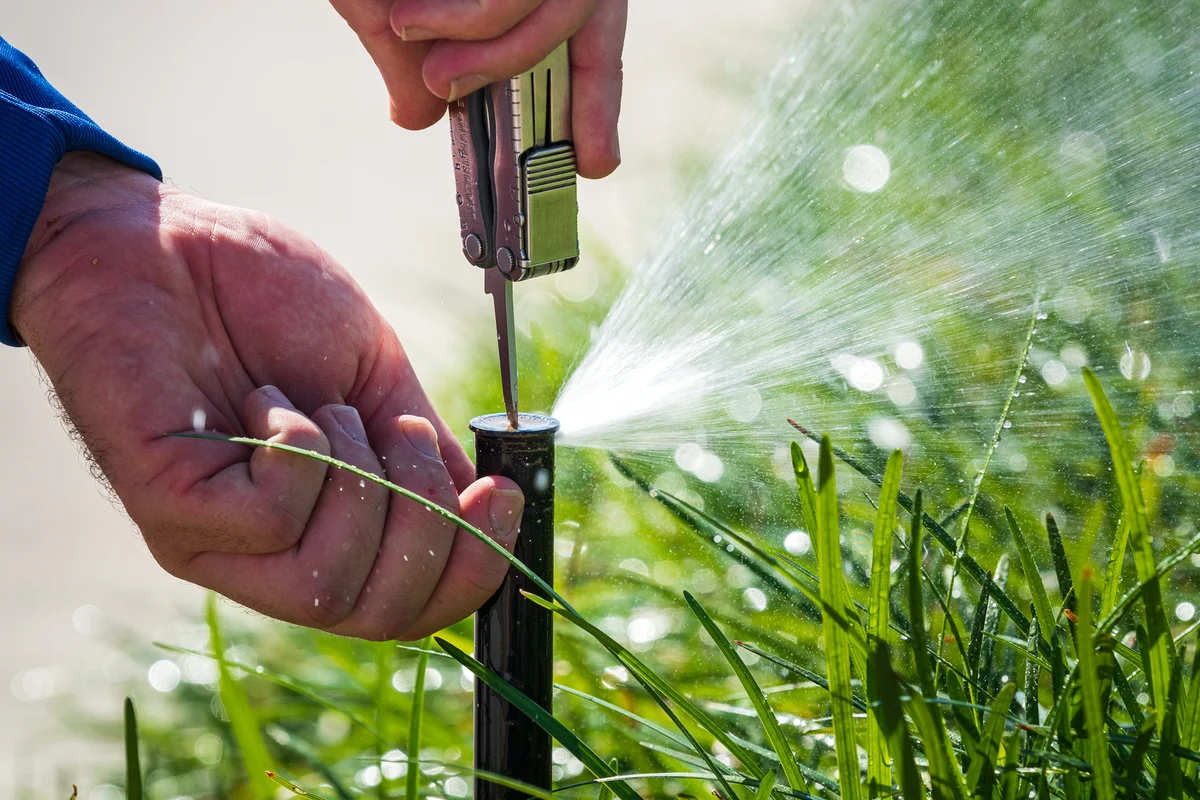
If you have an irrigation system on your Houston property and your lawn still looks stressed in summer, develops dry patches despite regular watering, or your water bill climbs unreasonably during the growing season, the system probably was not designed for Houston's actual climate conditions. It was designed generically — and in Houston, generic does not work.
Houston's climate is genuinely unusual for a major American city. It sits in USDA Zone 9a with summers that combine extreme heat, intense solar radiation, and humidity levels that suppress evapotranspiration in ways that confuse both homeowners and irrigation controllers. It has a wet season and a dry season that can shift dramatically within the same month. It receives 50-plus inches of rain annually but distributes that rainfall so unevenly that a lawn can go from waterlogged to drought-stressed within two weeks. And it sits on clay soil that absorbs water slowly, holds it for extended periods, and drains poorly — which means overwatering is just as damaging as underwatering, and often more so.
An irrigation system that doesn't account for all of that is not solving your Houston lawn's water needs. It is creating a new set of problems while giving you the false confidence that the lawn is being taken care of.
At Gulf Reserve Landscape & Pools, irrigation system design and installation is one of our core services across Houston. Here is what a properly designed Houston irrigation system actually looks like — and why the difference matters.
How Houston's Climate Creates Unique Irrigation Demands
Most irrigation systems are programmed around a simple assumption — the lawn needs a certain amount of water per week, delivered on a consistent schedule. In most American climates, that assumption produces acceptable results. In Houston, it produces overwatered lawns in spring and fall, underwatered lawns in the peak of summer, and persistent fungal problems year-round.
Houston's evapotranspiration rate — the combined rate at which soil loses moisture through evaporation and plants lose it through transpiration — varies enormously across the calendar year. In January and February, Houston's cool, humid, low-sunlight conditions mean a lawn may need virtually no supplemental irrigation at all. In July and August, with ambient temperatures exceeding 95 degrees Fahrenheit, direct sunlight for 13-plus hours, and heat index values above 105, evapotranspiration rates drive water demand to their annual peak. The difference between these two extremes can be a factor of 10 or more in terms of how much water a Houston lawn actually needs.
A system programmed to run three times a week year-round — the most common setup Gulf Reserve encounters on Houston properties — is drowning the lawn in winter and spring while potentially underwatering it during Houston's most demanding summer weeks. Neither outcome is what the homeowner is paying for, and the damage done by chronic overwatering in Houston's clay soil — fungal disease, root suffocation, and soil structure degradation — accumulates quietly until it becomes a visible problem.
Houston's rainfall distribution adds another layer of complexity. The city can receive 6 inches of rain in a single week and then go 4 weeks with nothing. A system with no rain sensor or smart controller capability will run its programmed schedule through a week of heavy Houston rain — pushing already-saturated clay soil past the point of root health — and then may not activate at the right frequency during an extended dry stretch if the default schedule doesn't account for drought conditions.
Zone Design — Where Most Houston Irrigation Systems Fall Short
The most impactful design decision in any Houston irrigation system is how irrigation zones are configured. Zones that mix areas with fundamentally different water needs — full sun turf, shaded turf, ornamental beds, and container areas — on a single valve and schedule are the most common design failure Gulf Reserve encounters on existing Houston systems.
In Houston, sun exposure drives water demand more dramatically than in most markets. A section of St. Augustine turf in full sun on the south-facing side of a Houston property may need twice the water per week in July compared to St. Augustine on the north side under live oak canopy. Running them on the same zone and schedule means one area is consistently over or underwatered regardless of what schedule is programmed.
Proper Houston irrigation zone design separates the property into areas of genuinely similar water demand. Full-sun turf areas get their own zones. Shaded turf areas get separate zones with meaningfully different scheduling. Ornamental planting beds — particularly those with native or adapted plants that are deliberately drought tolerant — get zones separate from turf entirely, because their water needs, application rates, and frequency preferences are completely different from grass. Slopes get dedicated zones programmed with shorter, more frequent run cycles to prevent runoff on Houston's clay soil before water can infiltrate.
The number of zones required to properly cover a Houston property is almost always higher than what was originally installed. Houston homeowners frequently discover when they have an existing system assessed that zones were consolidated during installation to reduce equipment cost — at the direct expense of the system's ability to actually match water delivery to plant needs.
Sprinkler Head Selection and Spacing for Houston Clay Soil
Houston's clay soil absorbs water at a rate of roughly 0.2 inches per hour under normal conditions — significantly slower than the application rate of most standard rotary and spray heads. When an irrigation system applies water faster than Houston's clay can absorb it, the excess water sheets off the surface as runoff or pools and sits on top of the soil. Neither outcome delivers the deep, root-zone watering that produces healthy Houston lawns.
Matching application rate to Houston's soil infiltration capacity is fundamental to effective irrigation design here. For Houston clay soil, rotary nozzles — which apply water at significantly lower application rates than standard spray heads — are generally the correct choice for turf areas. Their lower precipitation rate gives Houston clay time to absorb water during the irrigation cycle rather than generating runoff. They also distribute water more uniformly across the zone, reducing the dry spots that develop when high-output heads apply water unevenly.
Head spacing in Houston needs to account for wind. Houston's prevailing southeast winds — and the storm-associated winds that accompany frontal passages — affect spray distribution significantly. Heads spaced for still-air overlap coverage perform inconsistently when Houston's typical wind conditions push spray off pattern. Tighter spacing with lower-trajectory heads provides more reliable coverage in Houston's actual operating environment compared to widely spaced heads relying on full throw distance.
For Houston ornamental beds, drip irrigation or micro-spray systems deliver water directly to the root zone of plants without wetting foliage — which matters in Houston because wet foliage in Houston's humid, warm conditions is a direct path to fungal disease. Drip systems in Houston beds also apply water far more slowly than any sprinkler system, making them naturally compatible with Houston clay's low infiltration rate.
Smart Controllers — Non-Negotiable for Houston Irrigation
A properly designed Houston irrigation system without a smart controller is like a well-built car without a steering wheel. The hardware is capable but the most important variable — when and how much to water based on actual Houston conditions — is not being managed intelligently.
Smart irrigation controllers use real-time or historical weather data, evapotranspiration calculations, and site-specific inputs to adjust watering schedules dynamically based on what the landscape actually needs. In Houston's highly variable climate, this capability is not a luxury feature — it is the difference between an irrigation system that helps a Houston lawn and one that damages it over time.
For Houston, the most important smart controller features are ET-based scheduling adjustment, rain delay capability, and seasonal adjustment programming. ET-based adjustment automatically increases run times during Houston's peak summer demand and reduces them during cooler, wetter periods. Rain delay functionality suspends irrigation after Houston rain events — preventing the system from running on saturated Houston clay where additional water causes more harm than good. Seasonal adjustment scales the entire program up or down as Houston moves through its distinct seasonal water demand curve without requiring the homeowner to manually reprogram the system.
Hunter Hydrawise, Rain Bird ESP-TM2 with weather sensor, and Rachio 3 are controllers that perform well in Houston's climate when properly configured with Houston-specific evapotranspiration data and soil type inputs. The controller selection matters less than the configuration — a premium controller programmed with generic default settings performs no better than a basic timer in Houston's conditions.
Irrigation Scheduling for Houston — Getting the Programming Right
Even with the right equipment, an irrigation system that is programmed incorrectly will not serve a Houston lawn well. Here is what proper scheduling actually looks like for Houston conditions across the calendar year.
During Houston's peak summer period — roughly June through September — established St. Augustine turf typically needs 1 to 1.5 inches of water per week from combined rainfall and irrigation. During weeks with no significant rainfall, a properly designed Houston system should deliver this in two to three deep watering cycles rather than daily shallow cycles. Deep, infrequent watering encourages Houston lawn roots to grow deeper into the soil profile, improving drought tolerance. Daily shallow watering keeps roots near the surface where they are vulnerable to Houston's extreme summer heat and dry spells.
During Houston's spring and fall periods — October through November and March through May — natural rainfall typically supplements or replaces irrigation needs significantly. A smart controller reduces run times accordingly. Manual schedules set for summer peak demand and left unchanged through fall are one of the most common causes of fungal disease in Houston St. Augustine lawns — the combination of reduced evapotranspiration demand, frequent fall rainfall, and continued summer irrigation scheduling creates chronically wet conditions that Houston's warm temperatures turn into ideal fungal environments.
During Houston's winter months — December through February — established warm-season turf generally requires no supplemental irrigation except during extended dry periods. Running irrigation on established Houston turf through a normal Houston winter is wasteful and contributes to the cool-season fungal issues that affect St. Augustine under certain conditions.
New sod and newly planted ornamentals require significantly more frequent irrigation during the establishment period regardless of season — daily watering for the first two weeks after installation is standard for summer Houston sod installations, scaling back to every other day through the second and third weeks as root establishment progresses.
Common Houston Irrigation Problems and What Causes Them
Understanding the most common irrigation failures on Houston properties helps homeowners identify whether their existing system is performing correctly.
Dry spots that persist despite irrigation are almost always caused by head coverage gaps, clogged or misdirected nozzles, or zone pressure problems that reduce throw distance. In Houston's hard water conditions — municipal water across much of the metro has meaningful mineral content — nozzle clogging from mineral deposits is a common maintenance issue that reduces system performance gradually over time.
Fungal disease appearing in circular or irregular patterns on Houston St. Augustine lawns is frequently an irrigation scheduling problem — specifically overwatering, particularly with evening or nighttime irrigation cycles that leave foliage and soil surface wet through Houston's warm overnight temperatures. Morning irrigation, timed to complete before 10 AM, gives Houston lawns the best opportunity to dry before nighttime fungal conditions develop.
Consistently wet areas or standing water near heads after irrigation cycles ends in Houston clay soil almost always indicates application rate exceeding infiltration rate — the system is applying water faster than Houston clay can absorb it. Switching to rotary nozzles and implementing cycle-and-soak programming — multiple short cycles per zone with soak time between — resolves this in most Houston installations.
Irrigation system pressure problems are common in Houston's older Inner Loop neighborhoods where aging municipal infrastructure delivers inconsistent pressure. Both high pressure — which causes misting and wind drift — and low pressure — which reduces throw distance and coverage uniformity — affect system performance and require pressure regulation at the valve or controller level to correct.
Irrigation System Maintenance in Houston — What Gets Neglected
Houston's year-round growing season means irrigation systems run more months of the year than in most markets, which accelerates wear and maintenance needs. The items most commonly neglected on Houston irrigation systems are also the ones that most affect system performance.
Annual head inspection and adjustment ensures that heads haven't been shifted by lawn equipment, settled into grade changes, or accumulated mineral deposits that affect spray pattern. In Houston's active growing season, a head that was properly adjusted in March can be partially blocked by turf growth or shifted by mowing by June.
Backflow preventer inspection is required annually in many Houston municipalities and is good practice regardless. Houston's backflow preventers are subject to the same clay movement forces that affect other buried components and should be inspected for leaks and proper operation each season.
Controller battery replacement and program review at the start of each Houston growing season — typically late February or early March — ensures that the system resumes operation with an appropriate spring schedule rather than reverting to a default program after battery failure has cleared the controller memory.
Zone valve inspection in Houston's clay soil environment periodically reveals valves affected by root intrusion, debris accumulation in valve bodies, or diaphragm deterioration accelerated by Houston's heat. Valves that fail open are particularly damaging in Houston — a zone running continuously on Houston clay creates the saturated soil conditions that harm both the lawn and any nearby hardscape.

Your Houston lawn deserves an irrigation system that was actually designed for Houston. Gulf Reserve Landscape & Pools installs and services irrigation systems built around the specific demands of Houston's heat, clay soil, and unpredictable rainfall — across Houston, River Oaks, Memorial, Katy, Sugar Land, Pearland, The Woodlands, and surrounding areas.
Request your free estimate at gulfreservelandscaping.com — and let's stop guessing and start watering smarter.


