




The Houston Homeowner's Plant Guide — What Actually Thrives in Full Sun, High Humidity, and Alkaline Clay Soil
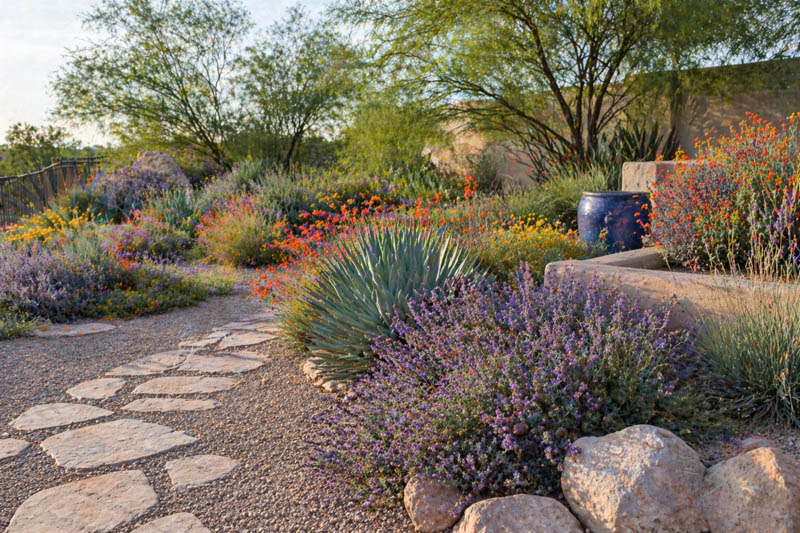
Houston is one of the most challenging plant environments in the United States. The combination of summer heat that regularly pushes past 95 degrees Fahrenheit with heat index values exceeding 105, year-round humidity that rarely drops to comfortable levels, alkaline clay soil with a pH between 7.5 and 8.2, and rainfall that swings between flooding and drought within the same season creates a plant selection filter that eliminates the majority of what is sold at national garden centers and big-box home improvement stores.
The plants that genuinely thrive in Houston are not the ones featured prominently on nursery display tables in spring. They are the ones that have demonstrated performance in Houston's specific combination of stressors over time — plants with root systems that handle clay, pigments and leaf structures that manage intense Gulf Coast solar radiation, and physiological tolerances that do not require the kind of soil pH conditions Houston's native ground simply does not provide without significant amendment.
At Gulf Reserve Landscape & Pools, plant selection is one of the areas where Houston-specific knowledge makes the most visible difference in long-term landscape performance. A landscape planted with species genuinely suited to Houston's conditions looks better, requires less intervention, and loses fewer plants over time than one populated with beautiful-at-purchase material that slowly declines in Houston's demanding environment. Here is a comprehensive guide to the trees, shrubs, grasses, perennials, and groundcovers that perform best in Houston's full sun, high humidity, and alkaline clay soil conditions.
Canopy Trees — The Long-Term Structural Investment of Any Houston Landscape
Tree selection in Houston is the highest-stakes plant decision a homeowner makes. A tree that is poorly suited to Houston's conditions will struggle for years, require ongoing intervention, and potentially need removal after significant investment of time and money. A tree well-suited to Houston's conditions grows into a defining asset of the property over decades with minimal input beyond establishment care.
Live oak is the defining canopy tree of Houston's Gulf Coast landscape for reasons that go beyond aesthetics. It is native to the region, which means its entire physiology is calibrated to Houston's soil pH, humidity, heat, and rainfall patterns. Live oak tolerates Houston's alkaline clay with minimal amendment once established, develops extraordinary drought tolerance through its deep root system, and produces the dramatically spreading, horizontally layered canopy that defines the character of Houston's most admired neighborhoods. No other canopy tree available to Houston homeowners delivers the combination of performance, longevity, and visual impact that live oak provides. In full sun Houston conditions on alkaline clay, live oak is almost always the correct answer for primary canopy.
Shumard red oak is the deciduous alternative for Houston homeowners who want fall color — a genuinely uncommon visual experience in Houston's subtropical climate. Shumard red oak performs well in Houston's alkaline clay with appropriate establishment soil amendment, tolerates Houston's heat and humidity, and develops a handsome upright to spreading form that provides good shade at a faster rate than live oak. Its brilliant red fall color in October and November is one of the most striking seasonal events available in Houston's landscape calendar.
Bald cypress is the correct large canopy tree for Houston properties with drainage challenges, low-lying areas, or locations near bayous and detention areas. Bald cypress is native to Houston's Gulf Coast bayou system and is one of the few large trees that genuinely thrives in Houston's periodically saturated clay — conditions that would kill most canopy tree species. It develops a broadly pyramidal form, produces feathery soft-textured foliage that turns russet-orange in fall before dropping, and provides a scale and character in the landscape that few other Houston-adapted trees match.
Cedar elm is Houston's native elm species and one of the most reliable medium to large canopy trees available for Houston's conditions. It tolerates Houston's alkaline clay and periodic flooding, handles Houston's heat with no difficulty, and provides dense summer shade and attractive yellow fall color. Cedar elm is particularly valuable for Houston Inner Loop properties where space constraints make the expansive spread of live oak challenging — cedar elm's more upright form fits tighter site conditions while still delivering meaningful canopy shade.
Texas live oak — specifically the closely related Quercus fusiformis — performs similarly to live oak but with slightly better drought tolerance and a somewhat smaller mature size. For Houston suburban lots where the ultimate size of a Quercus virginiana live oak may eventually become a management challenge, Texas live oak delivers the same fundamental character at a more manageable scale.
Understory and Ornamental Trees for Houston's Alkaline Clay Conditions
The intermediate tree layer — species that mature at 15 to 30 feet rather than 50 to 80 — provides the seasonal interest, human-scale enclosure, and ornamental detail that large canopy trees cannot deliver at eye level. Selecting understory trees for Houston's conditions requires the same alkaline clay and heat tolerance criteria as canopy tree selection, with the additional consideration that many ornamental flowering trees are particularly sensitive to soil pH.
Yaupon holly is one of the most versatile and reliable ornamental trees for Houston's conditions. It is native to Houston's Gulf Coast region, tolerates alkaline clay, flooding cycles, drought, and full sun with complete indifference, and produces abundant red berries in winter that provide significant wildlife value and visual interest during Houston's least colorful season. Yaupon can be maintained as a multi-trunk ornamental tree, a dense screening shrub, or a formally clipped topiary — its tolerance for heavy pruning and adverse conditions makes it one of the most flexible plants in the Houston landscape palette.
Mexican plum provides one of the most striking spring flowering displays available in Houston's native plant palette. Its white flowers emerge before the leaves in late February — making it one of the first significant flowering events of Houston's spring calendar — on a twisting, sculptural branching structure that provides year-round winter interest. Mexican plum tolerates Houston's alkaline clay, moderate drought once established, and performs well in both full sun and partial shade conditions.
Texas redbud delivers exceptional late winter and early spring flowering with lavender-pink blooms covering the bare branches before leaf emergence. It tolerates Houston's alkaline clay and clay drainage conditions, performs well in full sun to partial shade, and develops an attractive multi-trunk vase form. Texas redbud — specifically the native Texas variety rather than the Eastern redbud sold widely in Houston nurseries — is better calibrated to Houston's summer heat and alkaline soil than its Eastern cousin.
Possumhaw holly is the deciduous holly native to Houston's region and one of the most spectacular winter-interest plants available for Houston landscapes. It drops its leaves in fall to reveal an extraordinary display of persistent red or orange berries that remain through December, January, and February — providing color through Houston's least visually interesting season. It tolerates Houston's alkaline clay and periodic flooding, establishing readily in Houston's challenging soil conditions with minimal amendment.
Eve's necklace is an underutilized native Texas understory tree that deserves significantly more use in Houston landscapes. It produces attractive spring flower clusters, interesting seed pods that provide the common name, and tolerates Houston's alkaline clay and heat with notable toughness. Its smaller mature size — typically 15 to 20 feet — makes it appropriate for Houston suburban lots where larger ornamental trees would overwhelm the space.
Shrubs for Houston Full Sun and Alkaline Clay
Shrub selection for Houston's full sun, alkaline clay conditions eliminates many of the most popular national landscape shrubs and points toward a palette that is both more regionally appropriate and ultimately more reliable in Houston's environment.
Knockout roses have earned their place in Houston's full sun landscape through genuine performance rather than marketing. They tolerate Houston's alkaline soil better than most rose varieties — though pH amendment still improves their performance meaningfully — bloom repeatedly through Houston's long growing season, and recover from Houston's occasional freeze events without the dieback that more tender rose varieties experience. The double Knockout varieties provide the most abundant bloom display in Houston's conditions. Soil amendment to bring pH toward 6.5 and regular chelated iron application produce significantly better Knockout rose performance in Houston than planting into unamended alkaline clay.
Cenizo — Texas sage or Texas ranger — is one of the most drought-tolerant, alkaline-soil-adapted shrubs available for Houston's landscape. Its silver-gray foliage provides year-round color contrast in Houston landscape compositions, and its purple flowers — triggered by humidity and rain events in Houston's climate — appear throughout the growing season in a display that feels almost magical given how little maintenance the plant requires. Cenizo demands excellent drainage and full sun, making it ideal for Houston raised beds, slopes, and well-drained planting areas but inappropriate for Houston's low-lying drainage-challenged zones.
Turk's cap is a Texas native perennial shrub that provides genuine value in Houston's most challenging landscape conditions — deep shade, wet clay, high humidity, and heat that would stress most plants. Its distinctive red flowers attract hummingbirds from late spring through fall, it spreads naturally to fill difficult areas, and it dies back to the ground in Houston's mild winters before returning vigorously in spring. For Houston landscape areas under mature tree canopy where most plants struggle, Turk's cap is one of the most reliable performers available.
Dwarf Burford holly and Nellie R. Stevens holly are the workhorses of Houston's evergreen screening and formal hedge palette. Both tolerate Houston's alkaline clay and periodic flooding, respond well to formal shaping, and maintain dense evergreen coverage through Houston's mild winters. Nellie R. Stevens develops faster and to a larger ultimate size — appropriate for Houston properties needing significant screening. Dwarf Burford provides a more compact, rounded form for Houston foundation plantings and lower hedges.
Gulf muhly grass — Muhlenbergia capillaris — delivers the most dramatic single-season ornamental display of any grass species in Houston's plant palette. Its pink to magenta fall plumes — appearing in September and October — create a cloud-like flowering display that is genuinely striking in Houston's landscape. Gulf muhly is native to Houston's Gulf Coast region, tolerates alkaline clay and periodic drought with minimal care, and requires nothing more than an annual late winter cutback to perform at its best in Houston's conditions.
Firebush is a fast-growing, heat-loving shrub that thrives in Houston's full sun and humidity with an intensity that most plants cannot match. Its tubular orange-red flowers attract hummingbirds through Houston's long growing season, it tolerates Houston's alkaline clay after establishment, and it provides bold tropical color appropriate for Houston's subtropical character. Firebush dies back in Houston's hard freezes but returns from the root system reliably in most Houston winters.
Perennials and Groundcovers for Houston's Demanding Conditions
The perennial and groundcover layer provides the fine-grained texture, seasonal color, and bed coverage that defines the quality of a Houston landscape at close viewing distance. This layer is where the most plant failures occur in Houston because it is where the most planting variety is attempted against Houston's unforgiving conditions.
Cast iron plant is appropriately named for Houston's landscape. It genuinely thrives in Houston's deep shade conditions under live oak canopy where almost nothing else survives — the combination of root competition, low light, and humidity that defines the understory of Houston's Inner Loop properties. Cast iron plant's broad, dark green foliage maintains its appearance through Houston's heat, tolerates Houston's alkaline clay, and requires virtually no maintenance beyond occasional removal of damaged leaves. For Houston landscape areas that are genuinely difficult — deep shade, root competition, poor drainage — cast iron plant is the reliable answer.
Inland sea oats is a native Texas grass that provides graceful, naturalistic texture in Houston's shaded landscape areas. Its seed heads — which dangle from arching stems like miniature oats — provide movement and seasonal interest through fall and winter. Inland sea oats tolerates Houston's clay soil and partial to full shade, spreads gradually to fill areas, and requires minimal maintenance in Houston's conditions.
Liriope — monkey grass — is one of the most widely used and genuinely reliable Houston groundcovers for both sun and shade conditions. It tolerates Houston's alkaline clay, handles the transition from shade to partial sun, and maintains its appearance through Houston's heat and humidity with consistent watering during establishment. The variegated varieties provide stronger visual interest in Houston's shaded bed areas. Liriope does suffer in Houston's wettest, most poorly drained conditions — for chronically wet Houston landscape areas, mondo grass or Louisiana iris are better choices.
Salvia greggii — autumn sage — is one of the most reliable full-sun perennials for Houston's alkaline clay and heat conditions. Its red, pink, or coral flowers appear through Houston's entire growing season, it tolerates drought once established, and it responds to periodic cutback by producing fresh growth and renewed flowering through Houston's long summer. The compact varieties work well in Houston foundation beds and border plantings.
Esperanza — yellow bells or Tecoma stans — delivers Houston's most abundant full-sun flowering performance through the peak heat months when most plants reduce flowering. Its bright yellow trumpet flowers bloom prolifically from June through November in Houston, it tolerates alkaline clay and Houston's heat with enthusiasm, and it develops a large shrubby form that provides significant visual mass in Houston full-sun borders. Esperanza dies back in Houston's hard freezes but returns reliably from established root systems.
Louisiana iris is the correct choice for Houston's wettest, most poorly drained landscape areas — specifically the low spots, bayou-adjacent areas, and chronically saturated clay zones where most plants fail. Louisiana iris is native to the Gulf Coast region, thrives in Houston's wet clay, and produces spectacular spring flowers in a range of colors from deep purple and blue to red, yellow, and white. For Houston rain gardens, wet swales, and drainage areas, Louisiana iris provides ornamental value in conditions that would kill the majority of landscape plants.
Lantana performs with remarkable vigor in Houston's full sun and alkaline soil conditions. Its heat tolerance is exceptional — lantana actually intensifies its flowering as Houston summer temperatures climb to levels that stress most other plants — and it tolerates drought, alkaline clay, and neglect with equal indifference. The trailing varieties work well as Houston groundcover in difficult full-sun slopes and embankments. Lantana is toxic to pets and livestock, which is relevant for Houston homeowners with animals that access planted areas.
What Not to Plant in Houston — The Species That Consistently Fail
Understanding what to avoid saves Houston homeowners the frustration and expense of repeatedly replacing plants that are fundamentally unsuited to the city's conditions.
Japanese boxwood is perhaps the most consequential plant selection mistake in Houston's luxury landscape market. Its refined appearance makes it enormously attractive for formal hedges and foundation plantings, but Houston's alkaline clay, poor drainage, and high humidity create conditions that are deeply hostile to boxwood's performance. Root rot from Houston's periodically saturated clay, boxwood blight in Houston's humid conditions, and general heat stress make Japanese boxwood a high-maintenance, high-failure-rate choice in most Houston landscape applications. Dwarf Burford holly or Compacta holly delivers similar formal structure with genuinely Houston-compatible performance.
Azaleas require acidic soil — pH 4.5 to 6.0 — that is the direct opposite of Houston's native alkaline clay. While azaleas can be grown successfully in Houston in raised beds with heavily amended, acidified soil, they are an ongoing maintenance commitment rather than a plant that performs naturally in Houston's conditions. Houston homeowners who see beautiful azalea displays and attempt to replicate them in unamended Houston clay will be disappointed consistently.
Gardenias face similar challenges in Houston's alkaline soil. They prefer pH 5.0 to 6.0 and show iron chlorosis symptoms rapidly in Houston's high-pH clay. Like azaleas, they can be maintained in Houston with acidified raised bed soil and chelated iron programs, but they are a high-maintenance choice in Houston's conditions rather than a reliable performer.
Bermuda grass in shade is a combination that fails on Houston properties consistently. Houston homeowners who install Bermuda on lots with significant tree canopy or north-facing lawn areas that receive less than 6 hours of direct sun discover rapidly that Bermuda thins and disappears in shade regardless of how well the installation was executed. For Houston shaded lawn areas, St. Augustine — specifically Palmetto — is the correct choice.
Non-native crape myrtles pruned improperly — the crape murder phenomenon prevalent across Houston's landscape — is worth specific mention not because crape myrtles are a poor Houston plant but because the common practice of severe annual topping produces a landscape outcome that is simultaneously harmful to the tree and visually degrading to the property. Crape myrtles selected for appropriate mature size and allowed to develop their natural form are genuinely beautiful Houston landscape trees. Crape myrtles topped annually to knobby stubs are a Houston landscape cliché that signals a maintenance program operating without design intention.
Building a Houston Plant Palette — Principles That Guide Good Selection
The most successful Houston landscapes are built around a core palette of species genuinely adapted to Houston's conditions, with a smaller selection of higher-maintenance species used deliberately in areas where soil amendment and drainage have been specifically prepared to support them.
Native and near-native species form the most reliable foundation of any Houston landscape palette. Live oak, yaupon holly, turk's cap, gulf muhly, inland sea oats, Mexican plum, possumhaw holly, and Louisiana iris have all demonstrated multi-decade performance in Houston's conditions without requiring the soil management programs that non-adapted species demand. Building the structural and groundcover layers of a Houston landscape on these species produces a foundation that performs reliably and requires less ongoing intervention than a palette dominated by non-adapted material.
Adapted non-native species — plants not native to Houston but demonstrating proven performance in Houston's specific conditions — expand the palette with ornamental variety that Houston's native flora alone cannot always provide. Knockout roses, cenizo, lantana, esperanza, liriope, and cast iron plant all fall in this category. They perform reliably in Houston's conditions with appropriate siting and minimal soil amendment rather than requiring ongoing intervention to survive.
Aspirational species — beautiful plants that are genuinely challenging in Houston's conditions — belong in specific, carefully prepared locations rather than as general landscape plants. Azaleas, gardenias, Japanese maples, and other acid-preferring or cold-preferring species can succeed in Houston in raised beds with acidified, well-drained soil mixes, but they require that preparation and ongoing pH management to perform. Siting them in unamended Houston clay is setting them up to fail regardless of how carefully they are planted and watered.

Gulf Reserve Landscape & Pools designs and installs landscapes across Houston, River Oaks, Memorial, Katy, Sugar Land, Pearland, The Woodlands, and surrounding areas using plant palettes specifically selected for Houston's alkaline clay, heat, and humidity conditions. Every planting project starts with soil assessment and site conditions evaluation so the right species go in the right locations with the preparation they need to establish and perform.
Request your free estimate at gulfreservelandscaping.com — and let's build a Houston landscape planted to last.


