




The Houston Fall Landscaping Guide — What to Do From October Through December in Zone 9a
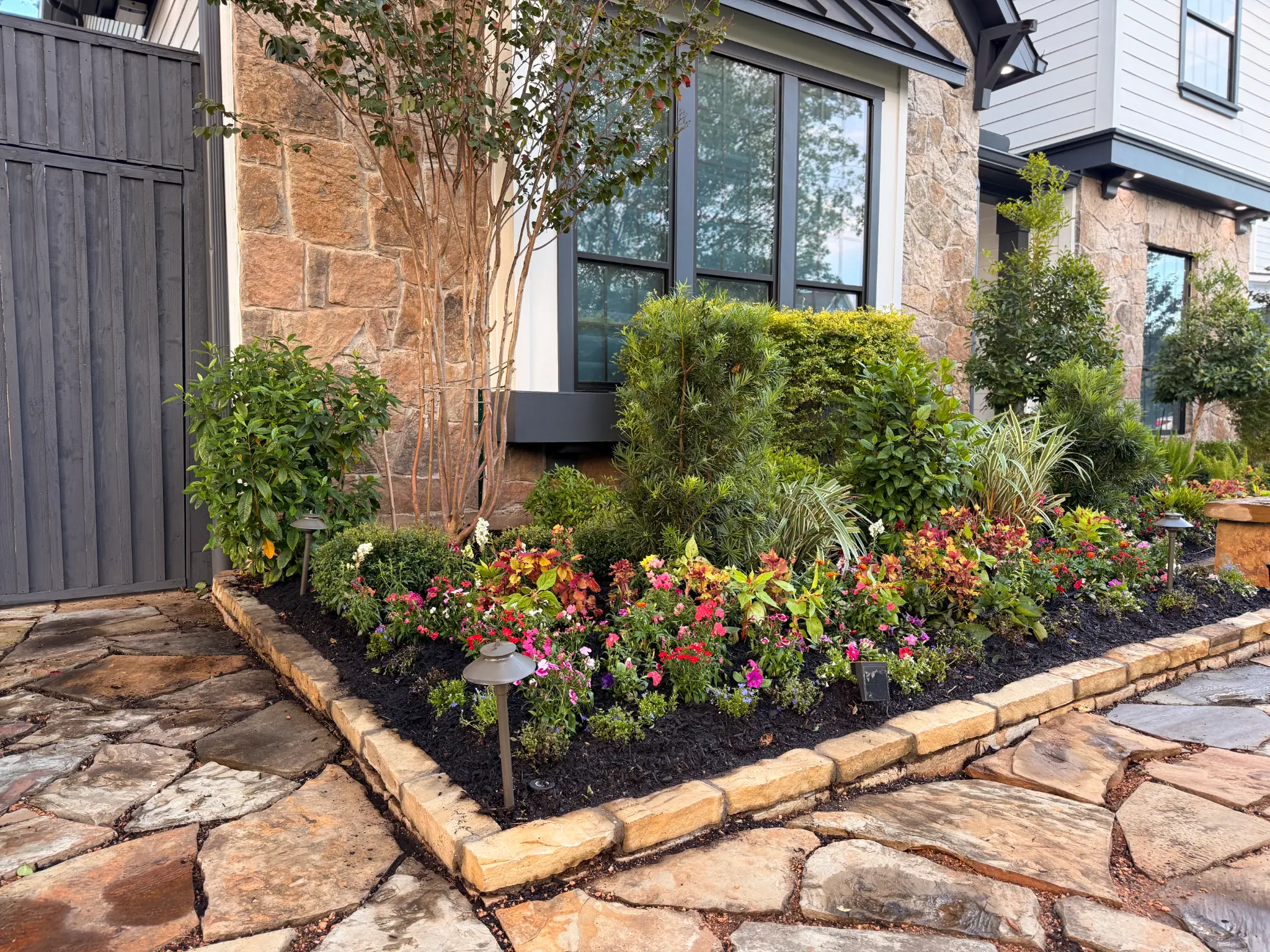
Fall in Houston is not what fall looks like in most of the country. There are no dramatic foliage displays turning the landscape red and orange. There is no hard frost arriving in October that ends the growing season and signals a universal shutdown of outdoor landscape activity. Houston's fall — the stretch from October through December — is something more nuanced and more valuable than a simple season-ending transition. It is a second growing window, a renovation opportunity, a planting season, and a preparation period all compressed into three months of genuinely pleasant weather that is ideal for outdoor work.
Houston's USDA Zone 9a classification means the city's fall is warm enough for cool-season annuals to thrive, mild enough for ornamental trees and shrubs to establish root systems before any cold stress arrives, and unpredictable enough — with occasional hard freezes in December that can drop temperatures below 28 degrees Fahrenheit — to require preparation that protects the landscape investment when those events do occur. The Houston homeowners who use the fall window intentionally and correctly enter the following spring with a lawn that is healthier, a landscape that is more established, and an irrigation system that is properly winterized — rather than dealing with the spring remediation that fall neglect produces.
At Gulf Reserve Landscape & Pools, fall is one of our busiest installation and assessment seasons across Houston. The combination of ideal planting conditions, the second pre-emergent window, sod renovation timing, and irrigation system adjustments that fall demands creates a concentrated work calendar that rewards preparation and planning. Here is a month-by-month Houston fall landscaping guide built around the specific conditions and opportunities that Houston's Zone 9a fall calendar creates.
Why Houston's Fall Is Underutilized as a Landscape Season
The perception that fall and winter are off-season for Houston landscaping is one of the most consistently costly misconceptions in Houston's residential landscape market. It produces lawns that enter spring in worse condition than they need to be, landscapes that have missed the optimal planting window for trees and shrubs, and irrigation systems that have been running on summer schedules through conditions where those schedules actively damage the landscape.
Houston's fall is underutilized for several reasons. The psychological association of fall with landscape shutdown — accurate in northern markets, not accurate in Houston — leads many homeowners to reduce landscape attention as days shorten. The visual shift as warm-season grasses begin their slow transition toward dormancy reads as decline rather than seasonal change, discouraging investment that would pay dividends in spring. And the compressed window between summer's end and the arrival of Houston's occasional December cold events creates a sense of limited time that sometimes results in nothing being done rather than the prioritized program that Houston's fall actually rewards.
The Houston homeowner who understands the fall window — who knows that October and November are among the best planting months of the Houston calendar for trees and shrubs, that the second pre-emergent application window for winter annual weeds opens in October, that sod renovation done in fall establishes better than many homeowners expect, and that irrigation adjustments made in September and October protect the landscape through the months when fixed summer schedules cause the most damage — is the Houston homeowner whose landscape consistently outperforms their neighbors' through the following year.
October — The Most Important Fall Month for Houston Landscapes
October in Houston marks the genuine beginning of the landscape fall window. Houston's first significant cold fronts typically arrive in October, dropping temperatures from the oppressive heat of September into the genuinely pleasant range — daytime highs in the 70s and 80s, overnight lows in the 50s and 60s — that makes outdoor work comfortable and that creates optimal conditions for plant establishment, sod rooting, and the second pre-emergent herbicide window.
Second pre-emergent application in early October is the fall landscape task with the highest return on investment for Houston homeowners dealing with winter annual weed pressure. Winter annual weeds — annual bluegrass, common chickweed, and henbit are the primary targets in Houston — germinate as soil temperatures drop through the 70-degree range in October and November and then grow through Houston's mild winter, producing seed in late winter and spring before dying as temperatures rise. A pre-emergent application timed for early October in Houston prevents the germination of these winter annual species during the primary fall germination window.
The distinction between summer and winter annual weed control programs is important for Houston homeowners to understand. The late February pre-emergent application covered in Blog 09 targets Houston's summer annual weeds — crabgrass, grassbur, and doveweed — that germinate as soil temperatures rise in spring. The October pre-emergent application targets Houston's winter annual weeds that germinate as soil temperatures drop in fall. Products containing atrazine, used carefully in St. Augustine turf applications according to label directions, provide the most reliable winter annual weed control in Houston's conditions. Prodiamine and pendimethalin products effective against summer annuals also provide some winter annual control when applied in October.
Irrigation system seasonal adjustment is October's most impactful maintenance task for Houston residential landscapes. Houston's evapotranspiration rate — the combined water demand of the landscape — drops significantly as October temperatures moderate and day length shortens. A Houston irrigation system still running on a summer schedule in October is delivering 30 to 50 percent more water than the landscape needs, maintaining chronically moist soil conditions that favor the fungal diseases Houston's fall weather transitions enable, and generating water bills that reflect summer demand for a landscape operating under fall conditions.
Reducing Houston irrigation run times by 30 to 40 percent from summer levels in early October — before the schedule reduction is visually obvious from lawn stress — is the correct proactive adjustment. Smart controller users should confirm that their ET-based adjustment is responding correctly to Houston's October weather data and that the seasonal adjustment factor has been updated for fall. Houston homeowners with manual irrigation controllers should make the October schedule reduction a calendar reminder that happens regardless of whether the lawn is visually signaling stress — by the time the lawn shows overwatering stress in the form of fungal disease, the damage has been building for weeks.
Tree and shrub planting is one of the highest-value October activities for Houston homeowners planning landscape additions. The combination of moderate temperatures, reduced evapotranspiration demand, and the full Houston winter and spring ahead for root establishment before the following summer's heat makes October one of the two best planting months in the Houston calendar — alongside March and April. Trees and large shrubs installed in October in Houston have 5 to 6 months of relatively mild conditions to develop root systems before they face the stress of Houston's first post-planting summer. The same trees installed in June must establish roots while managing peak heat stress simultaneously — a significantly harder establishment condition that produces slower establishment and higher losses.
Live oak, cedar elm, bald cypress, and the native understory trees covered in earlier blogs establish exceptionally well when installed in Houston's October planting window. Ornamental shrubs — yaupon holly, possumhaw holly, Virginia willow, and Gulf muhly grass — planted in October develop the root systems that support their first season of mature performance the following spring and summer rather than spending that season in recovery from installation stress.
Lawn assessment for sod renovation in October evaluates which areas of the Houston lawn have deteriorated through the summer — from chinch bug damage, take-all root rot, compaction stress, or simple thinning — to the point where renovation is warranted. Sod renovation in October in Houston benefits from cooler establishment temperatures than summer installation, Houston's fall rainfall that reduces irrigation demands during the critical rooting period, and the full spring growing season ahead to fully knit the repaired areas into the surrounding turf before summer heat arrives.
For Houston lawns with damage covering less than 30 to 40 percent of the total area, targeted sod repair — removing the damaged sections, addressing the soil conditions that caused the failure, and installing fresh sod with appropriate soil amendment and starter fertilizer — is the right approach. For Houston lawns with more extensive damage, a complete sod renovation — removing the existing turf, addressing soil conditions comprehensively, and installing a fresh sod layer — is more cost-effective than repeated partial repairs that never fully resolve the underlying soil and drainage conditions driving the damage.
November — Planting, Cool-Season Color, and Freeze Preparation
November is Houston's most visually transitional month — warm-season grasses beginning their dormancy cycle, cool-season annuals hitting their peak performance, and the first genuine cold fronts of the season arriving with enough frequency to make freeze preparation a relevant consideration for the first time since the previous winter.
Cool-season annual color installation in early to mid November is the landscape move that keeps Houston commercial and residential properties visually alive through the winter months when warm-season turf and summer annuals have faded. Houston's mild winter conditions — temperatures that spend most of the period from November through February between 40 and 70 degrees Fahrenheit — are ideal for cool-season annuals that would be killed by the hard winters of northern markets.
Pansies are the most reliable Houston winter color plant and the one that performs consistently across the widest range of Houston's winter temperature variations. Properly installed in early November in Houston with adequate soil preparation and appropriate fertilization, pansies bloom through November, December, January, and February — providing continuous color through the entire Houston winter period. Their cold hardiness means they survive Houston's occasional hard freeze events that damage less cold-tolerant winter annuals.
Snapdragons provide vertical color interest in Houston's winter annual palette that pansies' low growth habit cannot achieve, and their performance in Houston's cool, mild winter conditions is excellent when installed in well-prepared soil in November. Dianthus, alyssum, and ornamental kale expand the Houston winter color palette with complementary textures and forms that create more visually complex seasonal color compositions than single-species planting.
The timing of Houston cool-season annual installation matters for performance. Installing pansies and snapdragons in early October — before Houston's first meaningful cold fronts — subjects the plants to heat stress during Houston's lingering summer temperatures that reduces establishment vigor and early season performance. Waiting until Houston's consistent cool weather arrives in November produces stronger establishment and better performance through the winter season.
Ornamental grass cutback in November prepares Houston's warm-season ornamental grasses for winter dormancy while preserving the seed head interest that Gulf muhly, pink muhly, and similar species provide through Houston's fall. The timing of ornamental grass cutback in Houston requires balancing two objectives — preserving the fall seed head display as long as it remains attractive, and cutting back before the dead material accumulates to the point where it creates fire risk and impedes the following spring's growth emergence. In Houston, the appropriate cutback window is typically late November through December — after the seed heads have shed and the foliage has dried but before the new year's growth begins at the base of the plant.
Mulch refresh across Houston planting beds in November provides thermal insulation for plant root systems during Houston's winter cold events, conserves soil moisture during the dry periods that Houston's winter can produce, and completes the fall maintenance program with a visual refresh that carries the landscape through winter in good condition. A 3-inch mulch layer applied in November insulates Houston soil against the temperature spikes of cold fronts that can drop overnight temperatures 30 to 40 degrees Fahrenheit within hours — the rapid temperature drops that cause more damage to Houston landscape plants than the absolute low temperature alone.
Freeze preparation for Houston irrigation systems in November establishes the operational protocols that protect irrigation infrastructure during Houston's winter cold events. Houston's mild climate means full irrigation system winterization — blowing out all water from the system with compressed air — is not standard practice the way it is in northern markets. However, the periodic hard freezes that Houston experiences require specific preparation that is more than simply turning the system off.
Confirming that all above-grade irrigation components — backflow preventers, control valves, and exposed pipe sections — are insulated or protected for temperatures below 28 degrees Fahrenheit is the critical November irrigation task for Houston. Backflow preventers are the most vulnerable irrigation component in Houston freeze events — their brass bodies and internal components can crack when water freezes inside them, requiring replacement that is more expensive than the insulation that would have prevented it. Foam insulation wrap on Houston backflow preventers and exposed valve components is the standard protection that prevents the most common Houston freeze damage to irrigation systems.
Setting the Houston irrigation controller to a winter schedule in November — weekly or less frequent watering during cooler periods, with run times appropriate for Houston's fall and winter evapotranspiration rates — and ensuring the rain sensor is functional reduces the overwatering that Houston's winter rainfall produces when summer schedules continue into the cooler months.
December — Winterization, Final Plantings, and Spring Preparation
December in Houston occupies an unusual position in the landscape calendar — warm enough in most years for continued outdoor work, mild enough for some cool-season plantings to continue through the month, and cold enough in some years for the hard freeze events that test everything that November preparation was intended to protect.
Final tree and shrub plantings in early December take advantage of Houston's often-mild early December conditions for the last major planting window before the new year. Trees and large shrubs installed in December in Houston still have several months of mild weather ahead for root establishment before the following summer's heat arrives — though the establishment window is shorter than October plantings, December installations in Houston still outperform spring plantings in many years in terms of root development before summer stress.
Hardscape project completion before Houston's holiday season makes December one of the most productive months for getting concrete, stone, and patio work done. Houston's cooler December temperatures are actually better for concrete curing than summer heat — the slower cure rate in cooler temperatures produces denser, stronger concrete than rapid cure in Houston's summer heat, and the moderate humidity of Houston's December conditions reduces the surface drying that causes surface defects in summer pours. Houston homeowners planning concrete or stone hardscape projects who schedule them for December rather than waiting for spring often find both better material performance and better contractor availability.
Soil amendment applications in December set the foundation for the following spring's landscape performance. Elemental sulfur applications for Houston's alkaline clay — applied in December and January — have the full winter and early spring period to begin processing through soil bacterial activity before the growing season's nutrient demand begins. December is the correct time to make this application for Houston homeowners who did not complete it in fall, ensuring the maximum lead time before spring growth resumes.
Spring planning and contractor scheduling in December positions Houston homeowners ahead of the spring rush that compresses contractor availability in March and April. Houston landscape contractors book spring installations — sod, ornamental planting, hardscape — months in advance, and homeowners who wait until February or March to schedule spring work often find the best contractors already committed through April. December conversations about spring landscape plans allow project design, material selection, and permit applications to proceed during the winter months when contractor schedules have more flexibility.
Irrigation system winter operation in December requires the continued attention to freeze forecast monitoring that November preparation established. When Houston's weather forecast includes overnight temperatures below 28 degrees Fahrenheit — the threshold at which water in above-grade irrigation components is at risk of freezing — shutting off the irrigation system water supply at the main valve and allowing the system to drain is the protection that prevents the component damage that hard freeze events cause. Houston homeowners with smart controllers that have freeze sensor capability should confirm the freeze sensor is calibrated correctly — a sensor set too conservatively will shut the system off unnecessarily during non-damaging cold events, while one set too liberally will miss the threshold that actually causes damage.
The Houston Fall Landscape Investment That Pays the Biggest Dividend
Of all the fall landscape investments available to Houston homeowners, two consistently produce the most visible return in the following spring and summer — and both are directly tied to Gulf Reserve services.
Full landscape makeover planning and installation in fall takes advantage of Houston's ideal planting conditions to install the trees, shrubs, and ornamental plantings that will be fully established before the following summer's heat arrives. A landscape makeover installed in October and November in Houston enters its first summer with 6 months of root establishment rather than the 6 weeks that a spring installation provides before summer stress begins. The survival rates, growth rates, and first-season performance of landscape plantings installed in Houston's fall window consistently exceed those of spring installations — making fall the highest-ROI installation timing for Houston landscape makeover investments.
Sod installation and lawn renovation in fall is the second highest-return Houston landscape investment. Fall-installed Houston sod roots aggressively into warm soil, benefits from moderate temperatures and fall rainfall during the critical establishment period, and enters the spring growing season with a fully established root system ready to respond to spring fertilization and irrigation with the vigorous growth that produces a thick, dense lawn through the following summer. Fall sod renovation in Houston is the most reliable path to a lawn that looks genuinely excellent through the following year — rather than the patchy, establishment-stressed result that summer sod installations sometimes produce.
The Houston Fall Landscaping Calendar at a Glance
October is the time for second pre-emergent herbicide application for winter annual weeds, irrigation system schedule reduction to fall rates, tree and shrub planting in the fall establishment window, and lawn assessment for sod renovation needs. November is the month for cool-season annual color installation, ornamental grass cutback timing, mulch refresh across all planting beds, freeze protection installation on irrigation backflow preventers and exposed components, and irrigation controller winter schedule programming. December calls for final tree and shrub plantings in early December mild conditions, hardscape project completion before the holiday season, elemental sulfur soil amendment applications for spring pH correction lead time, spring project planning and contractor scheduling, and irrigation system freeze monitoring protocol activation.

Gulf Reserve Landscape & Pools provides fall landscape assessment, sod installation and renovation, full landscape makeover installation, irrigation system adjustment and winterization, and seasonal color installation across Houston, River Oaks, Memorial, Katy, Sugar Land, Pearland, The Woodlands, and surrounding areas. Fall availability fills quickly as Houston's weather cools — the October and November window is the most compressed and most productive period of the fall calendar.
Request your free estimate at gulfreservelandscaping.com — and let's make sure your Houston landscape gets everything it needs this fall.


