




Stone Work for Houston Pool Surrounds — What Natural Stone Delivers and What Gulf Coast Conditions Demand From Installation
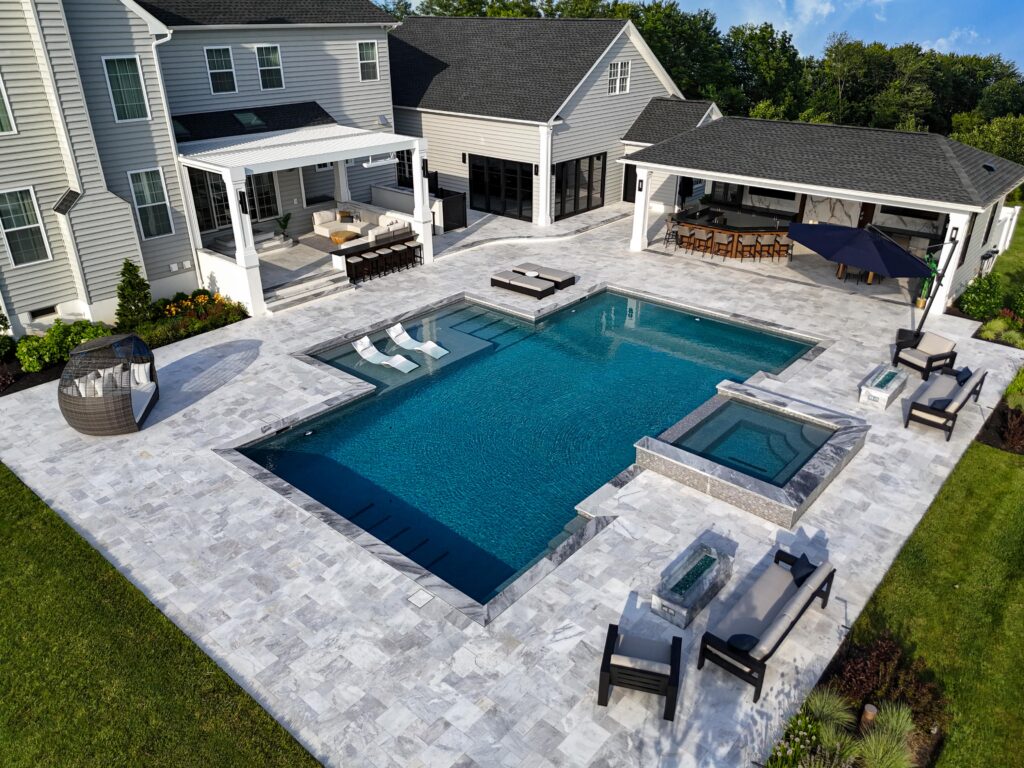
Is the hardscape around your Houston pool area communicating the quality standard the outdoor living investment deserves — or is there a gap between the pool itself, the surrounding landscape, and the surfaces that frame the pool environment that prevents the pool area from reading as the cohesive luxury outdoor environment it should be? Natural stone pool surrounds in Houston deliver the thermal performance, material quality, and aging character that transforms a pool installation from a functional amenity into a genuine outdoor destination — and that, when correctly specified and installed for Gulf Coast conditions, performs better over a realistic ownership horizon than the concrete alternatives that initial cost comparisons favor.
At Gulf Reserve Landscape & Pools, stone work for Houston pool surrounds is part of our stone work service. Here is what natural stone pool surround installation done correctly for Houston's Gulf Coast conditions actually requires.
Why Natural Stone Outperforms Concrete for Houston Pool Surrounds
The performance comparison between natural stone and concrete for Houston pool surrounds reflects the specific ways that Gulf Coast conditions differentiate material performance over the ownership horizon that pool area hardscape serves.
Thermal performance in Houston's direct summer sun is the pool surround material quality that swimmers and pool area users feel most directly and most consistently. As Blog 17 establishes for Houston pool deck materials, light-toned natural limestone and travertine stay 20 to 35 degrees Fahrenheit cooler than standard gray concrete in the same direct sun exposure. The pool surround where crossing barefoot during Houston's July afternoon is genuinely comfortable rather than genuinely painful is the pool surround that gets used during peak summer hours. The pool surround that requires footwear to cross comfortably during afternoon hours limits the pool area's usability during the extended summer that Houston's climate produces.
Material aging character in Houston's Gulf Coast environment distinguishes natural stone from concrete alternatives in the specific way each material responds to UV exposure, pool chemical contact, humidity, and the thermal cycling that Houston's climate creates. Natural travertine installed correctly on a Houston pool surround develops the surface character that time creates in authentic stone — the warm patina that communicates permanence and quality. Concrete pool surrounds in the same Houston conditions develop the UV bleaching, surface scaling, and chemical staining that concrete's response to pool environments creates over the same period.
Slip resistance in the wet conditions that active pool use creates on pool surround surfaces — the safety requirement that pool surround material selection must address — is achieved in natural stone through the tumbled and brushed finishes that create the textured surface that provides confident traction when wet without the surface roughness that uncomfortable barefoot experience creates. Travertine in tumbled or brushed finish provides the slip resistance that smooth-finished alternatives do not achieve in wet pool conditions.
Travertine — Houston's Premier Pool Surround Stone
Travertine is the natural stone material that Gulf Reserve most consistently specifies for Houston luxury pool surrounds — the material whose specific combination of thermal performance, aesthetic quality, slip resistance, and Gulf Coast durability makes it the pool surround specification that most comprehensively serves Houston luxury pool area applications.
Thermal performance of travertine pool surrounds in Houston's direct summer sun reflects the material's light tonal range and relatively low thermal mass — the properties that keep travertine surface temperatures within the comfortable barefoot range during the afternoon hours that Houston's summer heat makes the test of outdoor surface usability. The travertine pool surround that stays in the 100 to 110 degree Fahrenheit surface temperature range during Houston's peak summer afternoon is comfortable for barefoot use in ways that the 140 to 150 degree Fahrenheit surface temperature of dark concrete alternatives is not.
Travertine grade and finish selection for Houston pool surrounds requires the exterior-rated material specification that Blog 17 establishes — the filled and honed or tumbled finish grades that provide the surface stability in Houston's thermal cycling conditions that unfilled travertine's natural voids do not achieve. Unfilled travertine on Houston pool surrounds develops the crack propagation from the natural voids that Houston's thermal cycling creates — the failure mode that filled travertine in appropriate grades prevents through the void filling that creates structural continuity through the surface.
Travertine and coping integration on Houston luxury pool surrounds — the unified pool area material composition where the travertine deck and the travertine coping are the same material at coordinated format and finish — creates the visual unity that communicates considered design at the pool edge where every swimmer, every guest, and every photograph of the pool captures the most evaluated detail of the pool environment.
Pool Coping Stone Work for Houston Pools
Pool coping — the natural stone that covers the pool shell's bond beam at the water's edge — is the detail that most directly affects both the aesthetic quality and the functional safety of the Houston pool environment.
Coping profile selection for Houston luxury pools — the eased, chiseled, or bullnose edge profiles that provide the comfortable hand grip, the safe foot landing at the pool entry, and the visual separation between the water surface and the surrounding hardscape that coping details create — communicates the quality of the installation at the most closely observed and most frequently contacted detail of the pool area. The coping profile that is consistent around the full pool perimeter, cut to consistent dimensions, and bedded in polymer-modified mortar at consistent projection beyond the bond beam communicates the execution quality that luxury pool environments require.
Natural limestone pool coping for Houston properties where the design context calls for the warm, regionally authentic material character that Houston limestone provides — the buff and cream tones that complement Houston's brick and stucco residential architecture — delivers the material quality at the water's edge that relates naturally to the rest of the property's material palette. Houston limestone coping in sawn and honed finish provides the dimensional consistency and surface quality that precision pool coping installation requires.
Coping-to-deck transition detail — the joint between the pool coping and the adjacent pool deck surface that accommodates the differential thermal movement between the pool shell, the coping, and the deck — is the expansion joint design that prevents the cracking at this interface that rigid installation without movement accommodation develops through Houston's thermal cycling range. As Blog 68 establishes for Houston luxury pool surround concrete, the expansion joint between the pool structure and the surrounding hardscape is a structural detail rather than an optional refinement — the joint that Houston's temperature range makes necessary for the pool area hardscape to maintain its integrity.
Installation Standards for Houston Natural Stone Pool Surrounds
Installation standards for Houston natural stone pool surrounds reflect the specific structural, drainage, and durability requirements that pool area applications create for stone work in Gulf Coast conditions.
Concrete base system for Houston pool area natural stone — the structural concrete that provides the stable substrate that stone set in mortar requires above Houston's expansive clay — follows the same base depth, reinforcement, and drainage provisions that Blog 45 establishes for Houston stone work generally. Pool area stone surrounds on sand-set bases without concrete substrates develop the differential settlement that clay movement transmits to stone surfaces directly — the uneven, rocking stone condition that sand-set pool surrounds in Houston clay consistently develop within a few seasons of installation.
Pool chemical resistance in the mortar system for Houston pool surrounds — using the polymer-modified mortar products that resist the chlorine, pool shock compounds, and pH adjustment chemicals that splash onto pool surround surfaces and that aggressive pool chemical exposure accelerates mortar joint deterioration in — ensures the joint integrity that pool surround stone work maintains through the years of pool chemical contact that pool area use creates. Standard Portland cement mortar without polymer modification shows the accelerated joint deterioration that pool chemical exposure creates in less chemically resistant mortar systems.
Drainage slope calibration for Houston pool surrounds — the surface slope that directs pool splash and rainfall away from the pool shell rather than toward it, and away from adjacent planted areas rather than concentrating against them — is the drainage design parameter that protects both the pool structure and the adjacent landscape from the water concentration that incorrect pool surround slope creates. As Blog 68 establishes for Houston luxury pool surround concrete, the positive drainage slope away from the pool shell is the drainage principle that pool surround design establishes before any surface material consideration.
Maintenance for Houston Natural Stone Pool Surrounds
Houston natural stone pool surround maintenance addresses the specific maintenance requirements that pool chemical exposure, Houston's hard water irrigation contact, and Gulf Coast humidity create for stone in pool area applications.
Calcium scale management on Houston pool coping and travertine surround surfaces — the periodic acid cleaning that removes the mineral deposits that Houston's hard water creates at pool waterlines and on irrigated stone surfaces — is the maintenance program that pool area stone work in Houston generates more frequently than stone work in non-pool applications. Houston pool coping that receives the acid cleaning program appropriate for its material type — dilute acid concentration safe for travertine, appropriate contact time, and thorough rinsing — maintains the appearance that scale accumulation progressively obscures on untreated surfaces.
Annual sealer maintenance for Houston travertine and limestone pool surrounds — reapplying penetrating sealer before the previous application has deteriorated to the point where the stone surface is unprotected from pool chemical penetration and staining — maintains the surface protection that pool area stone requires at more frequent intervals than non-pool applications because pool chemical exposure and UV intensity in pool area positions accelerate sealer degradation beyond the rates that standard outdoor stone maintenance programs assume.

Is the stone work around your Houston pool area meeting the quality standard the outdoor living investment deserves — or are you considering natural stone pool surround installation that would transform the pool environment? Gulf Reserve Landscape & Pools assesses every Houston pool area personally before recommending stone work scope — evaluating drainage conditions, base conditions, and the specific pool area design context before recommending materials, installation approach, or budget.
Get your free estimate at gulfreservelandscaping.com


