




Soil Compaction in Houston Lawns — What It Does, Why Houston Clay Makes It Worse, and How to Fix It Permanently
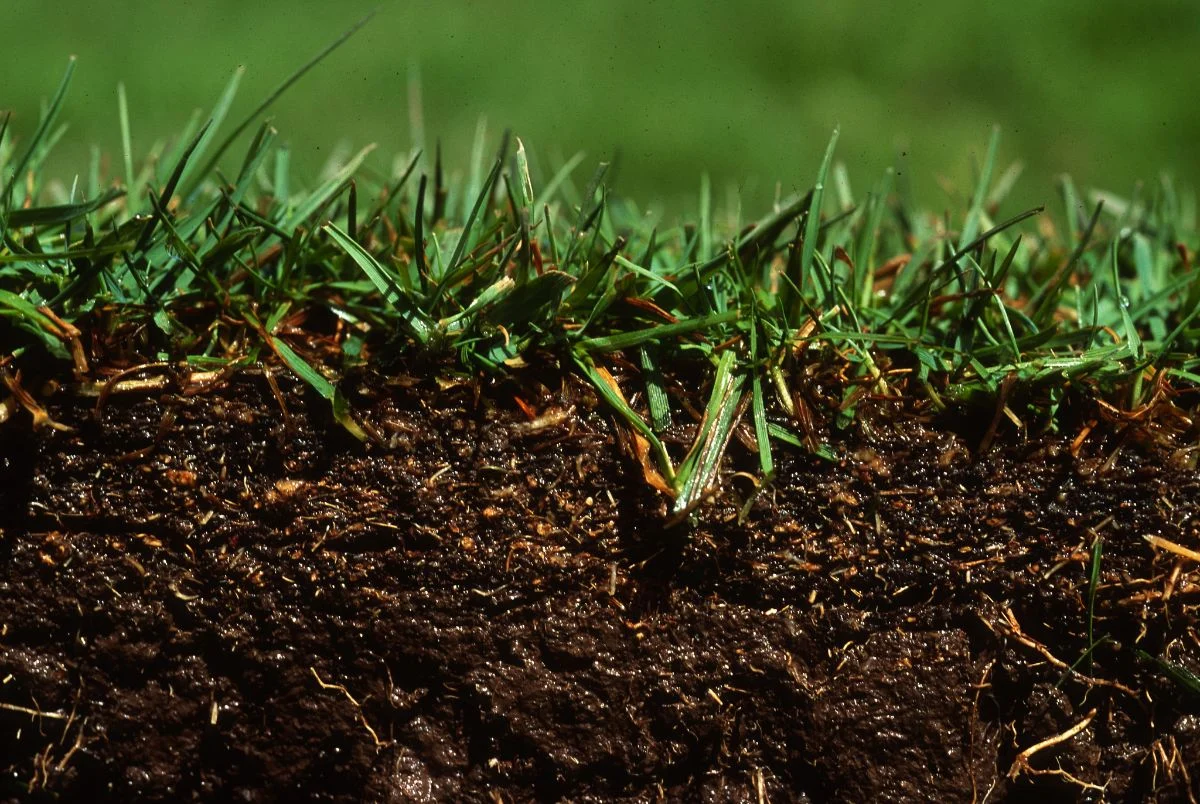
Is your Houston lawn thin, struggling, and unresponsive to fertilization and irrigation despite doing everything the standard lawn care advice recommends — and have you considered that the problem might not be above the soil surface at all? Soil compaction is one of the most common and least recognized causes of Houston lawn failure, the condition that prevents grass root systems from developing the depth and density that sustain quality through Houston's demanding growing conditions regardless of how carefully every other aspect of the lawn care program is managed.
Houston's clay soil creates the compaction challenge that most of the country's residential lawn markets do not face at the same severity. The same expansive clay that generates the soil movement that cracks concrete and challenges hardscape installations consolidates under the repeated weight of maintenance equipment, foot traffic, and the natural settling that Houston's wet-dry cycles produce in clay-dominant soil profiles. The compacted Houston clay that results from years of this accumulated consolidation becomes so dense that grass roots deflect horizontally at the compaction layer rather than growing downward — creating the shallow root system that drought vulnerability, heat stress, and the thin, struggling turf appearance that inadequate rooting produces.
At Gulf Reserve Landscape & Pools, soil compaction assessment and remediation is part of every Houston sod installation and lawn renovation we execute. Here is what soil compaction does to Houston lawns and what fixing it permanently actually involves.
What Soil Compaction Does to Houston Lawns
Understanding the specific ways that soil compaction affects Houston lawn performance — the mechanisms through which compaction produces the symptoms that Houston homeowners observe and misattribute to other causes — establishes why compaction remediation is the foundational intervention that makes other lawn care investments more effective.
Root penetration restriction is the most direct consequence of soil compaction in Houston lawns. Grass roots grow through soil by physically displacing soil particles as they extend — a process that requires the pore space between soil particles that adequate soil structure provides. Compacted Houston clay has had its pore space compressed to the point where root tips cannot displace the consolidated particles to continue growing downward. The root that encounters the compaction layer deflects horizontally along the top of the compacted zone rather than penetrating it — creating the shallow root mat at 2 to 3 inches below the surface that is the physical expression of compaction's effect on root development.
The shallow root system that compaction creates in Houston lawns produces the specific performance failures that compaction-affected lawns consistently exhibit. Drought stress appears rapidly when irrigation is reduced or when Houston's dry periods extend beyond a few days — because the shallow roots cannot access the deeper soil moisture reserves that deep root systems reach. Heat stress intensifies during Houston's peak summer because shallow roots in the upper soil profile experience the full thermal gradient that surface heating creates while deep roots would be in the cooler, more temperature-stable soil at depth. Recovery from wear, traffic damage, and the mechanical disturbance that lawn maintenance creates is slow because the root mass that drives recovery is concentrated in the thin surface layer rather than distributed through the deeper soil profile where recovery resources are more stable.
Water infiltration reduction is the second major consequence of soil compaction in Houston lawns — and the one that creates the feedback loop that makes compaction progressively worse over time on unmanaged Houston properties. Compacted soil has reduced pore space for water to infiltrate — the same consolidated particle arrangement that restricts root penetration also restricts water movement through the soil profile. Houston clay that is already slow to infiltrate water at 0.1 to 0.2 inches per hour under non-compacted conditions infiltrates even more slowly when compaction has further reduced its pore space. Surface runoff increases as infiltration capacity decreases — the water that should be infiltrating to recharge soil moisture instead sheets across the surface to lower areas where it concentrates. And the increased surface moisture from poor infiltration creates the humid surface conditions that the fungal diseases of Houston lawns, particularly brown patch and take-all root rot, exploit.
Nutrient availability reduction in compacted Houston lawn soil reflects the relationship between soil aeration, microbial activity, and nutrient cycling that adequate soil structure supports and compaction disrupts. The beneficial soil microorganisms that convert organic matter to plant-available nutrients, that fix atmospheric nitrogen into soil nitrogen, and that support the mycorrhizal associations that enhance plant root nutrient access require the oxygen-containing pore space that compaction eliminates. Compacted Houston lawn soil with depleted microbial activity cycles nutrients less efficiently than well-structured soil — contributing to the nutrient deficiency symptoms that Houston lawn owners observe as yellowing and thin coverage even in soils where adequate nutrients are present in total but not available in plant-accessible forms.
Why Houston Clay Makes Compaction Worse Than Most Markets
Houston's specific soil conditions create a compaction environment that is more severe and more damaging to lawn performance than the compaction conditions that other residential lawn markets face — and that requires more aggressive remediation than the approaches appropriate for lighter, sandier soils.
Clay particle characteristics — the plate-like structure of clay mineral particles that allows them to pack together with minimal pore space when external pressure is applied — make Houston's clay-dominant soils far more susceptible to compaction under equivalent loading than the sandy loam or silt loam soils of other markets. Sand particles are roughly spherical and create stable pore space that loading does not collapse as readily as the plate-like clay particle arrangements that pack flat under pressure. Houston's Black clay soils with 50 to 60 percent clay content have the particle structure that creates the most severe compaction response to loading of any common residential soil type in the United States.
Wet-dry cycling amplification of compaction in Houston clay soil reflects the specific behavior of clay minerals during the shrink-swell cycles that Houston's alternating wet and dry seasons produce. Clay particles swell when wet — expanding and displacing pore space as water molecules insert between the plate-like clay structures. When the soil dries, the clay particles contract and resettle in the more consolidated arrangement that the load history they have experienced produces. The repeated wet-dry cycling that Houston's climate creates produces the progressive consolidation that makes Houston clay soil denser over time without any additional external loading — a compaction mechanism that markets with more stable soil moisture do not experience at the same rate.
Maintenance equipment loading on Houston residential lawns — the mowing equipment that operates weekly or more frequently through Houston's 9 to 10 month active growing season — applies the repeated wheel and roller loads that accumulate into the compaction layer that seasonal use in cooler climates produces at lower intensity. Houston's extended growing season means that the mowing equipment that generates compaction loads passes over the lawn 35 to 45 times per year rather than the 20 to 25 times per year that northern markets with shorter growing seasons experience — applying proportionally more compaction load to the Houston clay that is already more susceptible to compaction than other soil types.
Diagnosing Soil Compaction in Houston Lawns
Distinguishing soil compaction from the other causes of Houston lawn underperformance — pH problems, irrigation coverage gaps, pest and disease damage — requires the specific diagnostic steps that reveal whether compaction is contributing to the observed symptoms.
The screwdriver test is the simplest diagnostic for Houston lawn soil compaction — inserting a standard screwdriver into the lawn soil with hand pressure and observing the resistance encountered at different depths. In non-compacted Houston soil, a screwdriver inserted with moderate hand pressure should penetrate 6 to 8 inches without significant resistance. In compacted Houston soil, the same screwdriver meets significant resistance at 2 to 4 inches — the depth where the compaction layer that restricts root penetration begins. The screwdriver test performed in multiple locations across the Houston lawn identifies the areas with significant compaction and the approximate depth at which the compaction layer begins — information that calibrates the remediation approach.
Root depth examination provides the direct evidence of compaction's effect on root development. Removing a plug of turf from the Houston lawn — the 3 to 4 inch plug that a golf hole cutter or sharp-edged spade removes in a clean cylinder — and examining the root system attached to the plug reveals whether the roots extend through the full plug depth or are concentrated in the upper 1 to 2 inches. Roots that are dense in the upper inch and largely absent below 2 inches confirm the shallow root mat that compaction produces. Roots that extend through the full 3 to 4 inch plug depth indicate that compaction is not severely restricting root development at that location.
Surface water observation after Houston rain events provides the practical evidence of reduced infiltration that compaction produces. A Houston lawn that develops surface ponding in flat or slightly sloped areas during moderate rain events — not the severe events that overwhelm any soil's infiltration capacity — is a lawn whose infiltration capacity has been reduced by compaction below the level that normal rainfall intensity exceeds. The same lawn after aggressive core aeration and compost amendment shows meaningfully faster surface water infiltration that confirms the infiltration improvement the remediation produced.
Remediation Approaches for Houston Lawn Soil Compaction
Soil compaction remediation for Houston lawns follows a program that addresses the compaction at the depth it exists and in the soil conditions Houston clay creates — the approaches that produce durable improvement rather than the temporary surface-level effects that shallow or inadequate interventions produce.
Core aeration is the primary mechanical remediation for Houston lawn soil compaction — the process that removes soil cores from the lawn to create the vertical channels through the compaction layer that root penetration and water infiltration use to bypass the compacted zone between aeration events. The effectiveness of core aeration for Houston lawn compaction remediation depends on the aeration depth, the core diameter, and the spacing between cores — the parameters that determine how completely the aeration pattern breaks up the compaction layer across the full lawn area.
Remediation aeration for compacted Houston lawns — as distinguished from maintenance aeration on lawns without severe compaction — uses the aggressive spacing of 2 to 3 inches between cores rather than the 4 to 6 inch spacing of standard maintenance aeration. The closer spacing that remediation requires creates more complete disruption of the compaction layer across the full aerated area rather than the isolated channels that widely spaced aeration produces. The aeration depth needs to reach below the compaction layer — typically 4 to 6 inches for Houston residential lawns with standard compaction from maintenance equipment — to create the channels that extend through the compaction zone rather than stopping within it.
Compost top-dressing applied immediately after core aeration — spreading 1/2 to 1 inch of quality compost across the aerated lawn surface and working it into the aeration holes with irrigation and rainfall — fills the aeration channels with organic matter that improves soil structure as it decomposes rather than allowing the channels to be refilled with the native compacted clay that surrounding soil deposits into the holes as the lawn is used. The compost that works into the aeration holes creates the improved soil structure in those channels that roots and water use preferentially — establishing the improved drainage and root penetration pathways that gradually extend as the compost-amended channels expand through biological activity over the following growing seasons.
Liquid aeration products — the biological and chemical agents marketed as soil conditioners and compaction relievers that claim to reduce compaction without mechanical coring — do not produce the physical disruption of the compaction layer that core aeration creates in Houston clay. These products may improve soil biological activity and provide some structural benefits in moderately compacted soils, but they cannot replace the physical channel creation that core aeration provides in the severely compacted Houston clay that most established residential lawns present. Liquid aeration as a supplement to core aeration and compost amendment is a reasonable addition to the compaction remediation program. Liquid aeration as a substitute for core aeration on severely compacted Houston clay is not.
Multi-season remediation program for Houston lawns with severe long-term compaction — the program that recognizes that 10 to 20 years of accumulated compaction cannot be fully remediated in a single aeration and compost treatment — schedules the aggressive core aeration and compost application twice annually for 2 to 3 consecutive seasons. The first-season treatment creates the initial channels and begins the compost amendment program. The second-season treatment extends the improvement into the soil zones between the first-season channels. The third-season treatment extends and deepens the improvement further — progressively building the improved soil structure that replaces the compaction layer rather than creating isolated channels in an otherwise unchanged compacted matrix.

Has soil compaction been the undiagnosed cause of your Houston lawn's persistent underperformance? Gulf Reserve Landscape & Pools assesses every Houston lawn personally — testing soil compaction at multiple locations, examining root depth, and observing drainage performance before recommending a remediation approach — so the investment you make in lawn improvement addresses what is actually limiting your lawn's performance rather than what the standard lawn care advice assumes.
Get your free estimate at gulfreservelandscaping.com


