




Sod Installation in Katy and Cypress — What Katy Prairie Clay Soil, HOA Standards, and New Construction Conditions Actually Require
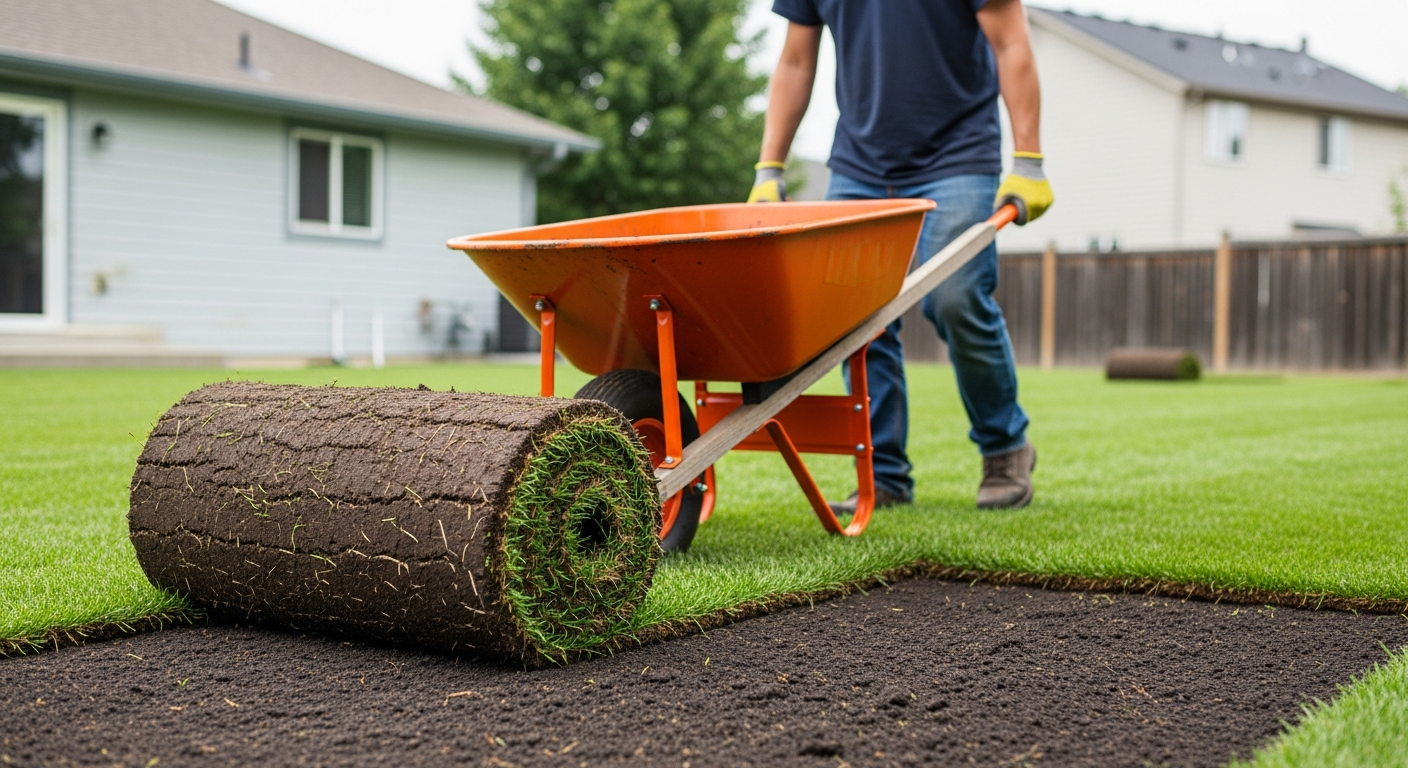
Is the sod on your Katy or Cypress property establishing and performing the way it should — or have you been dealing with the thin, struggling lawn that inadequate preparation for the Katy Prairie's specific clay soil conditions consistently produces when standard sod installation approaches are applied without the site-specific adjustments that this specific Houston suburban market demands? Katy and Cypress are two of Houston's most active residential markets — the northwest Houston communities along the I-10 and Highway 290 corridors where builder activity, large lot development, and the established master-planned communities that have been maturing over the past two to three decades create the full range of sod installation needs from new construction establishment to renovation of struggling established lawns.
Sod installation in Katy and Cypress faces the specific challenges that the Katy Prairie's geology and the specific development patterns of these communities create. The expansive clay soil that Blog 101 establishes as among the most active in the Houston metro. The HOA governance that most Katy and Cypress master-planned communities apply to visible landscape standards. And the new construction soil conditions that the continued active building programs in these markets consistently create on recently developed lots. These are conditions that the standard Houston sod installation approach addresses adequately in less challenging contexts but that require the specific intensity of preparation, drainage management, and variety selection that Katy and Cypress demand for lasting results.
At Gulf Reserve Landscape & Pools, sod installation in Katy and Cypress is part of our sod installation service across Houston's northwest suburban market. Here is what sod installation done correctly for these specific communities actually requires.
The Katy Prairie Clay Challenge for Katy and Cypress Sod
The Katy Prairie clay that underlies the Katy and Cypress residential development area creates the most specific and most demanding soil conditions that Houston area sod installation faces — the heavy, dark expansive clay that produces the shrink-swell behavior, the slow infiltration, and the compaction severity that standard Houston Black clay conditions do not match.
Katy Prairie clay characteristics that affect sod installation performance follow from the mineralogical composition of this specific soil series — the high montmorillonite clay mineral content that creates the shrink-swell behavior, the slow drainage rate, and the compaction response to loading that make this soil the most challenging residential substrate in the Houston metro for sod performance. As Blog 101 establishes for Katy area concrete and landscape work, the Katy Prairie clay's activity level exceeds standard Houston Black clay in ways that preparation programs calibrated for standard Houston conditions address inadequately.
Drainage limitations in Katy Prairie clay — the 0.05 to 0.1 inch per hour infiltration rate that the most active Katy Prairie clay presents, slower than the 0.1 to 0.2 inch per hour that standard Houston Black clay provides — create the surface runoff and root zone saturation conditions that cycle-and-soak irrigation programming addresses but that overhead spray heads delivering at standard precipitation rates exceed. The sod installed on Katy Prairie clay without the rotary nozzle head specification that matches precipitation rate to infiltration rate is sod that receives systematic surface runoff from its own irrigation rather than the root zone delivery that correctly specified heads provide.
Compaction severity on Katy Prairie clay from construction equipment, maintenance machinery, and the natural consolidation that wet-dry cycling produces in this high-activity clay creates the compaction layer at 2 to 4 inches that restricts root penetration more severely than equivalent compaction in standard Houston Black clay. The remediation aeration at 2 to 3 inch core spacing that Blog 107 establishes for Houston lawn compaction remediation is the minimum appropriate for Katy Prairie clay compaction — with the additional consideration that multiple treatment seasons may be required for the most severely compacted Katy Prairie clay rather than the single-season remediation adequate for less active soil conditions.
Pre-Installation Preparation for Katy and Cypress Sod
Pre-installation preparation for Katy and Cypress sod follows the complete preparation sequence that Blog 126 establishes for Houston sod preparation generally — with the additional intensity that Katy Prairie clay conditions demand at each preparation step.
Soil testing at testing-calibrated rates is the starting point that makes every subsequent preparation decision appropriate for the specific conditions on the specific Katy or Cypress property rather than the assumed conditions that standard amendment programs address. Katy Prairie clay on new construction lots frequently tests above pH 8.0 from the alkaline fill material that development uses and the alkaline native clay that the Katy Prairie's geology produces. The sulfur amendment rate appropriate for pH 8.2 is different from the rate appropriate for pH 7.8 — the testing that reveals the specific pH allows the amendment rate to be calibrated for the actual condition rather than the standard rate that over- or under-treats conditions that deviate from the assumed baseline.
Aggressive core aeration at the 2 to 3 inch spacing that Katy Prairie clay compaction requires — not the 4 to 6 inch maintenance spacing but the remediation density that creates adequate channel distribution through the compaction layer on the most resistant clay soil in the Houston market — is the mechanical preparation step that most directly improves root penetration conditions in Katy Prairie clay. The core depth that reaches below the primary compaction layer on Katy Prairie clay — typically 5 to 6 inches on established Katy properties with significant compaction history — requires the heavy-duty aeration equipment that achieves this depth in resistant clay rather than the lighter equipment adequate for less compacted soil conditions.
Deep compost incorporation to the 8-inch depth that Katy Prairie clay's organic matter depletion and structural challenges require — using the rotary tilling pass that incorporates compost throughout the prepared profile rather than the surface application that stays above the compaction layer — creates the improved growing medium that sod roots need to establish in conditions that limit root penetration more severely than standard Houston clay conditions.
Drainage Assessment and Correction Before Katy and Cypress Sod Installation
Drainage assessment and correction before sod installation on Katy and Cypress properties reflects the specific drainage challenges that Katy Prairie's flat topography and slow-draining clay create for sod performance.
Drainage behavior observation during or after a Houston rain event — walking the lot while it is wet to observe where water accumulates, how long it holds, and whether the grade directs drainage toward or away from the proposed sod installation areas — reveals the specific drainage conditions that sod installation needs to address before the first roll goes down. Katy and Cypress properties with the flat topography and active clay that characterize much of the northwest Houston development area often have drainage challenges that are subtle in dry conditions and obvious during Houston rain events.
French drain installation for the specific low spots and drainage accumulation areas that the assessment reveals — before sod installation rather than after — addresses the drainage conditions that would undermine sod establishment and long-term performance if left unresolved. The French drain that removes subsurface water from the chronically saturated zone on a Katy property creates the drainage condition that allows sod root zone aeration between Houston rain events — the basic requirement for warm-season grass health that saturated clay conditions prevent regardless of how well every other aspect of the sod program is executed.
Grade corrections that establish positive drainage across the Katy or Cypress property toward appropriate collection points — the grade modifications that direct surface runoff away from the house foundation and away from the sod installation areas where accumulation would create the saturation conditions that root rot exploits — are the preparation investments that protect the sod installation from the drainage-driven decline that inadequate grade management allows Houston's rainfall to produce.
HOA Compliance for Katy and Cypress Sod Installation
HOA compliance for sod installation in Katy and Cypress master-planned communities reflects the specific lawn maintenance and landscape modification standards that these communities' governing documents impose on visible exterior conditions.
Front yard lawn quality standards in Katy HOA communities — the mowing frequency requirements, lawn height limits, weed control standards, and the overall maintenance condition that community deed restrictions require — create the quality standard that sod installation on Katy properties needs to achieve and maintain. Installing new sod on a Katy property without a maintenance program adequate to sustain the HOA quality standard produces the HOA compliance issue that declining sod quality below the community's minimum standard creates when the post-installation maintenance program does not deliver what the new sod requires to maintain compliance.
Sod variety compatibility with HOA community standards in Katy and Cypress master-planned communities — confirming that the variety selected for the specific property installation is compatible with the community's approved planting standards and that it can be maintained at the mowing height and appearance standard the community requires — is the compatibility check that prevents the variety selection that produces the performance level or appearance character that conflicts with HOA standards.
Irrigation System Assessment for Katy and Cypress Sod Installation
Irrigation system assessment before sod installation on Katy and Cypress properties addresses the specific coverage and performance limitations that Katy Prairie clay soil creates for irrigation systems designed for standard Houston clay conditions.
Precipitation rate compatibility with Katy Prairie clay's even slower infiltration rate — confirming that the irrigation heads serving the sod installation area apply water at rates compatible with the specific Katy Prairie clay's absorption capacity rather than the standard Houston clay rates that head selection for these properties has historically used — is the irrigation specification check that most directly affects sod establishment success on the most active Katy Prairie clay. As Blog 06 establishes for Houston irrigation head selection, rotary nozzle heads at 0.4 to 0.6 inch per hour precipitation rate serve Houston clay's infiltration capacity. The most active Katy Prairie clay may require the lower end of this range to prevent the surface runoff that exceeds even the rotary head precipitation rate on the slowest-draining Katy clay conditions.
Cycle-and-soak programming for Katy and Cypress sod establishment irrigation — breaking each zone's establishment run time into multiple shorter cycles with soak intervals that allow the water delivered in each cycle to infiltrate before the next cycle begins — delivers the establishment irrigation volumes that sod needs within Katy Prairie clay's absorption capacity rather than as surface runoff that leaves the root zone underserved despite adequate apparent irrigation delivery.
Sod Variety Selection for Katy and Cypress Properties
Sod variety selection for Katy and Cypress properties follows the site-specific criteria that Blog 89 establishes for Houston sod variety selection — with the Katy Prairie-specific considerations that the specific clay conditions and the HOA maintenance standards of these communities create.
Sun exposure assessment on Katy and Cypress properties — the measurement of actual direct sun hours per day during the growing season in each lawn area — drives the variety selection decision between Bermuda's full-sun requirement and St. Augustine's shade tolerance for the specific conditions on each property. New construction Katy properties where the house orientation and neighboring structures have not yet created the mature shading that older properties develop may have adequate sun for Bermuda throughout the lot — while established Katy properties in older sections of Cinco Ranch or Firethorne may have the partial shade from mature neighborhood tree canopy that calls for Palmetto St. Augustine in the affected areas.
Traffic tolerance for Katy family properties — the wear resistance and recovery rate from foot traffic, pet activity, and the outdoor play that active Katy and Cypress families create in their lawn areas — is the practical performance criterion that Blog 89 establishes as Bermuda's significant advantage over St. Augustine for full-sun applications where household activity levels are high. The Katy family property where children and dogs use the rear lawn actively in full sun conditions is a Bermuda property where that variety's traffic tolerance advantage over St. Augustine produces the recovery rate and wear resistance that active household use demands.

Has the sod on your Katy or Cypress property been struggling despite the installation investment you have made — or are you planning new sod installation and want to ensure the preparation and process are appropriate for the specific conditions your property presents? Gulf Reserve Landscape & Pools assesses every Katy and Cypress property personally before recommending sod installation scope — evaluating soil conditions from the Katy Prairie clay assessment, drainage behavior, and irrigation system performance before the first amendment is applied or the first roll of sod is scheduled.
Get your free estimate at gulfreservelandscaping.com


