




Sod Installation for Houston Inner Loop Properties — What River Oaks, Memorial, and Heights Lawns Actually Require
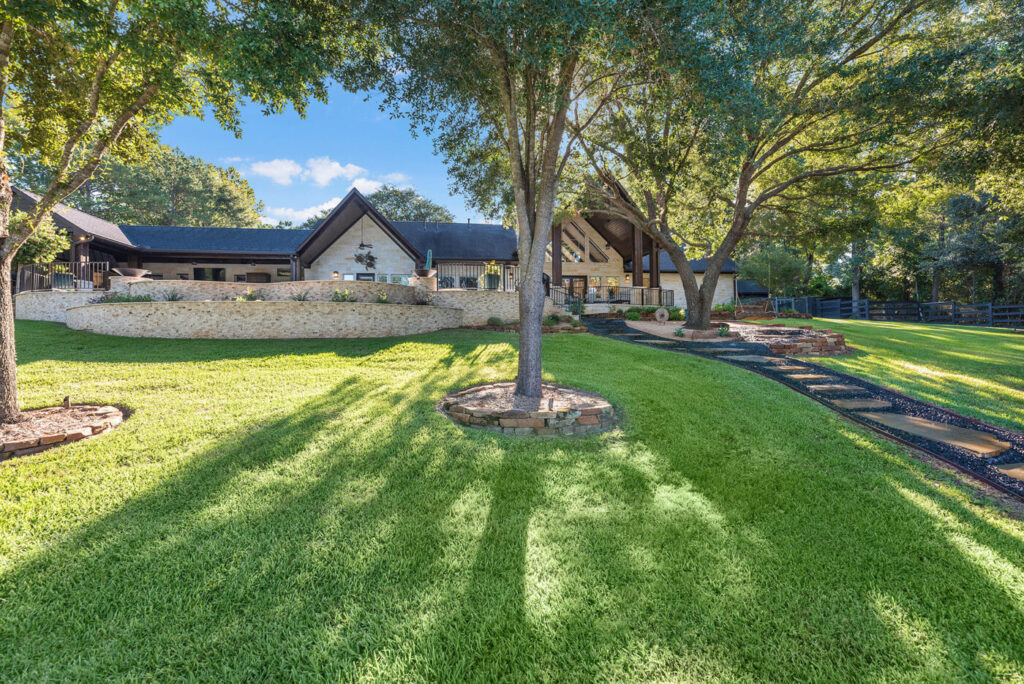
Is the lawn on your Houston Inner Loop property performing the way it should — or are you managing the thin, yellowed, and patchy turf that the combination of deep shade, mature tree root competition, alkaline soil, and inadequate preparation consistently produces on Inner Loop properties where standard suburban sod installation approaches are applied without the site-specific adjustments that Houston's Inner Loop conditions demand? The gap between a Houston Inner Loop lawn that performs correctly and one that struggles year after year is almost never about the sod variety or the irrigation frequency. It is about the preparation and installation approach that accounts for what Houston's Inner Loop properties are actually dealing with — the conditions that make Inner Loop sod installation fundamentally different from the suburban new construction sod work that most Houston sod contractors do the majority of their business executing.
Houston's Inner Loop neighborhoods — River Oaks, Memorial, the Heights, Montrose, West University, Tanglewood, and the surrounding established areas — present sod installation conditions that suburban Houston properties do not. Mature tree canopy that creates the deep, irregular shade patterns that demand different sod variety selection than full-sun suburban lots. Surface root systems from live oaks, pecans, and cedar elms that compete aggressively with sod root systems for water and nutrients in the top 18 inches of soil. Soil pH that has accumulated above the 7.5 to 8.2 baseline of Houston's native clay from decades of hard water irrigation. And the site-specific variability that established urban properties present — different conditions under different trees, in different sun exposures, and in areas with different drainage and irrigation histories — that require assessment and response rather than the uniform treatment that production sod installation applies.
At Gulf Reserve Landscape & Pools, sod installation on Houston Inner Loop properties is among the most technically demanding residential sod work we execute — and the work where the assessment-first approach that defines our program produces the most clearly superior results compared to standard sod installation. Here is what Inner Loop sod installation done correctly actually involves.
The Specific Conditions That Make Houston Inner Loop Sod Installation Different
Understanding the specific conditions that Houston Inner Loop properties present for sod installation establishes why standard suburban approaches consistently underperform in these neighborhoods and what the correct approach needs to address differently.
Mature tree canopy and shade is the defining condition of most Houston Inner Loop properties — and the condition that most directly affects the sod variety selection that will succeed or fail on the specific lawn area. The live oaks, pecans, and cedar elms that have been growing on River Oaks and Memorial properties for generations create shade patterns that are deeper and more variable than the partial shade that suburban properties with younger trees produce. Sod variety selection for Houston Inner Loop properties needs to be based on actual sun exposure measurement — the hours of direct sun per day during the growing season at the specific lawn locations — rather than a general assessment of whether the property has trees.
St. Augustine — specifically the Palmetto variety — is the correct sod selection for Houston Inner Loop properties with significant shade from mature canopy trees. As Blog 03 establishes, Palmetto St. Augustine tolerates shade better than any other warm-season grass available in Houston's market — a performance characteristic that is not simply an advantage in Inner Loop conditions but a prerequisite for success where Bermuda and Zoysia would thin and fail in the shade conditions that Palmetto can handle. Properties where the shade is too deep even for Palmetto — the areas directly beneath dense live oak canopies where less than 2 hours of direct sun per day reaches the ground — may need alternative solutions beyond sod: shade-tolerant groundcovers, mulched bed areas, or decomposed granite that acknowledges the site condition rather than attempting sod installation in conditions that will not support it.
Tree root competition in the top 18 to 24 inches of Houston Inner Loop soil — the depth range where live oak, pecan, and cedar elm surface roots concentrate — creates a competitive environment for newly installed sod that suburban properties with younger, less extensive root systems do not present. Newly installed sod roots competing directly with established mature tree root systems for water and nutrients in compacted, alkaline Houston clay faces a competitive disadvantage that soil amendment, appropriate irrigation, and the right sod variety can partially overcome but cannot eliminate entirely. Setting realistic expectations about the density and performance ceiling that sod can achieve in heavy tree root competition zones — and designing the planting program so that heavily rooted areas under tree canopy are addressed with shade-tolerant groundcovers rather than pushed to achieve sod performance that the root competition prevents — is the honest assessment that serves Houston Inner Loop property owners better than attempting sod installation in every area regardless of the root competition conditions.
Accumulated soil alkalinity from decades of hard water irrigation on Houston Inner Loop properties — the pH drift above 8.0 that Blog 30 establishes as a systematic outcome of years of Houston municipal water irrigation — requires more aggressive remediation than the standard new construction amendment program that is calibrated for Houston's native soil baseline. Inner Loop soil testing frequently reveals pH levels of 8.0 to 8.4 and organic matter contents below 1.5 percent — conditions that require higher sulfur application rates, deeper compost incorporation, and the chelated iron program that makes iron available in high-pH soil to support the iron-demanding St. Augustine that Inner Loop conditions call for.
Site variability across the Inner Loop property — the different conditions that exist in different areas of the same lawn — requires zone-specific assessment and treatment rather than the uniform program that production sod installation applies. The area beneath the dense live oak canopy has different soil pH, different shade, and different root competition than the open lawn area in the same garden. Treating them identically with the same amendment rate, the same sod variety, and the same irrigation schedule produces the inconsistent results that uniform treatment of variable conditions generates.
Soil Preparation for Houston Inner Loop Sod Installation
Soil preparation for Houston Inner Loop sod installation addresses the specific accumulated conditions that established Inner Loop properties present — conditions that require more extensive remediation than new construction preparation and that need to be calibrated for the specific soil chemistry that soil testing from the specific property reveals.
Core aeration at aggressive density — the 2 to 3 inch spacing that provides maximum compaction relief rather than the 4 to 6 inch spacing of standard annual maintenance aeration — creates the root channels through the compaction layer that sod establishment requires in Houston Inner Loop soil that has been compressed by decades of maintenance equipment operation and foot traffic. On Inner Loop properties where the existing soil compaction is severe — detectable by the resistance to probe insertion that indicates compaction at 2 to 3 inches below the surface — aggressive core aeration before compost incorporation is the remediation step that most directly improves the root environment the new sod will encounter.
Compost incorporation at Houston Inner Loop depths — tilling 3 to 4 inches of quality compost into the top 6 to 8 inches of the prepared Houston Inner Loop soil — creates the improved growing medium that new sod needs in the accumulated alkaline clay of an established Inner Loop property. The compost incorporation for Inner Loop properties uses the full 8-inch tilling depth rather than the 6-inch depth adequate for new construction lots because the compaction and structural degradation that accumulated over decades of an established property requires reaching deeper into the soil profile to create the aeration and structure improvement that supports adequate sod rooting.
Elemental sulfur application calibrated to tested pH — not the standard new construction rate but the higher application rate that Inner Loop soil pH levels above 8.0 require to begin meaningful pH correction within the establishment period — is the amendment that most directly improves the nutrient availability environment that newly establishing sod encounters in Houston Inner Loop soil. As established in Blog 01, elemental sulfur in Houston clay requires 6 to 12 months for meaningful pH change through soil bacterial processing. Applying the correct rate before Inner Loop sod installation starts the correction process that will progressively improve soil conditions through the sod's first and second growing seasons — the time horizon that meaningful pH correction in Houston's established soil requires.
Variety Selection and Establishment Management for Houston Inner Loop Sod
Sod variety selection and establishment management for Houston Inner Loop properties follows the site-specific approach that variable conditions across the Inner Loop property demand — different variety decisions for different areas of the same lawn based on the actual conditions each area presents.
Palmetto St. Augustine for shaded Inner Loop areas — the variety selection that Blog 03 establishes as the correct choice for Houston Inner Loop properties with significant shade — should be confirmed against actual sun exposure measurement rather than assumed for the entire property. Inner Loop lawn areas with 4 to 6 hours of direct sun per day are Palmetto candidates. Areas with less than 2 to 3 hours of direct sun are groundcover candidates rather than sod candidates — the honest assessment that serves the property owner better than attempting Palmetto in conditions where even the most shade-tolerant Houston sod variety cannot establish a functional lawn.
Establishment irrigation management for Houston Inner Loop sod needs to account for the tree root competition that draws water from the soil faster than the irrigation system's standard establishment schedule replaces it. Inner Loop properties where mature tree root systems occupy the same soil volume as newly installed sod may require more frequent establishment irrigation — extending the twice-daily schedule of the first week into the second week in areas with heavy root competition — to maintain the consistent soil moisture that sod rooting requires when competing root systems are simultaneously drawing from the same soil moisture reservoir.
First mowing timing on Houston Inner Loop sod follows the tug test standard established in Blog 25 — delaying the first mowing until the tug test confirms adequate rooting — with the additional consideration that Inner Loop sod under tree root competition may take longer to reach the establishment threshold than sod on comparable suburban lots without root competition. Waiting for the tug test result rather than mowing on a calendar schedule prevents the root disruption that premature mowing on under-established Inner Loop sod produces.
Irrigation System Assessment for Houston Inner Loop Sod Installation
Irrigation system assessment before Houston Inner Loop sod installation reveals the specific coverage and programming limitations that Inner Loop properties' older irrigation systems frequently present — and the corrections that need to be made before new sod installation to ensure the system can support establishment correctly.
Coverage assessment under tree canopy on Houston Inner Loop properties frequently reveals the head placement and spacing limitations that irrigation systems installed before the current tree canopy scale was established are operating under. Heads that were correctly spaced for coverage of an open lawn now spray into — and are partially blocked by — the tree root system, lower branch structure, and trunk presence that the mature tree's growth has placed in the spray path. Coverage assessment that runs each zone and maps the actual spray distribution under current conditions identifies the head repositioning and supplemental head additions that correct the coverage gaps that tree growth has created since the original irrigation installation.
Controller programming for Inner Loop conditions — specifically for the deeper shade conditions and higher root competition that Houston Inner Loop lawns operate under — produces the irrigation schedule that reflects the actual evapotranspiration conditions of the specific property rather than the standard Houston residential schedule. Inner Loop lawn areas under dense live oak canopy have significantly lower evapotranspiration rates than open suburban lawns at the same time of year — the shade reduces the solar radiation input that drives evapotranspiration — and the irrigation schedule that serves the open lawn areas of the same property overwatered the shaded areas if applied uniformly. The zone-by-zone scheduling that separate zones for shaded and open areas enables is the programming calibration that Inner Loop irrigation management requires.
What Houston Inner Loop Sod Installation Costs and What It Delivers
Houston Inner Loop sod installation costs reflect the more extensive preparation work that accumulated Inner Loop soil conditions require, the site-specific assessment that variable Inner Loop conditions demand, and the more complex establishment management that tree root competition creates — relative to the standard suburban new construction sod installation that most Houston sod pricing benchmarks reflect.
Properly prepared Houston Inner Loop sod installation — including soil testing, aggressive core aeration, deep compost incorporation, sulfur amendment calibrated to tested pH, irrigation system assessment and correction, and sod installation with variety selection appropriate to site-specific conditions — typically costs 2.00 to 3.50 dollars per square foot installed on Houston Inner Loop properties. This range reflects the additional preparation scope that Inner Loop conditions require relative to the 1.50 to 2.50 dollar per square foot range that standard suburban sod installation represents — a cost premium that reflects the soil and site complexity work that makes the difference between Inner Loop sod that performs and Inner Loop sod that repeats the struggling performance of what it replaced.

Not sure whether your Houston Inner Loop property's lawn conditions support sod installation or need a different approach in some areas? Gulf Reserve Landscape & Pools assesses every Houston Inner Loop property personally — evaluating shade conditions, root competition, soil chemistry, and irrigation coverage before recommending sod variety, preparation scope, or whether alternative groundcovers are more appropriate for specific areas — so the investment you make reflects what the site actually needs.
Get your free estimate at gulfreservelandscaping.com


