




Smart Irrigation Scheduling for Houston Properties — What ET-Based Scheduling Delivers and Why Fixed Schedules Cost More Than They Should
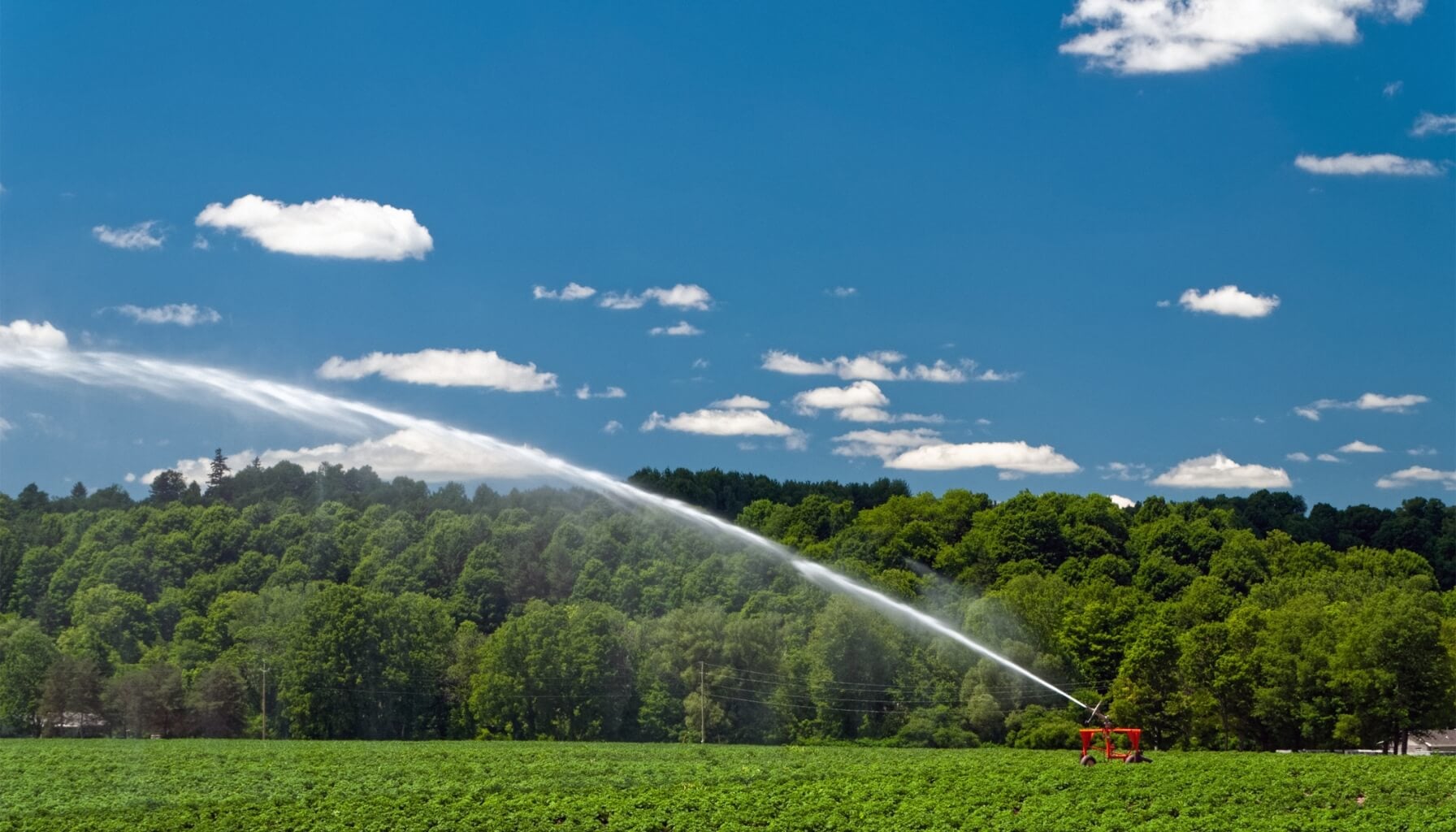
Is the irrigation system on your Houston property running on the schedule that was programmed at installation — the schedule that was calibrated for summer peak demand and that delivers summer-level water volumes through fall, winter, and spring regardless of what Houston's actual evapotranspiration conditions require? Fixed irrigation schedules on Houston residential and commercial properties are the single largest source of preventable irrigation water waste in the market — the systematic overwatering through cooler months that ET-based smart scheduling eliminates by continuously calibrating irrigation delivery to what the landscape actually needs rather than what a summer-peak schedule assumes it always needs.
Houston's climate creates the seasonal irrigation demand variation that makes the gap between fixed-schedule and ET-based scheduling more consequential here than in markets with more uniform year-round conditions. Houston's July evapotranspiration rate — the combined soil evaporation and plant transpiration that drives landscape water demand — is roughly 10 times higher than January's ET rate. A Houston irrigation system running the same schedule year-round delivers 10 times more water than the January landscape needs in January, 5 times more than the October landscape needs in October, and 3 times more than the April landscape needs in April. The water cost of this systematic overwatering — at Houston's residential water rates, on a standard Houston residential property — accumulates to several hundred to over a thousand dollars annually in avoidable water expense.
At Gulf Reserve Landscape & Pools, smart controller specification and ET-based scheduling optimization is part of every Houston irrigation system design and assessment we execute. Here is what smart irrigation scheduling actually delivers for Houston properties.
What ET-Based Scheduling Is and How It Works in Houston
ET-based irrigation scheduling adjusts zone run times and frequencies in response to the property's actual evapotranspiration conditions — the combined measure of water leaving the soil through evaporation and leaving the plants through transpiration that determines how much water the landscape has used and therefore needs replaced through irrigation.
Evapotranspiration calculation for Houston properties uses the reference ET formula that combines the weather data variables that drive water loss from the landscape — solar radiation, air temperature, humidity, and wind speed — into the daily ET estimate that tells the irrigation controller how much water the landscape used on that specific day under those specific conditions. Houston's ET rate varies from approximately 0.05 to 0.10 inches per day in winter to 0.25 to 0.35 inches per day during peak summer — the range that represents the 5 to 10 times seasonal variation that makes fixed-schedule irrigation so wasteful in Houston's cooler months.
Smart irrigation controllers access Houston's ET data through either local weather stations that measure the specific conditions at or near the property or through internet-connected weather service integrations that provide the location-specific ET estimates for the property's coordinates. The controller calculates the irrigation run time required to replace the ET water loss that the previous day's conditions produced — delivering the water the landscape used rather than the water a fixed schedule assumes it always needs.
Zone-level ET application on Houston irrigation systems with smart controllers applies the ET calculation to each zone independently — accounting for the different plant types, sun exposures, and soil conditions that make each zone's water demand different from every other zone on the same property. Full-sun St. Augustine turf zones have higher ET rates than shaded ornamental bed drip zones on the same property because solar radiation drives ET at full rate in sun-exposed zones and at reduced rates in shaded zones. Zone-level ET application adjusts each zone's run time for the specific conditions of that zone rather than the property average that a single ET adjustment factor applied uniformly across all zones produces.
What Smart Controllers Cost and What They Save in Houston
The financial case for smart controller investment on Houston residential and commercial properties reflects the water cost reduction that ET-based scheduling produces relative to fixed-schedule systems on the same properties — and the installation cost relative to that annual water cost savings.
Residential smart controller installation on Houston properties — replacing a fixed-schedule controller with a Wi-Fi connected ET-based platform such as Rachio 3, Hunter Hydrawise, or Rain Bird ESP-TM2 — typically costs 350 to 600 dollars including the controller hardware and the installation labor that programs the system with Houston-specific ET settings, soil type inputs, and zone parameters. This installation cost is recovered through water savings within 1 to 2 years on most Houston residential properties where the irrigation system currently runs a fixed summer-peak schedule year-round.
Annual water savings from smart controller installation on Houston residential properties with standard suburban lot irrigation typically range from 200 to 600 dollars — the savings that the 20 to 35 percent water use reduction that ET-based scheduling produces translates to at Houston's current tiered water rates. Properties with larger irrigated areas, currently running more overwatered fixed schedules, or in the higher tiers of Houston's water rate structure achieve savings at the higher end of this range. The compounding value of annual water savings — the 200 to 600 dollars saved every year for the 10 to 15 year service life of the smart controller — makes the initial investment one of the highest-return improvements available on Houston irrigation systems that currently operate on fixed schedules.
Commercial smart controller installation on Houston commercial properties — replacing fixed-schedule controllers on systems with 20 to 40 zones with commercial ET-based platforms such as Hunter ACC with ET System or Rain Bird ESP-LXD with weather station integration — typically costs 1,500 to 4,000 dollars. Annual water savings on Houston commercial properties with significant irrigated area and currently running overwatered fixed schedules typically range from 3,000 to 15,000 dollars — the savings that make commercial smart controller investment recoverable within months on many Houston commercial properties where the current fixed-schedule programming has never been systematically optimized for seasonal conditions.
Rain Sensors and Soil Moisture Sensors — Smart Controller Supplements
Smart irrigation controllers deliver maximum water efficiency when paired with the sensor technologies that provide the real-time site conditions data that weather-station-based ET calculations approximate but do not measure directly at the specific property.
Rain sensors — the devices that suspend irrigation when rainfall at the property is adequate to meet or exceed the scheduled irrigation delivery — prevent the systematic waste that irrigation running during and immediately after Houston rain events produces. Houston's frequent summer thunderstorms — the afternoon convective events that deliver 0.5 to 2 inches of rain across the property before the scheduled evening irrigation cycle activates — create the daily rain sensor activation opportunity that rain sensors capture. A rain sensor that suspends the evening irrigation after a 0.75-inch afternoon rain event prevents the full irrigation delivery that a fixed-schedule system would otherwise apply to soil that is already saturated from the afternoon rainfall.
Rain sensor calibration for Houston irrigation systems sets the activation threshold at the rainfall amount that represents meaningful soil moisture replenishment rather than triggering on the light misting events that do not add measurable soil moisture. Calibration at 0.25 inches of rainfall as the activation threshold provides the appropriate sensitivity for Houston's rainfall patterns — triggering on the afternoon thunderstorm that delivers genuine soil moisture replenishment and not triggering on the light misting that provides negligible soil moisture benefit.
Soil moisture sensors for Houston irrigation systems provide the direct soil moisture measurement that ET-based calculation estimates — confirming whether the calculated ET replacement has maintained the soil moisture in the target range that the plants need or whether actual soil moisture has deviated from the calculated estimate due to rainfall interception, surface runoff, or the specific soil conditions at the sensor location. Houston clay soil's slow infiltration and high water-holding capacity make soil moisture sensing particularly valuable in the transition between ET-based scheduling and actual soil moisture confirmation — the sensor that confirms the soil moisture level before activating irrigation prevents the overwatering that applying ET-calculated irrigation on top of the soil moisture that Houston's high water-holding capacity clay has retained from the previous irrigation cycles produces.
Seasonal Programming Optimization — What ET-Based Systems Do Automatically
The seasonal programming optimization that ET-based smart controllers perform automatically on Houston properties is the most significant operational advantage these systems provide relative to the manual seasonal adjustment that fixed-schedule systems require and that most Houston homeowners do not perform consistently.
Automatic seasonal run time adjustment on Houston ET-based controllers reduces zone run times as Houston transitions from peak summer demand into fall and increases them as spring approaches — the continuous optimization that keeps irrigation delivery matched to actual ET demand through every season transition rather than the stepwise manual adjustment that fixed-schedule seasonal management requires. The Houston property on an ET-based controller in October is automatically receiving 40 to 60 percent less irrigation than it received in July — the reduction that Houston's October ET conditions require and that the smart controller applies without the manual programming adjustment that a fixed-schedule controller depends on the owner or manager to perform.
Automatic weather-based holds on Houston ET-based controllers apply the rain delay functionality that pauses irrigation for the defined period following rainfall events that meet the threshold for meaningful soil moisture addition — the 24 to 48 hour hold that prevents irrigation immediately following a significant Houston rain event when soil moisture is already adequate. ET-based controllers that combine the weather-based hold with the resumption of ET-calibrated scheduling after the hold period expired apply the most complete water efficiency logic — not simply delaying irrigation after rain but recalibrating the resumption based on the ET conditions that have occurred during the hold period.
Common Smart Controller Programming Mistakes in Houston
Even properly installed smart controllers on Houston properties underperform their potential when programming errors reduce the accuracy of the ET-based scheduling the system provides.
Incorrect soil type selection in Houston smart controller programming is the most common programming error that reduces ET-based scheduling accuracy on Houston properties. Houston's clay-dominant soils have fundamentally different water-holding capacity and infiltration rate than the loam and sandy loam soils that national smart controller default settings often assume. Programming a Houston smart controller for loam soil when the property has heavy clay soil causes the system to calculate run times appropriate for soil that drains faster than Houston clay — delivering more water per cycle than Houston clay's infiltration rate can absorb and less water than clay's higher water-holding capacity needs per cycle. Correct soil type programming for Houston clay — specifically selecting the clay or heavy clay soil option that the smart controller's programming interface provides — calibrates ET-based run times for the actual soil conditions.
Incorrect sun exposure zone classification in Houston smart controller programming reduces the accuracy of zone-level ET calculation by applying full-sun ET rates to partially shaded zones where the reduced solar radiation creates lower actual ET demand. Shaded rear yard zones under Houston's live oak canopy have significantly lower ET rates than the full-sun front yard zone on the same property — programming both zones as full sun doubles the ET demand calculated for the shaded zone relative to its actual conditions. Correct sun exposure classification for each zone — confirming whether each zone receives full sun, partial shade, or deep shade during the peak growing season — is the programming step that makes zone-level ET calculation accurate for Houston properties with the varied sun exposure conditions that mature tree canopy creates.

Has the irrigation system on your Houston property been running on a fixed schedule that delivers summer-level water volumes year-round — and have you been paying the water bill that systematic overwatering through Houston's cooler months produces? Gulf Reserve Landscape & Pools assesses every Houston irrigation system personally — evaluating controller technology, current programming accuracy, and the specific smart controller platform and settings that would produce the greatest water efficiency improvement for your specific property and system configuration.
Get your free estimate at gulfreservelandscaping.com


