




Pergolas and Shade Structures in Houston — What Gulf Coast Conditions Demand and What Proper Design Actually Delivers
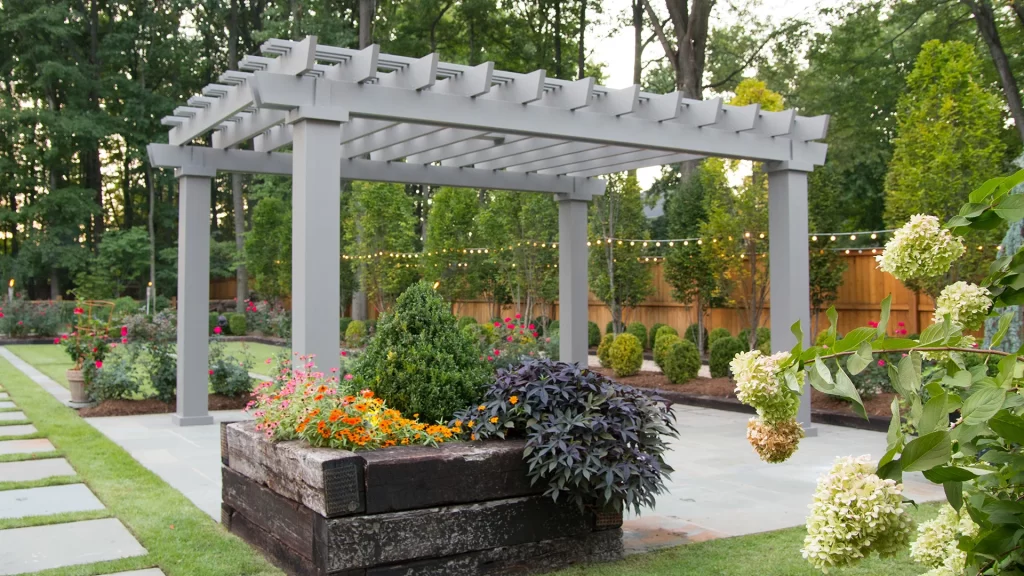
Is your Houston outdoor living space genuinely usable during the afternoon and early evening hours that summer heat makes the most challenging — or does the absence of adequate shade make the patio, outdoor kitchen, and outdoor living areas that Houston's climate should make valuable into spaces that the household avoids during the peak hours of the longest outdoor living season in the country? Houston's summer heat creates the shade requirement that most outdoor living environments in the country do not face with the same urgency. The afternoon and early evening hours from noon to 7 PM that Houston's June through September heat makes genuinely uncomfortable for outdoor activity without shade are the hours that a well-designed shade structure transforms from unusable to genuinely pleasant — extending the outdoor living season's daily usable hours in ways that no other single outdoor improvement produces as directly.
Shade structures for Houston outdoor living spaces span a range from the simple open-frame pergola that provides partial shade through its overhead structure to the fully covered aluminum systems with motorized louver roofs that provide complete rain and sun protection at the touch of a button. Getting the shade structure decision right for Houston's specific conditions requires understanding both the performance requirements that Gulf Coast weather creates for structural materials, connections, and finishes and the design principles that make shade structures genuinely useful in Houston's outdoor living context rather than simply present in it.
At Gulf Reserve Landscape & Pools, pergola and shade structure design and installation is part of our luxury hardscaping service across Houston's residential market. Here is what shade structures done correctly for Houston's conditions actually look like.
Why Houston Outdoor Living Requires Shade That Other Markets Do Not
Houston's specific climate conditions create the shade requirement that makes covered outdoor structures not a luxury addition to the outdoor living program but a functional prerequisite for genuine outdoor living quality through the extended summer that Houston's climate produces.
Peak summer heat intensity in Houston — the combination of air temperatures exceeding 95 degrees Fahrenheit and the solar radiation loading that Houston's southern latitude creates on exposed horizontal surfaces — produces the conditions that make unshaded outdoor living genuinely uncomfortable rather than simply warm during the afternoon and early evening hours. The patio surface that reaches 140 to 150 degrees Fahrenheit in direct summer sun creates the radiant heat environment that makes standing on it without footwear genuinely painful and that makes sitting in chairs above it uncomfortable even when air temperatures alone would be manageable. Shade that intercepts the solar radiation before it reaches the patio surface and the people using it reduces both the surface temperature and the radiant heat that makes unshaded Houston outdoor living so demanding.
Houston's extended summer season amplifies the shade requirement that peak heat creates. Houston's months with average high temperatures above 90 degrees Fahrenheit run from May through September — five months of consistent peak heat that makes afternoon outdoor shade not a seasonal convenience but a fundamental outdoor living quality requirement for more than a third of the calendar year. The outdoor living program that provides comfortable shade during these five months delivers genuine daily outdoor living quality through Houston's most challenging outdoor season. The program without shade requires accepting that the outdoor spaces are genuinely unusable during the hours and months when Houston's heat is most intense.
Gulf Coast humidity combines with Houston's heat to create the thermal environment that makes shade more effective at improving comfort than air temperature reduction alone suggests. The shade structure that reduces surface temperatures and limits direct solar exposure creates the environment where Houston's typical afternoon breeze — the Gulf Coast onshore flow that moves across Houston during afternoon hours — provides genuine cooling rather than just moving hot air. Shaded outdoor environments in Houston capture the cooling benefit of air movement that unshaded environments cannot because the radiant heat from unshaded surfaces overwhelms the cooling that air movement provides.
Material Selection for Houston Shade Structures
Material selection for Houston pergolas and shade structures is the most consequential design decision — the choice that determines how long the structure performs in Gulf Coast conditions and how much ongoing maintenance it requires to maintain its appearance and structural integrity.
Aluminum pergola systems are the material that Gulf Reserve most consistently recommends for Houston outdoor living shade structures, for the specific performance reasons that Blog 32 establishes for Houston covered outdoor structure applications. Aluminum's inherent corrosion resistance eliminates the rust and corrosion failure that steel structures develop in Houston's persistent humidity. Its dimensional stability through Houston's thermal cycling range prevents the expansion and contraction that creates loose connections and structural movement in materials with higher thermal expansion coefficients. And the PVDF powder coating finish that quality aluminum pergola systems specify provides the UV resistance and color stability that Houston's solar intensity demands — maintaining finish appearance through the years of sun exposure that standard powder coating fades under in Gulf Coast conditions.
The specific aluminum pergola systems appropriate for Houston residential applications include the engineered extrusion systems from manufacturers who design specifically for outdoor covered structure applications rather than the kit systems assembled from standard aluminum components not designed for the loads and exposures that Houston outdoor structures face. The wind load design that Houston's occasional severe weather creates for attached outdoor structures — the lateral forces from high-velocity winds that tropical weather systems bring to Houston during hurricane season and severe thunderstorm events — requires the engineering that reputable aluminum pergola system manufacturers build into their products and that kit systems assembled without engineering review do not provide.
Cedar and ipe wood pergolas for Houston applications where the natural material character that wood provides is the priority reflect the maintenance commitment that organic materials require in Gulf Coast conditions. Western red cedar in Houston outdoor applications needs the penetrating oil finish treatment that prevents moisture absorption and the UV-driven surface checking and graying that untreated cedar develops rapidly in Houston's outdoor conditions. Cedar pergolas in Houston that receive the refinishing program that Gulf Coast conditions demand — reapplication every 2 to 3 years — maintain the warm natural character that makes wood the material preference for homeowners who value authentic material quality above maintenance convenience. Cedar pergolas that do not receive consistent maintenance develop the gray, checked, and structurally weakened character that accelerated weathering produces in wood exposed to Houston's outdoor conditions without protection.
Ipe hardwood pergolas for Houston outdoor applications provide the natural material character of wood with significantly better weather resistance than cedar — the natural oils that ipe contains providing the moisture resistance and biological growth resistance that cedar relies on applied finishes to achieve. Ipe pergolas in Houston that receive annual oiling to maintain the surface protection that the wood's natural oils begin to provide stabilize to the silvery gray patina that weathered ipe develops as a natural aging process rather than the deterioration that weathered cedar represents. Houston homeowners who prefer ipe's lower maintenance commitment relative to cedar accept the silvery patina as the natural aging character that ipe develops rather than maintaining the original warm brown through the refinishing that cedar requires.
Vinyl and composite pergola systems for Houston outdoor applications present the specific limitation that Blog 32 establishes for these materials in Gulf Coast conditions. Vinyl's thermal expansion coefficient — significantly higher than aluminum's — creates the joint movement, connection looseness, and structural racking that Houston's thermal cycling range produces in vinyl pergola components through repeated expansion-contraction cycles. Composite materials in Houston's outdoor conditions develop the UV degradation that reduces their structural integrity and surface appearance over shorter service lives than aluminum or properly maintained wood alternatives achieve in equivalent conditions.
Shade Structure Types for Houston Outdoor Living Applications
The specific shade structure types appropriate for Houston outdoor living applications span from the open overhead structures that provide partial shade and visual definition to the fully enclosed covered structures that provide complete weather and sun protection.
Open-frame pergolas — the overhead structures with open spacing between roof members that provide partial shade through filtered sunlight — are the shade structure type with the widest application range in Houston outdoor living design. Open-frame pergolas in Houston outdoor living spaces provide the visual definition and overhead structure that outdoor rooms require while delivering the partial shade that reduces direct solar loading on the surfaces and people below without eliminating the sky view and the sense of outdoor exposure that closed roof structures create.
The shade effectiveness of open-frame pergolas in Houston depends on the orientation of the overhead members relative to the sun path and the spacing between members. East-west oriented overhead members in Houston pergolas — the orientation that positions the longest dimension of the members perpendicular to the sun's north-south arc — provide maximum shade during the midday hours when Houston's sun is highest and most intense. North-south oriented overhead members provide maximum shade during morning and afternoon hours when the sun is lower in the sky and the longer shadow from north-south members extends further across the pergola floor.
Louvered roof pergolas — the adjustable or fixed louver systems that provide variable shade control from open-sky to fully closed depending on the louver angle — represent the shade structure type that most directly addresses Houston's variable outdoor living conditions. The ability to open the louvers for full sky exposure on pleasant days when shade is less critical and close them for full sun protection during peak summer afternoon hours makes louvered pergolas the most versatile shade structure option for Houston outdoor living applications where the weather variability that Gulf Coast conditions create makes fixed-shade structures either over-shaded on comfortable days or under-shaded on the hottest ones.
Motorized louvered systems — the premium louver pergola option where the louver angle is controlled by a motor through a remote, wall switch, or smartphone app — provide the convenience that makes the louver adjustment actually happen in practice rather than being theoretically available but practically unused because manual adjustment requires physical effort. Houston homeowners with motorized louvered pergolas adjust their louver angle in response to changing sun angle, cloud cover, and comfort needs throughout an outdoor entertaining session without leaving their seating. Manual louvered systems that require physical adjustment of each louver panel are adjusted infrequently in practice — producing the fixed-shade performance of an open-frame pergola rather than the variable-shade performance that the louver system's design intent promises.
Solid roof covered structures — the fully covered outdoor rooms with metal, polycarbonate, or solid panel roofing that provide complete rain protection and maximum sun blocking — represent the shade structure type most appropriate for Houston outdoor kitchen applications where the covered environment allows outdoor cooking and entertaining to continue through Houston's afternoon thunderstorms. The fully covered outdoor room that connects the indoor kitchen to the outdoor kitchen through a sheltered transition creates the outdoor living environment that Houston's frequent afternoon rain events cannot disrupt — the genuine all-weather outdoor entertaining space that Houston's otherwise exceptional outdoor living climate makes possible year-round with adequate overhead protection.
Foundation Design for Houston Shade Structures
Foundation design for Houston pergolas and shade structures follows the site-specific requirements that Houston's clay soil, the specific structure's loads, and the post positions relative to the property's underground infrastructure create.
Post footing depth for Houston pergola and shade structure posts needs to extend below the active clay movement zone to prevent the post movement that shallow footings in Houston clay produce as shrink-swell cycles move the soil around posts whose footings terminate within the movement zone. The minimum footing depth of 24 to 30 inches below finished grade — the depth that Blog 32 establishes for Houston shade structure footings — extends the footing below the active clay movement zone that affects the top 18 to 24 inches of Houston's residential soil profile.
The concrete footing diameter appropriate for Houston shade structure posts reflects the post load and the bearing capacity of the soil at the footing depth. Standard Houston residential pergola posts on 6 to 8 inch diameter footings at 24-inch depth provide adequate bearing capacity for the gravity and lateral loads that standard residential pergola structures impose on the footing system. Larger structures, those in areas with known weak soils, and those designed for the increased wind loads of Houston's hurricane exposure zone benefit from footing diameter increases that engineering review for the specific structure and site conditions determines.
Utility locating before Houston shade structure footing excavation is the site preparation step that prevents the utility conflicts that footing augering without prior locating creates. Houston residential properties have the underground water supply lines, irrigation mainlines, electrical conduit, and gas lines that decades of residential development have placed at unpredictable depths in many residential lots. Calling Texas 811 for utility marking before any post footing excavation is both the legal requirement that Texas law imposes and the practical protection against the utility damage that excavation without locating creates.
Integrating Shade Structures With Houston Outdoor Living Components
Pergolas and shade structures in Houston outdoor living spaces are most effectively designed as integrated components of the overall outdoor living program rather than as independent shade additions to an existing patio.
Integration with outdoor kitchen design is the shade structure relationship that most directly affects the outdoor kitchen's usability through Houston's summer months. The shade structure that covers the outdoor kitchen and extends over the adjacent dining and seating areas creates the unified covered outdoor living environment that makes outdoor cooking and entertaining genuinely comfortable through Houston's peak summer rather than confining outdoor kitchen use to the cooler morning and evening hours that unshaded outdoor kitchens in Houston are comfortable during.
Integration with landscape lighting design for Houston shade structures follows the principle that Blog 108 establishes for outdoor kitchen and dining lighting generally. The lighting channels, recessed fixtures, and fan mounting points that aluminum pergola systems incorporate in their extrusion profiles allow the lighting and ceiling fan installations that outdoor room functionality requires to be built into the structure rather than surface-mounted after installation. The clean, architectural integration that purpose-built lighting and fan mounting in the pergola structure provides is significantly more refined than the surface-mounted conduit and bracket mounting that lighting and fans added to structures not designed to accommodate them require.
Integration with hardscape design ensures that the shade structure's post positions are coordinated with the patio layout below and that the transition between the patio surface and the structure's perimeter is detailed with the quality that the overall outdoor living environment requires. Patio surfaces that were designed and poured with the shade structure's post positions established in the layout — the post footings poured as part of the patio construction rather than core-drilled through completed patio after the fact — produce the clean integration that coordinated design and installation creates rather than the visible disruption that post-patio structure installation requires.

Is the outdoor living space on your Houston property genuinely usable through the summer months, or does the absence of adequate shade make the outdoor environment you have invested in less functional than Houston's climate should allow? Gulf Reserve Landscape & Pools assesses every Houston outdoor living space personally before recommending any shade structure scope, evaluating the specific sun exposure, the outdoor living program the household uses the space for, and the material and design options that serve those specific conditions before making any recommendations.
Get your free estimate at gulfreservelandscaping.com


