




Outdoor Kitchens in Houston — What Materials, Layouts, and Hardscape Design Actually Hold Up in Gulf Coast Humidity
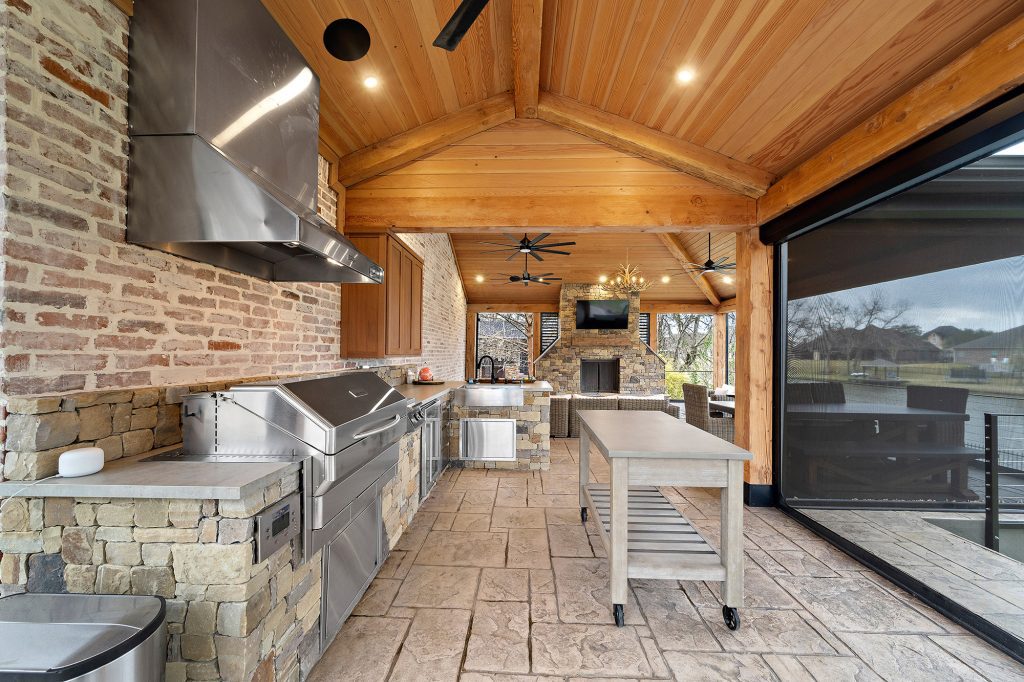
Houston is one of the best cities in the country for outdoor kitchens — and one of the most demanding environments for them. The city's mild winters, long shoulder seasons, and genuine outdoor living culture mean a well-designed Houston outdoor kitchen gets used 9 to 10 months of the year rather than the 4 to 5 months that outdoor kitchen owners in northern markets manage. That extended use season, combined with Houston's year-round humidity, UV intensity, salt air influence, and the clay soil movement that affects everything built on Houston's ground, creates a performance environment that separates outdoor kitchens built correctly for Houston from ones that looked impressive at installation and began deteriorating within two or three seasons.
The outdoor kitchen market in Houston has expanded significantly over the past decade, and with that expansion has come an enormous range in installation quality. Prefabricated outdoor kitchen modules — the kind sold at big-box stores and assembled by general contractors without specific Houston climate knowledge — represent the majority of Houston outdoor kitchen installations and the majority of Houston outdoor kitchen disappointments. Stucco over steel stud frames that rust when Houston's humidity infiltrates the surface finish. Countertop materials that bleach and crack under Houston's UV. Appliances specified for residential indoor kitchens that corrode in Houston's outdoor humidity conditions. Structural assemblies built on Houston clay without the drainage and base preparation that the soil conditions demand.
At Gulf Reserve Landscape & Pools, outdoor kitchen design and construction is part of our luxury hardscaping and stone work services across Houston's high-end residential market. Here is what an outdoor kitchen built correctly for Houston's conditions actually looks like.
Why Most Houston Outdoor Kitchens Fail Prematurely
Understanding the specific failure modes that Houston's environment creates for outdoor kitchens helps explain why material and structural decisions that seem minor at the planning stage matter so much over a 10 to 20 year use horizon.
Steel stud and cement board framing is the construction method used in most prefabricated and many custom Houston outdoor kitchens. Steel studs provide a lightweight, strong structural frame for the kitchen assembly, and cement board sheathing provides a surface for stucco, tile, or stone cladding. The failure mode in Houston is moisture infiltration into the steel stud cavity through surface finish cracks, joint failures, or penetrations for appliances and plumbing. Once Houston's humidity reaches the steel studs inside a cladded outdoor kitchen frame, rust develops rapidly — Houston's year-round humidity provides no dry-out period that slows the corrosion cycle. Rust-swelling studs crack the surface finish from the inside, accelerating further moisture infiltration and structural degradation.
On Houston outdoor kitchens where stucco over steel stud construction is used, the surface finish integrity is the only barrier between the structural frame and Houston's humidity. Stucco that develops even hairline cracks — which is virtually inevitable on any Houston outdoor kitchen given the thermal cycling and clay soil movement the structure experiences — allows moisture entry that the steel frame cannot survive long-term. The outdoor kitchens Gulf Reserve sees in Houston that are 5 to 8 years old and require complete reconstruction are almost always stucco over steel stud construction that admitted moisture and rusted from the inside.
Masonry construction — concrete block, reinforced concrete, or natural stone structural assemblies — eliminates the rust failure mode entirely by removing ferrous metal from the structural system. A concrete block Houston outdoor kitchen frame has no steel to rust. Its failure modes are different — cracking from clay soil movement if the foundation is inadequate, mortar joint deterioration from freeze-thaw cycling in Houston's occasional hard freezes — but they are significantly more manageable and slower-developing than steel stud rust failure in Houston's humidity environment.
Countertop material failures in Houston outdoor kitchens follow predictable patterns based on material selection. Granite is the most durable Houston outdoor kitchen countertop material and the one that holds up most reliably in Houston's UV, humidity, and pool chemical splash environment. Marble's porosity and acid sensitivity make it a poor choice for Houston outdoor kitchen applications where food acids, pool chemicals, and cleaning products contact the surface in conditions that accelerate deterioration. Engineered quartz — popular for Houston indoor kitchen countertops — is not manufactured for the UV exposure that Houston outdoor applications involve and shows color fading and surface degradation in Houston's direct sun that interior applications never reveal. Concrete countertops with proper sealing perform well in Houston outdoor kitchens but require more maintenance sealing frequency than granite in Houston's aggressive UV environment.
Appliance failures in Houston outdoor kitchens result from specifying products designed for indoor residential or even standard outdoor use in an environment more demanding than the product was designed for. Houston's year-round humidity — regularly exceeding 90 percent on summer nights — combined with salt air influence and the temperature cycling of Houston's seasons creates corrosion conditions that standard residential appliances were not designed to withstand. Stainless steel appliances specified for Houston outdoor kitchens need to be 304-grade or higher — the 430-grade stainless used in entry-level outdoor appliances rusts visibly in Houston's conditions within 2 to 3 years. Grill burners, igniters, and control valves need to be specified for outdoor humidity conditions rather than simply being residential units placed in an outdoor enclosure.
Foundation and Base Design for Houston Outdoor Kitchens
An outdoor kitchen is a permanent, heavy structure that sits on Houston's expansive clay soil. The foundation and base system that supports it determines whether it remains level, structurally sound, and aesthetically intact over decades or develops the cracking, settling, and joint separation that are visible on Houston outdoor kitchens built without adequate foundation design.
Concrete slab foundation for Houston outdoor kitchens needs to meet the same specifications as any other Houston concrete flatwork — and then some, because an outdoor kitchen imposes concentrated loads on specific areas of the slab that a standard patio slab design does not account for. The equipment areas of a Houston outdoor kitchen — where the grill, side burners, refrigerator, and storage components sit — impose point loads that are significantly higher than the distributed foot traffic loads that standard residential patio slabs are designed for.
For Houston outdoor kitchen slabs, a minimum 4-inch thickness with No. 4 rebar at 16 inches on center in both directions on a 6-inch compacted crushed limestone base is the appropriate starting specification. Where the outdoor kitchen mass is significant — natural stone cladding, granite countertops, masonry block frame — thickened slab edges and additional reinforcement under the kitchen footprint provide the structural capacity that the concentrated loads require.
Frost protection is relevant for Houston outdoor kitchen foundations in ways that it is not for most other Texas markets. While Houston does not experience the deep frost penetration of northern climates, hard freezes — temperatures sustained below 28 degrees Fahrenheit for 6 or more hours — occur in Houston on average several times per decade and can occur multiple times in a single winter. Water trapped in soil or masonry joint material expands when it freezes, and freeze-thaw cycling even at Houston's mild scale can crack insufficiently protected masonry and mortar joints over time. Proper drainage design around the outdoor kitchen foundation that prevents water accumulation against the base structure protects Houston outdoor kitchens from the freeze-thaw damage that occurs when moisture is present during freeze events.
Structural Frame Options for Houston Outdoor Kitchens
The structural frame of a Houston outdoor kitchen determines the long-term durability of the installation more than any other single component. The frame choice affects both the failure modes the outdoor kitchen is exposed to and the finish materials that are compatible with it.
Concrete masonry unit construction — standard concrete blocks mortared together and reinforced with rebar and grout in critical cells — is the most durable structural frame available for Houston outdoor kitchens. It has no ferrous metal in the structural system to rust, tolerates Houston's humidity with complete indifference, provides excellent thermal mass that moderates temperature swings in the kitchen enclosure, and is compatible with any cladding material including natural stone, brick, stucco, and large-format porcelain tile. The labor cost of CMU construction is higher than steel stud framing, but the 30-plus year service life of properly built CMU outdoor kitchens in Houston versus the 7 to 10 year replacement cycle of steel stud construction makes CMU the better long-term investment for Houston homeowners planning to stay in their properties.
Aluminum stud framing is the moisture-tolerant metal frame alternative that eliminates the rust failure mode of steel studs while maintaining the lighter weight and faster construction speed of metal framing. Aluminum does not rust in Houston's humidity. It does conduct heat rapidly — Houston outdoor kitchen enclosures framed in aluminum experience greater temperature cycling of the frame than CMU construction — but this does not create the structural failure mode that steel stud rust produces. Aluminum framing is an appropriate Houston outdoor kitchen structural choice when CMU construction is not feasible due to weight or access constraints, provided the surface finish system is selected for Houston's humidity conditions rather than defaulting to standard stucco.
Cladding and Finish Materials for Houston Outdoor Kitchens
The exterior cladding of a Houston outdoor kitchen is the most visible design element and the surface that is most directly exposed to Houston's UV, humidity, temperature cycling, and the pool and cooking environment of the outdoor kitchen area.
Natural stone cladding is the premium finish for Houston outdoor kitchens and the material that performs best aesthetically and durably in Houston's conditions over a long service life. Houston limestone — the buff and cream-toned Texas limestone that has a natural relationship with Houston's architectural character — weathers beautifully in the Gulf Coast climate, tolerates Houston's UV and humidity without surface degradation, and delivers the material quality that is appropriate for luxury outdoor kitchen installations in Houston's high-end residential market. Stacked ledger stone, dimensional cut stone panels, and full-bed natural stone all perform well as Houston outdoor kitchen cladding when properly installed with appropriate mortar and joint sealant systems for outdoor exposure.
Large-format porcelain tile is the contemporary alternative for Houston outdoor kitchen cladding that has become increasingly common on Houston luxury installations seeking a clean, modern aesthetic. The same specification requirements that apply to Houston pool deck porcelain tile — exterior-rated material with adequate freeze-thaw resistance and appropriate adhesive systems for outdoor thermal cycling — apply to outdoor kitchen cladding applications. Porcelain's resistance to staining from cooking splash, pool chemicals, and outdoor elements makes it a practical choice for Houston outdoor kitchen surfaces that see active use.
Brick is the historically appropriate cladding choice for Houston outdoor kitchens on properties where the home's architecture is brick construction and visual continuity between the house and the outdoor kitchen is a design priority. Houston clay brick is a proven performer in the Gulf Coast climate and requires minimal maintenance. The mortar joints are the maintenance point — Houston's thermal cycling and occasional freeze events affect mortar joint integrity over time and periodic tuckpointing keeps brick outdoor kitchen cladding performing correctly.
Countertop Selection for Houston Outdoor Kitchens
The countertop is the outdoor kitchen component most subject to Houston's combined UV, humidity, heat, food contact, and cleaning chemical exposure — and the component where incorrect material selection produces the most visible and rapid deterioration.
Granite is the correct primary countertop material for Houston outdoor kitchens. Its UV resistance is excellent — granite does not bleach or fade in Houston's intense solar radiation. Its durability in Houston's heat and humidity is proven over decades of outdoor application across the Gulf Coast market. Its resistance to the food acids, pool chemicals, and cleaning products that contact outdoor kitchen surfaces in Houston's use environment is superior to every alternative except stainless steel. Granite requires periodic sealing — every 1 to 3 years in Houston's outdoor conditions depending on the specific stone's porosity — but this maintenance requirement is minimal relative to the performance it delivers.
Stainless steel countertops are the professional kitchen standard that performs extremely well in Houston outdoor kitchens for functional work areas — particularly around the grill and prep areas where heat resistance and easy cleaning are priorities. The specification requirement in Houston is 304-grade stainless or better — the same standard that applies to Houston outdoor kitchen appliances — to resist the rust that lower-grade stainless develops in Houston's humidity and salt air environment. Stainless steel countertops get hot in Houston's direct sun and are not comfortable as touch surfaces during peak summer heat, which limits their appropriate application to the functional work zones of Houston outdoor kitchens rather than dining and seating areas.
Concrete countertops with high-quality sealing systems perform well in Houston outdoor kitchen applications when the sealing program is maintained. The design flexibility of concrete — any color, texture, embedded aggregate, and integrated features like drain boards and trivets — makes it attractive for custom Houston outdoor kitchen designs. The maintenance requirement of resealing every 1 to 2 years in Houston's outdoor UV and moisture conditions is higher than granite and needs to be factored into the material selection decision by Houston homeowners who want low-maintenance outdoor kitchen surfaces.
Appliance Specification for Houston's Outdoor Humidity Environment
Outdoor kitchen appliances in Houston need to be specified for the actual operating environment — year-round humidity exceeding 70 percent for much of the year, periodic salt air influence, temperature cycling from Houston's occasional freezes to peak summer heat, and the corrosive combination of cooking byproducts and outdoor moisture that Houston's climate creates.
Grills for Houston outdoor kitchens should be specified with 304-grade stainless steel cooking grates, burner tubes, and firebox components. The entry-level outdoor grills with 430-grade stainless components or porcelain-coated cast iron grates show rust and deterioration in Houston's conditions that premium 304-grade equipment avoids. Grill covers are essential for Houston outdoor kitchens — Houston's frequent humidity-driven dew and rainfall events keep outdoor kitchen surfaces wet overnight, and covered grills last significantly longer than uncovered ones in Houston's environment.
Refrigeration for Houston outdoor kitchens needs to be rated for the ambient temperature conditions the unit will experience — outdoor-rated units designed for operating in ambient temperatures up to 110 degrees Fahrenheit are appropriate for Houston outdoor kitchen applications where units may be partially or fully exposed to Houston's summer heat. Standard indoor refrigerators placed in outdoor kitchen enclosures are not designed for Houston's ambient temperature conditions and typically fail within 2 to 3 years of outdoor installation.
Sinks and plumbing in Houston outdoor kitchens require freeze protection design for Houston's occasional hard freeze events. Outdoor kitchen plumbing in Houston should include shutoff valves and drain provisions that allow the water supply to the outdoor kitchen to be isolated and drained before a hard freeze event — protecting the supply lines, valves, and fixture connections from freeze damage that is expensive to repair and that can cause water damage to the outdoor kitchen structure if a line fails during or after a freeze.
Layout and Design Principles for Houston Outdoor Kitchens
The layout of a Houston outdoor kitchen needs to reflect the specific outdoor living patterns that Houston's climate creates — the extended shoulder seasons, the intense summer heat that affects how and when the outdoor kitchen is used, and the relationship between the kitchen, the pool, and the covered outdoor living area that most Houston luxury outdoor kitchen installations incorporate.
Shade coverage over the Houston outdoor kitchen is not optional — it is the design element that determines whether the kitchen is actually usable during Houston's peak summer months. An outdoor kitchen in full Houston afternoon sun in July is a beautiful fixture that nobody wants to cook at. A covered outdoor kitchen under a solid pergola, extended roof overhang, or shade structure is a genuinely functional year-round cooking environment. For Houston outdoor kitchen design, orienting the cooking and prep areas under shade coverage and the dining areas where they can transition between sun and shade gives the outdoor living space the most flexibility across Houston's variable weather conditions.
Ventilation design for Houston outdoor kitchen enclosures affects both the cooking comfort and the longevity of the appliances and finish materials. Houston's humidity means that outdoor kitchen enclosures with poor air circulation retain moisture that accelerates the corrosion and deterioration of everything inside the enclosure. Open-sided or partially open outdoor kitchen designs that allow natural air movement through the cooking area keep Houston outdoor kitchen environments drier and more comfortable than fully enclosed designs that trap Houston's moisture against every surface.
Drainage from the outdoor kitchen area needs to be integrated into the overall pool deck and patio drainage design rather than treated as a separate consideration. An outdoor kitchen produces cooking waste water, ice melt from the refrigerator and ice maker, and wash water from the sink that needs to drain away from the kitchen base and the adjacent patio surface. Floor drains or channel drains adjacent to the sink and ice maker positions, connected to the patio's broader drainage system, prevent the water accumulation against the outdoor kitchen base that accelerates foundation deterioration and the growth of biological material on cladding surfaces in Houston's humidity.
What a Properly Built Houston Outdoor Kitchen Costs — Setting Realistic Expectations
Houston outdoor kitchen pricing spans an enormous range — from prefabricated module installations in the 8,000 to 15,000 dollar range to fully custom natural stone and masonry installations with premium appliances in the 60,000 to 150,000 dollar range on Houston's luxury residential properties. Understanding what drives the cost difference helps Houston homeowners evaluate proposals and make decisions that align with their long-term goals.
The primary cost drivers in a Houston outdoor kitchen are the structural frame material — CMU masonry versus aluminum versus steel stud — the cladding material — natural stone versus porcelain tile versus stucco — the countertop material — granite versus concrete versus tile — and the appliance specification — premium outdoor-rated brands versus entry-level products. The combination of CMU frame, natural stone cladding, granite countertops, and 304-grade stainless appliances from reputable outdoor kitchen appliance manufacturers produces a Houston outdoor kitchen that will perform well for 25 to 30 years. The combination of steel stud frame, stucco cladding, tile countertops, and entry-level appliances produces a Houston outdoor kitchen that will need significant renovation within 7 to 10 years.
The total cost of ownership over a 25-year period — including the renovation or replacement cycles that lower-specification Houston outdoor kitchens require — often makes the premium specification the more economical choice when calculated over the full ownership horizon rather than the initial installation cost alone.

Gulf Reserve Landscape & Pools designs and builds outdoor kitchens across Houston, River Oaks, Memorial, Katy, Sugar Land, Pearland, The Woodlands, and surrounding areas — with masonry construction, natural stone and porcelain cladding, granite countertops, and appliance specifications calibrated for Houston's demanding outdoor environment.
Request your free estimate at gulfreservelandscaping.com — and let's design a Houston outdoor kitchen that performs as well as it looks for decades.


