




Natural Stone Retaining Walls in Houston — What Premium Grade Transition Construction Requires in Gulf Coast Conditions
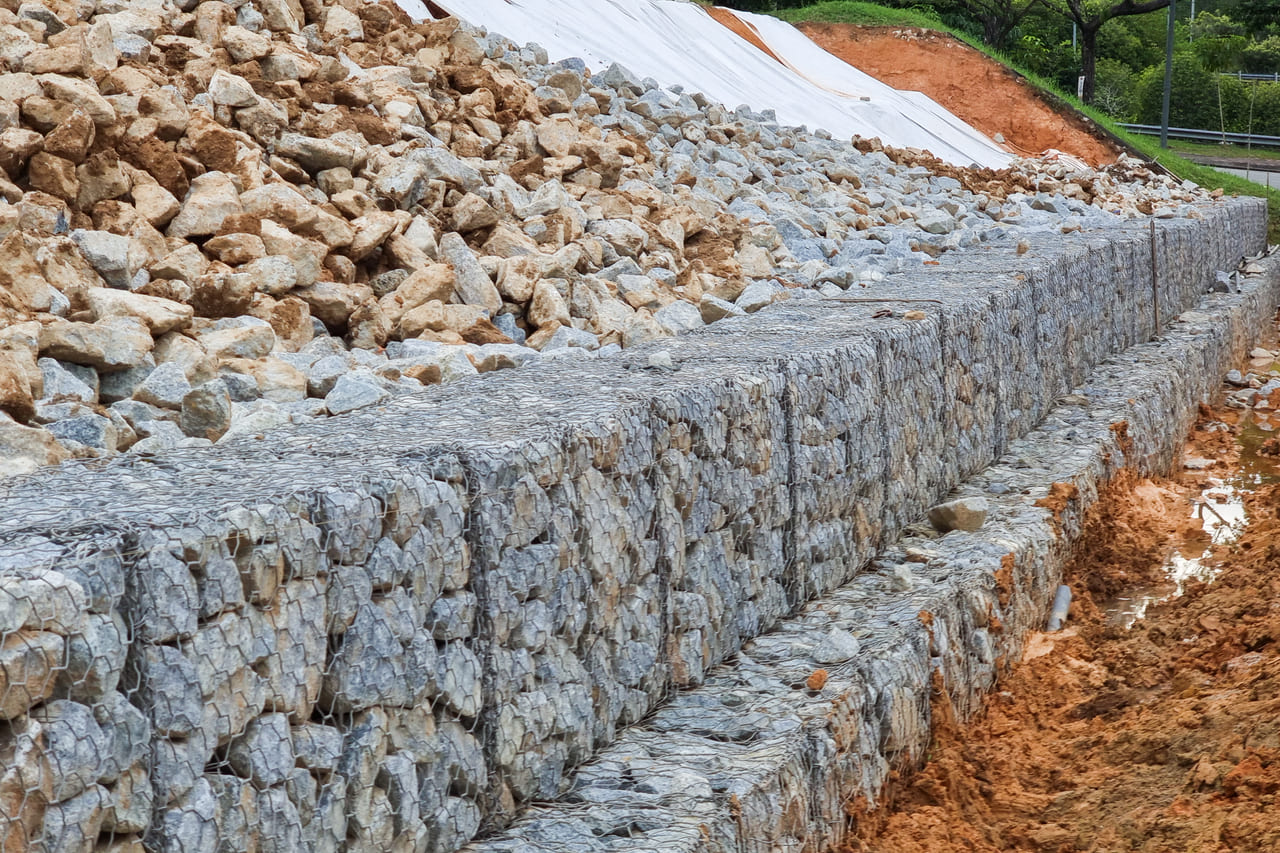
Is the retaining wall on your Houston property performing the structural function it was built for while communicating the material quality the landscape deserves — or is a deteriorating concrete block wall that was adequate at installation but has been moving, cracking, and losing structural integrity through years of Houston's clay soil movement and rainfall events creating the safety and aesthetic problem that natural stone construction, done correctly, prevents? Retaining walls on Houston properties are one of the hardscape applications where the choice between concrete block and natural stone most directly affects both the long-term structural performance and the visual quality of the landscape — and where the investment in natural stone construction produces the most clearly superior result over a 20 to 30 year ownership horizon.
Natural stone retaining walls in Houston — the limestone, granite, and native Texas material structures that manage grade transitions while providing the authentic material quality that manufactured alternatives cannot replicate — deliver structural performance that matches or exceeds concrete block when they are built with the foundation depth, drainage design, and material specification that Houston's specific conditions require. They age with the patina that makes them more beautiful over time rather than the deterioration that inadequately protected concrete block accumulates in Gulf Coast conditions. And they communicate the design intention and material investment that defines premium Houston landscape work rather than the utilitarian adequacy that standard concrete block retaining structures project.
At Gulf Reserve Landscape & Pools, natural stone retaining walls are a core component of our stone work service across Houston's residential market. Here is what natural stone retaining wall construction done correctly for Houston's conditions actually involves.
Why Natural Stone Outperforms Concrete Block for Houston Retaining Walls
The performance comparison between natural stone and concrete block retaining walls in Houston's specific conditions reveals the advantages that favor natural stone for residential applications where longevity, aesthetics, and material quality are primary criteria.
Material durability in Gulf Coast conditions favors natural stone — particularly Houston limestone and granite — over the concrete block that most Houston retaining wall installations use. Concrete block retaining walls in Houston's humidity develop the efflorescence — the white mineral deposits that leach from the block surface — the biological growth colonization that Gulf Coast humidity enables on the porous block surface, and the surface spalling that Houston's freeze-thaw cycling and UV exposure accelerate in manufactured concrete products. Natural stone's lower porosity and inherent material durability — the characteristics that have allowed limestone and granite to survive centuries of outdoor exposure rather than the 15 to 25 year service life that concrete block realistically delivers in Houston's conditions — make it the material specification that produces genuinely durable retaining wall construction on Houston properties.
Aesthetic quality over time differentiates natural stone from concrete block in Houston's landscape environment through the specific way each material ages. Concrete block retaining walls in Houston look their most acceptable at installation and progressively less acceptable as the combination of UV bleaching, biological growth staining, and surface deterioration accumulate. Natural stone retaining walls in Houston develop the patina — the warm, living surface quality that authentic stone acquires in Gulf Coast conditions — that makes them more beautiful at 15 years than at installation. This aging difference is particularly consequential on Houston properties where the retaining wall is a prominent landscape element viewed daily from the house and garden.
Structural flexibility of natural stone retaining walls — specifically the dry-stack and semi-dry construction methods that allow individual stone units to accommodate the movement that Houston's clay soil generates without the mortar joint cracking that rigidly mortared construction experiences — provides a structural adaptation advantage over concrete block systems that rely on rigid construction to achieve their rated structural capacity. Houston's clay soil movement is continuous and cyclical — the shrink-swell cycling that Blog 02 establishes as the primary cause of Houston hardscape deterioration affects retaining walls as much as flatwork. Construction systems that can accommodate some degree of movement without failure perform better in Houston's conditions than rigidly constructed systems that crack when movement exceeds their tolerance.
Natural Stone Options for Houston Retaining Walls
The natural stone materials appropriate for Houston retaining wall construction span a range from the regionally native options with inherent material compatibility to imported premium materials specified for specific aesthetic goals.
Texas limestone is the most appropriate natural stone for Houston retaining wall construction — the material whose regional authenticity, material performance in Gulf Coast conditions, and aesthetic compatibility with Houston's residential landscape character make it the default specification for quality stone retaining wall work in this market. Austin stone — the rough-textured, fossil-rich limestone quarried in Central Texas — produces the naturalistic, deeply textured retaining wall face that complements informal Houston garden landscapes and the traditional residential architecture of Houston's established neighborhoods. Lueders limestone — the finer-grained, more consistent material appropriate for more formal retaining wall applications — produces the clean-faced, coursed wall appearance that formal Houston landscape compositions and contemporary architectural contexts call for.
Houston limestone's structural performance in retaining wall applications reflects the material's inherent compressive strength — adequate for the bearing loads that residential retaining walls impose — combined with its natural texture that provides the mechanical interlock between stacked courses that resists the lateral sliding failure that smooth-faced materials are more susceptible to. Limestone retaining walls in Houston that are properly detailed with adequate batter — the backward lean into the retained soil that provides mechanical advantage against the lateral soil pressure — and adequate drainage behind the wall face perform the structural function required while delivering the aesthetic quality that manufactured alternatives cannot match.
Granite is appropriate for Houston retaining wall applications where maximum hardness, durability, and biological growth resistance are the primary criteria — the retaining wall applications in consistently shaded, moist Houston landscape conditions where the biological growth that colonizes more porous stone materials creates the ongoing maintenance demand that granite's lower porosity minimizes. Granite retaining walls in Houston shaded garden conditions maintain their appearance with less biological growth management than limestone walls in the same conditions — a maintenance advantage that justifies the premium over limestone for shaded Houston applications where biological growth is a persistent concern.
Fieldstone and river rock — the rounded, water-worn materials that provide a naturalistic retaining wall character — are appropriate for Houston informal retaining wall applications where the organic, stream-bed aesthetic suits the landscape character. Fieldstone and river rock retaining walls in Houston are most effectively constructed as dry-stack or gravity walls — relying on mass, interlocking geometry, and adequate batter rather than mortar bonding for structural integrity — because the rounded geometry makes consistent mortar joint construction impractical and because the dry-stack method accommodates the Houston clay soil movement that mortared construction would translate into joint cracking.
Foundation Design for Houston Natural Stone Retaining Walls
Foundation design for Houston natural stone retaining walls follows the principles established in Blog 05 — with the specific considerations that natural stone construction methods introduce relative to the concrete block systems that Blog 05's primary analysis addresses.
Footer depth for Houston stone retaining walls extends below the active clay movement zone — the minimum 12 to 18 inches below finished grade that Blog 05 establishes for standard residential retaining walls — regardless of whether the wall is mortared or dry-stack construction. The footer depth requirement reflects the clay movement forces that affect the wall foundation regardless of what material the wall above it is built from. A natural stone wall on an adequate footer performs through Houston's wet-dry cycles. The same wall on an inadequate footer shifts with the clay movement that the footer cannot resist — producing the lean, cracking, and displacement that Blog 05 identifies as the primary cause of Houston retaining wall failure.
Footer material for natural stone retaining walls in Houston follows the same 3,000 PSI minimum concrete specification that other Houston flatwork and structural concrete requires — the strength adequate to resist the combined vertical load of the stone wall mass and the lateral loading from retained soil pressure. For natural stone walls with significant mass — the thicker dry-stack limestone walls that derive their structural capacity from gravity and mass rather than from the tensile reinforcement of concrete block systems — the footer needs to be proportioned for the actual wall weight rather than the lighter loads that thinner manufactured wall systems impose.
Batter specification for Houston natural stone retaining walls — the backward lean into the retained soil that provides mechanical advantage against lateral soil pressure — is the structural design parameter that distinguishes retaining walls that perform from those that progressively lean forward under Houston's clay soil pressure and eventually fail. A batter of 1 inch per foot of wall height is the minimum adequate specification for Houston residential natural stone retaining walls — producing a wall face that leans noticeably into the retained soil and that provides the mechanical resistance to forward overturning that a vertical wall face does not.
Drainage Design for Houston Natural Stone Retaining Walls
Drainage design for Houston natural stone retaining walls follows the same drainage system requirements that Blog 05 establishes for all Houston retaining walls — with the additional consideration that natural stone construction methods affect how drainage is detailed relative to the wall face.
Drainage aggregate backfill behind Houston natural stone retaining walls — the clean crushed stone layer that intercepts water moving through the retained soil mass and directs it to the drainage pipe at the wall base — is installed the same way regardless of whether the wall face is natural stone or concrete block. The drainage aggregate layer needs to extend a minimum of 12 inches back from the wall face across the full wall height — providing the interceptor layer that prevents hydrostatic pressure buildup against the wall face during Houston rain events.
Weep hole placement in mortared natural stone walls follows the same 6-foot horizontal interval standard that Blog 05 establishes for masonry retaining walls — with the additional detailing consideration that weep holes in natural stone walls need to be positioned to align with natural stone coursing rather than cutting through stone faces. Pre-planning weep hole positions during the design phase — before stone placement begins — allows the installer to position stones that naturally accommodate the weep hole opening rather than cutting through set stone to create weep holes after the wall is built.
Drainage outlet management at the ends of Houston natural stone retaining walls — directing the drainage pipe outlet to a location that releases water away from the wall foundation rather than against it — requires the site-specific assessment that Blog 04 establishes as the starting point for Houston drainage design. Natural stone wall drainage outlets that discharge against the wall end or toward the wall foundation create the foundation saturation that produces the differential settlement and lean that compromises wall structural integrity over time.
Natural Stone Retaining Wall Construction Standards
Natural stone retaining wall construction standards for Houston properties reflect the quality requirements that premium stone work demands — the standards that distinguish walls built to perform and age beautifully from walls that look acceptable at installation and deteriorate within a few years.
Course layout and stone selection for Houston natural stone retaining walls requires the pre-laying assessment — arranging stones on the ground before setting to evaluate course transitions, vertical joint staggering, and color distribution — that produces the consistent, well-composed wall face that communicates design intention. Natural stone retaining walls built without pre-laying course layouts develop the irregular coursing, poorly staggered vertical joints, and color concentrations that communicate hurried execution rather than considered craft — visual quality failures that are apparent at the close viewing distance of a garden retaining wall and that persist for the wall's full service life.
Mortar joint consistency in mortared Houston natural stone retaining walls — the consistent joint width and tooled joint profile that defines the quality of the finished wall face — requires the installation pace and attention that production-speed installation cannot achieve. Consistent 3/4-inch joints throughout a natural stone retaining wall, tooled to a slightly convex profile that sheds water away from the joint face, communicate the craftsmanship quality that premium stone work requires. Inconsistent joints that vary from hairline to 2 inches, tooled inconsistently or left flush with the stone face, communicate the opposite regardless of the quality of the stone material itself.
Cap stone installation on Houston natural stone retaining walls — the finishing course that protects the wall from water infiltration, completes the wall's visual composition, and provides the functional surface for the garden edge or seating element that the wall cap creates — is the detail that most directly communicates the completion quality of the retaining wall installation. Cap stones set with a consistent projection beyond the wall face, bedded in polymer-modified mortar with joints tooled to shed water, and selected for consistent thickness and color across the full wall length produce the finished quality that luxury Houston landscape retaining wall work requires.
Natural Stone Retaining Walls and Houston Landscape Integration
Natural stone retaining walls on Houston properties function as both structural elements and landscape design features — the grade transition management that the engineering requires and the garden wall character that the aesthetic intent creates. Maximizing the landscape design value of Houston natural stone retaining walls requires the integration considerations that treat the wall as a design element rather than simply infrastructure.
Planting pocket integration in Houston natural stone retaining wall faces — the unmortared joints or intentional pocket spaces that accommodate groundcover plantings, trailing ornamentals, and the creeping plants that naturalize the wall face over time — creates the combined stone and planting composition that the most beautiful Houston garden retaining walls achieve. As established in Blog 28, creeping phlox, elfin thyme, and trailing rosemary perform well in Houston retaining wall planting pockets on south and west-facing exposures. Ferns and cast iron plant perform in the moist, shaded conditions of north-facing Houston wall planting pockets.
Lighting integration with Houston natural stone retaining walls — the wall-mounted fixtures, in-grade uplights, and step lights that illuminate the wall face and the garden spaces the wall creates after dark — produces the nighttime landscape quality that the daytime wall investment deserves. Wall-mounted fixtures in brass or copper that complement the warm tones of Houston limestone communicate the material investment of the wall through the evening hours when the landscape is experienced from the outdoor living spaces the wall helps define.

Not sure whether natural stone or concrete block is the right choice for the retaining wall your Houston property needs? Gulf Reserve Landscape & Pools assesses every Houston property personally — evaluating the grade change, soil conditions, drainage requirements, and aesthetic context before recommending materials or construction method — so the retaining wall we build is right for your specific Houston site from the foundation up.
Get your free estimate at gulfreservelandscaping.com


