




Landscaping in Pearland and League City — What Gulf Coast Soil, Flooding, and Brazoria County Conditions Actually Demand
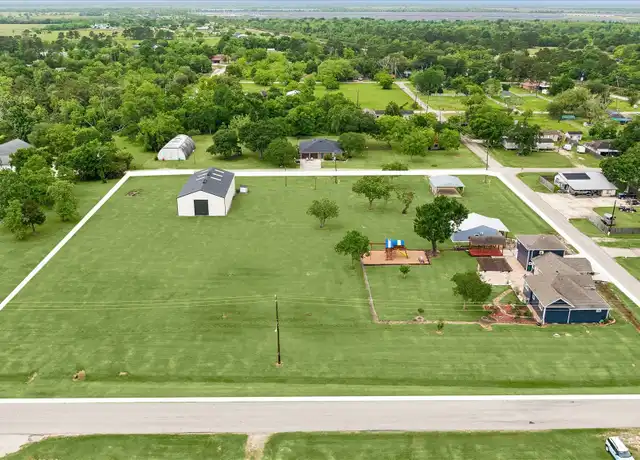
Pearland and League City are two of the fastest-growing cities in Texas, and two of the most consistently underserved markets when it comes to landscape contractors who actually understand what the ground conditions in these areas demand. Drive through any established neighborhood in Pearland or League City and the evidence is visible — retaining walls that have shifted after two or three wet seasons, sod that looks perpetually stressed despite irrigation, concrete flatwork with diagonal cracking running across driveways that were poured without adequate base preparation for the soil conditions underneath.
The reason is straightforward. Most landscape and hardscape contractors working in Houston's suburban expansion markets apply the same specifications they use everywhere else — and the soil conditions, drainage challenges, and flood zone realities of Pearland and League City are not everywhere else. They are specifically demanding in ways that require different approaches, different material specifications, and different drainage design thinking than what works on higher-ground properties in Katy, Sugar Land, or The Woodlands.
At Gulf Reserve Landscape & Pools, we work across Pearland, League City, Friendswood, and the broader Brazoria and Galveston County suburban market. Here is what landscape work in these areas actually requires — from soil science and drainage design to plant selection and hardscape specification for Gulf Coast conditions.
Understanding Pearland and League City's Soil and Topographic Conditions
Pearland and League City occupy some of the lowest-elevation developed land in the Houston metropolitan area. Much of Pearland sits between 25 and 45 feet above sea level — significantly lower than Houston's Inner Loop elevations — and League City's proximity to Clear Lake and Galveston Bay places portions of the city at or very near sea level. This topographic reality has direct consequences for every landscape decision made on properties in these areas.
The soil profile in Pearland is dominated by the Lake Charles clay series — a dark, heavy, extremely plastic clay with even higher shrink-swell characteristics than the Houston Black clay of the Inner Loop. Lake Charles clay has a plasticity index that places it among the most expansive clay soils in Texas, with volumetric change between wet and dry states that regularly exceeds 15 percent. For landscape and hardscape work in Pearland, this means the soil movement forces acting on concrete slabs, retaining walls, and hardscape edges are more severe than in most other Houston suburban markets.
The water table in Pearland is shallow across most of the city — seasonally rising to within 18 to 24 inches of the surface in many areas during wet periods. This shallow water table affects everything from plant root depth to drainage system design to the effective bearing capacity of soil beneath concrete foundations and footers. A retaining wall footer specified for typical Houston conditions may be sitting at or near the seasonal water table in Pearland — a condition that requires footer design to account for buoyancy forces and saturated soil bearing capacity rather than the dry-condition bearing capacity assumptions that standard residential construction uses.
League City's soil conditions transition from the Lake Charles clay of its northern sections toward the more varied soils of the Galveston Bay coastal plain in its southern areas. Properties in League City's older neighborhoods near Clear Lake and NASA Road 1 frequently encounter fill material of variable quality — much of the low-lying land in this area was filled to bring it above flood elevation during development periods stretching back to the 1960s and 1970s. This fill material is inconsistent in composition, compaction, and drainage characteristics, and landscape work on these properties requires assessment of what is actually in the ground rather than assumption based on general soil series descriptions.
FEMA flood zone coverage in Pearland and League City is more extensive than in Houston's higher-ground suburbs. A meaningful percentage of properties in both cities carry flood zone designations — AE, AH, and X500 zones are common across both cities — that affect what can be built, how it must be designed, and what drainage provisions are required. Landscape and hardscape work within FEMA flood zones in Harris, Brazoria, and Galveston Counties has specific regulatory considerations that contractors unfamiliar with these markets routinely overlook.
Drainage Design for Pearland and League City Properties — Where Standard Approaches Fall Short
The flat topography, shallow water table, high-clay soil, and flood zone conditions of Pearland and League City combine to create drainage challenges that exceed what standard residential landscape drainage approaches are designed to handle. Understanding where standard approaches fall short in these specific markets is the starting point for designing drainage that actually works.
Surface drainage slope on Pearland and League City properties is often marginal to nonexistent across significant portions of lots — particularly in the interior sections of master-planned developments where grading was performed to meet code minimums rather than to facilitate robust drainage. The 2 percent slope standard that provides adequate surface drainage on most residential properties becomes difficult to maintain consistently across large, flat Pearland and League City lots where even minor soil settlement creates reverse-grade conditions that pool water against foundations.
Correcting surface drainage on Pearland and League City properties frequently requires more aggressive regrading than comparable work on Houston properties at higher elevation — because there is less natural fall available to work with and every inch of grade correction toward an outlet matters more when the outlet itself is at nearly the same elevation as the property being drained. In many Pearland and League City situations, creating adequate surface drainage requires routing water to storm sewer inlets or detention pond connections rather than relying on sheet flow across adjacent lots — connections that require coordination with municipal infrastructure and sometimes permitting that residential grading on higher-ground properties doesn't require.
French drain outlet locations in Pearland and League City require specific attention because the available outlets — storm sewer connections, detention pond edges, drainage easement channels — are often at elevations that provide minimal head above the drainage pipe installation depth. A French drain outlet that provides 18 inches of vertical clearance above the water table on a typical Houston property may have 4 to 6 inches of clearance in Pearland — barely enough to function during normal conditions and insufficient during the seasonal high water table periods that occur multiple times annually in these markets.
For Pearland and League City drainage projects, sump-assisted drainage systems — where a sump collection point accepts French drain and surface water and a pump lifts it to a discharge point at adequate elevation — are often the correct solution rather than gravity-flow systems that don't have adequate fall to function reliably in these low-elevation conditions. Gravity drainage is always preferable where it is achievable, but on Pearland and League City properties where gravity drainage is marginal, pump-assisted systems provide the reliable capacity that gravity systems cannot.
Detention and retention design on larger Pearland and League City properties — particularly commercial properties and larger residential lots — may require on-site detention of storm water runoff as a condition of development or landscape improvement. Brazoria County and Galveston County drainage regulations reflect the flood-prone nature of these markets and can require storm water detention capacity that exceeds what Harris County requires for similar projects. Understanding these county-specific requirements before designing landscape and hardscape improvements prevents costly redesign and permitting complications.
Hardscape Specification for Pearland and League City's Extreme Clay Conditions
The Lake Charles clay soil of Pearland demands hardscape specifications that go beyond what is adequate on Houston's less expansive clay types. The difference between a concrete driveway that lasts 25 years and one that requires major repair within 5 years in Pearland is almost entirely in the subgrade preparation, base depth, and reinforcement specification — not in the concrete itself.
Subgrade preparation in Pearland's Lake Charles clay requires addressing soil moisture and compaction at depths that exceed standard practice in less expansive soil conditions. Lake Charles clay's plasticity means that moisture content at the time of construction determines the soil's behavior for years afterward — clay compacted at high moisture content will shrink significantly as it dries, creating voids beneath concrete that lead to slab settlement and cracking. Clay compacted at optimal moisture content provides a stable subgrade that resists the movement cycles that destroy improperly prepared flatwork.
Lime stabilization of the subgrade — incorporating agricultural lime into the top 6 to 8 inches of Lake Charles clay before base material placement — reduces the clay's plasticity index and shrink-swell behavior significantly. This technique is standard practice in Texas highway construction on expansive clay subgrades and is increasingly used in residential and commercial hardscape construction in Pearland and South Houston where Lake Charles clay conditions are most severe. The additional cost of lime stabilization is modest relative to the improvement in subgrade stability it provides on Pearland properties.
Base depth for Pearland concrete work should be increased above the Houston standard recommendations to account for the more severe soil movement the Lake Charles clay produces. Where a 6-inch crushed limestone base is adequate for most Houston driveways, an 8 to 10 inch base on Pearland properties on native Lake Charles clay provides the additional bearing depth and drainage buffer that the more expansive subgrade conditions require.
Rebar specification for Pearland flatwork follows the same principle of upward adjustment from Houston standards. No. 4 rebar at 16 inches on center in both directions — tighter than the 18-inch spacing adequate for most Houston applications — provides the additional crack resistance that Pearland's clay movement forces demand. For Pearland driveways in areas with known problematic soil conditions or near mature trees with aggressive surface root systems, thickened slab sections at 5 inches rather than the standard 4-inch residential thickness add meaningful resistance to the flexural loading that clay movement creates.
Sod and Lawn Establishment in Pearland and League City
The combination of Lake Charles clay, shallow water table, and flood zone conditions in Pearland and League City creates specific challenges for lawn establishment that differ from the Houston general market conditions covered in earlier blogs.
Soil amendment before sod installation is non-negotiable in Pearland and League City in a way that is even more absolute than in Houston's general market. Lake Charles clay's combination of high alkalinity — pH readings of 7.8 to 8.4 are common on Pearland properties — poor drainage, and shrink-swell behavior makes it one of the most hostile environments for warm-season grass root establishment available in the Houston market. Incorporating a minimum of 4 inches of quality compost into the top 6 inches of Lake Charles clay before sod installation, combined with elemental sulfur for pH correction, gives new sod a fighting chance at establishing a root system deep enough to survive Pearland's dry summers and wet winters.
Sod variety selection for Pearland and League City should prioritize flood tolerance alongside the heat and humidity tolerance that governs Houston general market sod selection. Among the standard Houston sod options, Palmetto St. Augustine demonstrates the best combination of shade tolerance, flooding recovery, and alkaline soil adaptation for Pearland and League City's conditions. Zoysia's slower establishment rate is a disadvantage in Pearland's conditions — the first growing season often includes flood events that stress newly installed sod before it has developed the root depth that makes established Zoysia resilient.
Drainage grading before sod installation on Pearland and League City properties requires establishing positive grade across the entire lawn area before a single roll of sod goes down. New sod installed over a Pearland lot with reverse grade or significant low spots will experience the standing water conditions that suffocate grass root systems in Lake Charles clay within the first few rain events after installation. The investment in thorough drainage grading before sod installation is repaid many times over in establishment success and long-term lawn performance.
Plant Selection for Pearland and League City's Gulf Coast Conditions
The Gulf Coast proximity of Pearland and League City introduces plant selection considerations beyond what the general Houston plant palette addresses — specifically, increased salt air influence, higher humidity, and the need for plants that tolerate periodic complete inundation in flood zone areas.
Salt tolerance becomes a meaningful plant selection criterion on League City properties closest to Galveston Bay and on Pearland properties in the southern sections of the city closest to the Gulf Coast plain. While neither city is in a true coastal salt spray environment, the salt air influence at these distances from the Gulf affects the longevity of sensitive plant species in ways that become apparent over a 5 to 10 year landscape lifecycle. Live oak, yaupon holly, and Gulf muhly grass — all natives of the Gulf Coast region — demonstrate excellent salt air tolerance that makes them reliable choices in Pearland and League City's coastal-influenced environment.
Flood tolerance is the plant selection criterion that most distinguishes Pearland and League City planting design from the broader Houston market. Properties in AE and AH flood zones in these cities experience periodic complete inundation — not just soil saturation but standing water above grade for periods ranging from hours to days depending on event severity and drainage system response. Plant material in these areas needs to survive these inundation events and recover rather than dying outright.
Bald cypress is the most important tree recommendation for Pearland and League City properties in flood-prone areas. It is native to the Gulf Coast bayou system, tolerates complete inundation for extended periods, and develops a root system adapted to the saturated, anaerobic soil conditions that kill most other trees. Louisiana iris, swamp milkweed, and native sedges perform similarly well in the wet zones of Pearland and League City properties and provide ornamental value in the landscape areas where most conventional plants would fail.
Wind resistance for Pearland and League City properties deserves attention given the cities' exposure to Gulf Coast tropical storm tracks. Plant species with brittle wood — Bradford pear, silver maple, and Chinese tallow — that would be marginal choices anywhere in the Houston metro become genuinely poor choices in Pearland and League City's more exposed Gulf Coast position. Native species with flexible wood structure and deep root systems — live oak, cedar elm, yaupon holly — provide the wind resistance profile that Gulf Coast proximity demands.
What Pearland and League City Homeowners Should Ask Any Landscape Contractor
The gap between landscape contractors who understand Pearland and League City's specific conditions and those applying generic Houston market practices is wide and consequential. Here are the questions that reveal which category a contractor falls into.
Ask specifically what soil series they expect to encounter on your property and how that affects their base preparation specification. A contractor who gives a Houston-generic answer without acknowledging the Lake Charles clay conditions in Pearland is working from a template rather than site knowledge.
Ask how they handle shallow water table conditions in footer and drainage design. Contractors familiar with Pearland and League City conditions factor water table depth into footer specifications and drainage outlet design. Those who don't know the water table is shallow cannot account for it.
Ask what their approach is for flood zone properties and whether they are familiar with Brazoria County and Galveston County drainage requirements. Landscape and hardscape work in FEMA flood zones in these counties has regulatory dimensions that not all Houston market contractors are familiar with.
Ask for references from completed projects specifically in Pearland or League City. Performance on a project in Memorial or Katy does not necessarily translate to competent execution in Pearland's significantly more demanding soil and drainage environment.

If you are planning a landscape, drainage, sod, or hardscape project in Pearland or League City, we would like to walk your property and give you an honest assessment built around what your specific site conditions actually demand.
Request your free estimate at gulfreservelandscaping.com — and let's build something that holds up in Pearland and League City's demanding Gulf Coast conditions.


