



Irrigation Systems for Houston Commercial Properties — What Proper Design, Installation, and Management Actually Look Like
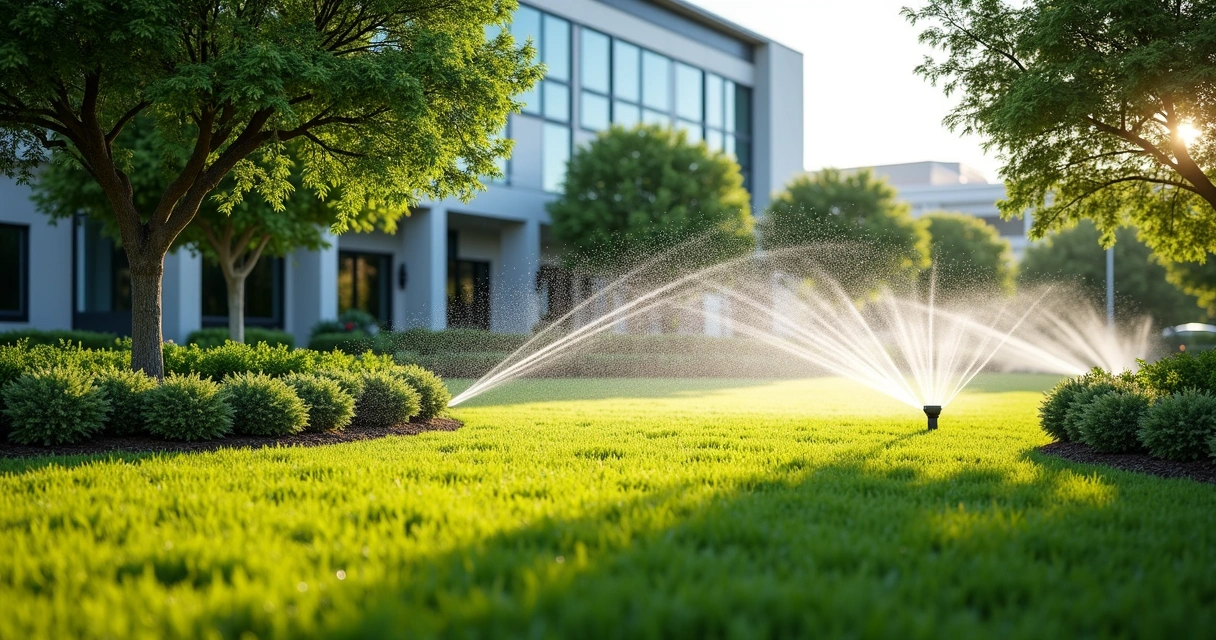
Is the irrigation system on your Houston commercial property actually protecting the landscape investment it was installed to serve — or is it running on a schedule set at installation, delivering inconsistent coverage across zones that were designed for efficiency rather than performance, and generating water bills that reflect summer demand year-round regardless of what Houston's actual weather conditions require? Commercial irrigation on Houston properties is one of the highest-value landscape infrastructure investments a property manager or owner can make — and one of the most consistently underspecified, under-maintained, and underperforming systems in the Houston commercial landscape market.
The gap between a Houston commercial irrigation system that protects and supports the landscape it serves and one that simply runs water through pipes on a timer is visible in the landscape quality difference between Houston commercial properties where irrigation is managed as a performance system and those where it is managed as a utility — something that runs in the background until it breaks. A properly designed, correctly installed, and actively managed Houston commercial irrigation system delivers consistent turf quality, healthy ornamental plantings, reduced water costs, and the documentation that supports asset management decisions. An underperforming system delivers the patchy turf, declining plantings, and unexplained water bills that undermine the commercial property's market positioning regardless of how good the rest of the maintenance program is.
At Gulf Reserve Landscape & Pools, commercial irrigation system design, installation, and management is a core component of our irrigation systems and commercial maintenance contract services across Houston's office, retail, multifamily, and medical campus market. Here is what commercial irrigation done correctly for Houston's conditions actually looks like.
Why Houston Commercial Irrigation Demands More Than Residential Specifications
Houston commercial irrigation systems face operating demands that residential systems do not — and the specifications that produce adequate residential irrigation performance are insufficient for commercial applications where the consequences of underperformance affect a much larger area and a much more visible asset.
Scale and zone count on Houston commercial properties require irrigation system designs that manage the complexity of multiple turf types, multiple ornamental bed areas, and multiple microenvironments across properties that may span acres rather than the fractions of an acre that residential systems serve. A Houston commercial property with 50,000 square feet of mixed turf and ornamental areas — not unusual for a mid-size Houston office park or retail center — requires 20 to 40 irrigation zones to achieve the zone separation that appropriate water delivery demands. The design complexity of a 40-zone commercial system is fundamentally different from a 12-zone residential system — requiring hydraulic calculations, pressure zone design, and controller programming sophistication that residential irrigation design does not demand.
Runtime hours and component wear on Houston commercial irrigation systems exceed residential systems by a factor of 3 to 5 — the higher runtime that larger irrigated areas require produces proportionally faster wear on every moving component in the system. Commercial irrigation heads, valve diaphragms, and backflow preventer internals designed for residential runtime hours reach their maintenance thresholds significantly faster on Houston commercial systems — requiring the more frequent inspection and component replacement that commercial irrigation maintenance programs need to address.
Water cost management is a financial performance dimension of Houston commercial irrigation that residential systems do not face at the same scale. A Houston commercial property with 40 irrigation zones running on a poorly calibrated schedule can generate water bills that exceed correctly managed operation by 30 to 50 percent annually — a cost difference that on a large Houston commercial property may represent tens of thousands of dollars per year in unnecessary water expense. Commercial irrigation management that actively optimizes scheduling against Houston's actual evapotranspiration conditions produces the water cost reduction that makes the investment in professional system management financially justifiable on any meaningful Houston commercial property.
Commercial Irrigation System Design for Houston Properties
Proper commercial irrigation system design for Houston properties addresses every component that determines long-term system performance — hydraulic design, zone layout, head selection, controller specification, and the backflow prevention and metering requirements that Houston commercial properties are subject to.
Hydraulic design for Houston commercial irrigation systems calculates the water demand of every zone, the pressure available at the point of connection, the friction losses through the mainline and lateral pipe runs, and the pressure requirements of the specific heads and emitters specified for each zone — confirming that the system delivers adequate pressure and flow to every head in every zone simultaneously. Hydraulic design failures on Houston commercial irrigation systems — undersized mainlines that cannot deliver adequate flow to multiple zones operating simultaneously, pressure losses that reduce head throw distance and coverage uniformity — produce the systematic coverage failures that look like head performance problems but are actually system design problems that head replacement cannot solve.
Zone layout by water demand and microenvironment on Houston commercial properties follows the same principles as residential zone design but at commercial scale and with the additional complexity that large commercial properties present. Full-sun turf areas on south and west-facing exposures of Houston commercial buildings have significantly higher water demand than shaded north-facing turf areas on the same property — combining them on the same zone produces the systematic over or underwatering that compromises turf quality in one area regardless of the schedule applied. Separate zones for full-sun turf, shaded turf, ornamental beds, trees, and any areas with significantly different soil conditions or drainage characteristics allow each area to receive the water it needs rather than the compromise schedule that mixed zones require.
Head selection for Houston commercial applications follows the same clay soil infiltration rate principles established in Blog 06 — rotary heads for commercial turf areas where the lower precipitation rate matches Houston clay's slow infiltration better than standard spray heads, and drip emitters for commercial ornamental bed areas where direct root zone delivery eliminates the foliar wetness that Houston's humidity makes consequential for disease risk in commercial planting beds. Commercial-grade rotary heads — Hunter MP Rotator, Rain Bird R-VAN, and similar products — provide the precipitation rate, distribution uniformity, and durability that commercial Houston irrigation applications require from heads that will operate at significantly higher annual runtime hours than residential equipment.
Smart controller specification for Houston commercial irrigation systems is the component that most directly determines the system's ability to respond to Houston's highly variable climate rather than running on fixed schedules through conditions that demand flexibility. Commercial ET-based controllers — Hunter ACC with ET System, Rain Bird ESP-LXD with weather station integration, and similar commercial-grade smart controller platforms — provide the zone-level scheduling intelligence, ET-based run time adjustment, rain delay functionality, and the reporting and documentation capabilities that commercial property irrigation management requires. These platforms also provide remote access and monitoring — allowing Gulf Reserve's irrigation team to adjust Houston commercial irrigation schedules in response to weather conditions without requiring a site visit for every seasonal adjustment.
Water metering and sub-metering on Houston commercial irrigation systems provides the consumption data that supports water cost management, leak detection, and the documentation that asset management and sustainability reporting programs require. Dedicated irrigation meters — separate from the domestic water meter serving the building — provide irrigation-specific consumption data that allows irrigation water cost to be tracked independently from building domestic water use. Flow sensors on individual irrigation zones provide the real-time flow data that identifies stuck-open valves, broken heads, and mainline leaks before they generate the significant water bills and landscape damage that undetected failures produce on Houston commercial properties.
Installation Standards for Houston Commercial Irrigation
Commercial irrigation installation on Houston properties requires the construction quality, material specifications, and documentation standards that differentiate systems designed for 20-plus year service lives from those that underperform and require premature replacement.
Mainline pipe specification for Houston commercial irrigation uses Schedule 40 PVC in sizes appropriate for the hydraulic design — typically 2-inch to 3-inch mainline on mid-size Houston commercial properties, increasing to 4-inch on larger properties with higher flow demands. Class 200 PVC lateral pipe in 1-inch to 1.5-inch sizes provides the pressure rating and wall thickness appropriate for commercial lateral applications. Poly pipe — appropriate for some residential applications — does not provide the pressure rating and installation durability that Houston commercial irrigation mainline applications require.
Valve installation standards for Houston commercial irrigation include commercial-grade solenoid valves in appropriate flow capacity ratings for each zone's demand, installed in valve boxes with adequate access for maintenance, at depths that protect the valve body from Houston's occasional freeze events while remaining accessible for service. Valve boxes on Houston commercial properties are installed at consistent depths and locations that are documented in the as-built drawings provided at system completion — allowing maintenance technicians to locate valves without excavating to find them years after installation.
As-built documentation at Houston commercial irrigation system completion — complete drawings showing every zone valve location, mainline routing, head position, and controller programming — is the standard deliverable that commercial system installation requires and that protects the property owner's investment over the system's service life. Houston commercial irrigation systems without as-built documentation are systems where the institutional knowledge of how the system is configured exists only in the memory of the installing contractor — a vulnerability that produces significant service complications when that contractor is no longer involved with the property.
Commercial Irrigation Management for Houston Properties
The performance of a Houston commercial irrigation system over its service life is determined as much by how it is managed as by how it was designed and installed. Commercial irrigation management — the ongoing assessment, adjustment, and maintenance program that keeps the system delivering what the landscape requires — is the component that most Houston commercial property managers either under-resource or delegate to general maintenance contractors without the irrigation-specific expertise that commercial systems require.
Seasonal programming management for Houston commercial irrigation adjusts zone run times and schedules in response to Houston's changing evapotranspiration conditions throughout the year — the seasonal calibration program covered in detail in Blog 35. Houston commercial properties where irrigation scheduling is actively managed against actual ET conditions consistently use 25 to 40 percent less water than properties running on fixed annual schedules — a water cost reduction that on large Houston commercial properties represents meaningful annual savings.
Monthly zone performance assessment — running every zone and observing head operation, coverage uniformity, and any performance changes since the previous assessment — is the monitoring frequency that catches developing problems before they produce visible landscape damage. Houston commercial irrigation heads that are beginning to clog, valves showing early signs of diaphragm wear, and coverage gaps developing from head settlement are identifiable and correctable during monthly assessment at a fraction of the cost they represent after the problems have been present long enough to damage the landscape they were supposed to protect.
Annual system audit — comprehensive zone-by-zone assessment including hydraulic performance testing, controller program review, backflow preventer inspection and testing, and system documentation update — provides the annual baseline that supports maintenance planning, capital improvement budgeting, and the asset management documentation that Houston commercial property owners and investors require for properties under active management.
Water Efficiency and Sustainability for Houston Commercial Irrigation
Water efficiency in Houston commercial irrigation is both a cost management objective — reducing the water expense that inefficient irrigation generates — and an increasingly relevant sustainability credential for Houston commercial properties where tenant expectations and investor reporting requirements include environmental performance metrics.
WaterSense certification for Houston commercial irrigation systems — using EPA WaterSense labeled controllers, heads, and system components — provides the product quality documentation that supports water efficiency claims and that qualifies for the rebate programs that some Houston area utilities offer for efficient irrigation equipment installation. WaterSense labeled controllers are required for projects seeking certain green building certifications — a relevant consideration for Houston commercial properties pursuing LEED or similar sustainability credentials.
Reclaimed water compatibility on Houston commercial irrigation systems — designing the system for potential future connection to reclaimed water supply where Houston's expanding reclaimed water distribution infrastructure makes this connection available — is a forward-looking specification that positions the system for water cost reduction as reclaimed water becomes available in the Houston commercial property's service area. Reclaimed water systems in Houston require specific backflow prevention and system identification — purple pipe and signage — that differs from potable water irrigation system requirements.

Wondering whether your Houston commercial property's irrigation system is performing at the level your landscape investment requires? Gulf Reserve Landscape & Pools assesses Houston commercial irrigation systems personally — evaluating zone performance, controller programming, coverage uniformity, and water efficiency against Houston's specific climate requirements before recommending any changes.
Get your free estimate at gulfreservelandscaping.com


