




How Houston Homeowners Should Prep Their Landscape Before Hurricane Season
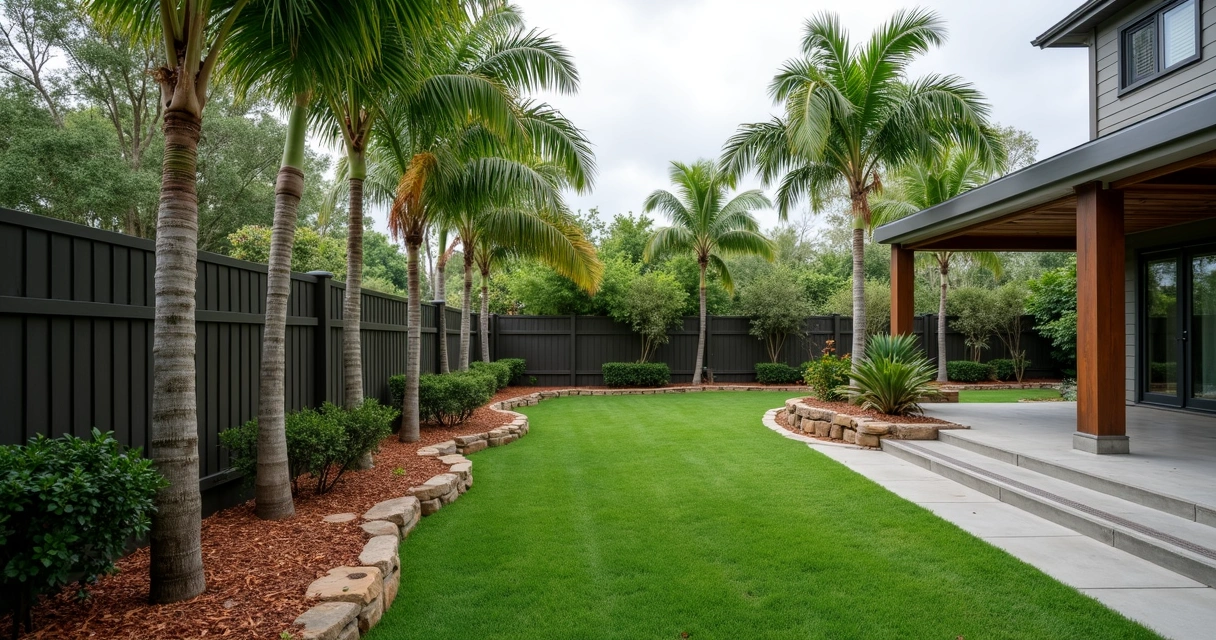
Every year on June 1, Houston enters hurricane season. And every year, a significant number of Houston homeowners reach that date with landscapes that are not prepared for what the Gulf Coast's storm season can deliver — trees that haven't been properly trimmed, drainage systems that haven't been cleared, hardscape elements that become projectiles in high winds, and irrigation systems that will sit underwater through a multi-day flood event without protection.
Hurricane season preparation for a Houston landscape is not about expecting the worst every year. Most Houston seasons pass without a direct hit. It is about managing the risks that are real and specific to Houston's Gulf Coast location — and doing the preparation work that protects your property, your neighbors, and your investment when a significant storm event does arrive.
Houston's storm history is not abstract. Harvey in 2017 delivered 60-plus inches of rainfall over four days, flooding tens of thousands of properties and causing landscape damage that took years to remediate. Ike in 2008 brought 110-mile-per-hour wind gusts that toppled thousands of mature trees across the metro. Alicia in 1983 reshaped the urban forest across Houston's Inner Loop neighborhoods in ways that are still visible in the canopy gaps that persist today. These events are not anomalies in Houston's climate history — they are the recurring reality of building and maintaining a landscape on the Gulf Coast.
At Gulf Reserve Landscape & Pools, the period from late April through May is when we conduct pre-hurricane season assessments across Houston properties. Here is a complete picture of what Houston landscape hurricane preparation actually involves.
Tree Assessment and Trimming — The Highest Priority Hurricane Prep Task in Houston
Trees are responsible for the majority of landscape-related property damage in Houston hurricane and tropical storm events. A mature live oak or pecan tree that fails in 80-mile-per-hour winds does not fall cleanly — it takes fences, power lines, outbuildings, vehicles, and in the worst cases, structural components of homes with it. The damage a single large tree failure causes can exceed the entire cost of a comprehensive landscape hurricane preparation program many times over.
Pre-hurricane season tree assessment in Houston involves evaluating every significant tree on the property for structural integrity, deadwood accumulation, co-dominant stem issues, root zone conditions, and proximity to structures and power lines. This assessment is not something Houston homeowners can reliably perform themselves — the indicators of structural failure risk in large trees require trained eyes to identify correctly.
Deadwood removal is the most straightforward hurricane prep tree task in Houston. Dead branches — which can be identified by absent foliage during the growing season, lack of bark, or brittle texture — have no structural integrity and fail at wind speeds far below what living wood can withstand. In Houston's urban forest, where live oaks, pecans, and cedar elms develop large canopies over decades, accumulated deadwood can represent significant projectile risk during storm events. Removing deadwood before hurricane season eliminates the lowest-threshold failure points in the tree canopy.
Crown thinning of large Houston canopy trees reduces wind resistance by creating gaps that allow wind to pass through the canopy rather than pushing against it as a solid surface. A dense, unpruned live oak canopy acts as a sail in high winds — the full leaf surface area translates wind force directly to the root system and trunk. A properly thinned canopy reduces that wind load significantly, which is one of the primary reasons well-maintained Houston trees survive storm events that topple neglected trees of similar size.
Crown thinning needs to be done correctly to provide the structural benefit it is intended to deliver. Removing large interior scaffold branches — the common result of poorly supervised Houston tree trimming — creates large wounds that expose the tree to decay and does not reduce wind load effectively. Proper Houston pre-hurricane crown thinning removes smaller secondary and tertiary branches distributed throughout the canopy, maintaining structural scaffold integrity while meaningfully reducing the canopy's wind resistance profile.
Co-dominant stem assessment is one of the most important and least understood tree risk factors on Houston properties. Co-dominant stems — two or more main trunks of roughly equal diameter arising from the same point — develop a bark inclusion at their junction over time as the stems grow against each other rather than together. This bark inclusion creates a structural weakness that fails under the load and vibration of high winds. In Houston's storm events, co-dominant stem failure is one of the most common modes of large tree loss. Identifying co-dominant stems on significant Houston trees before hurricane season and either cabling them for structural support or removing the more hazardous stem is one of the highest-value pre-hurricane tree interventions available.
Root zone assessment evaluates whether the root systems of large Houston trees have been compromised by construction activity, grade changes, soil compaction, or the chronic saturation that Houston's poorly draining clay creates. A large tree with a compromised root system is significantly more likely to uproot in saturated soil during a Houston storm event than the same tree with a healthy, intact root zone. Signs of root zone compromise include fungal conks at the base of the tree, soil heaving on one side of the root zone, and lean that has developed over recent years rather than being a consistent historical characteristic of the tree.
Live oak pruning timing in Houston requires specific attention during hurricane preparation season. The Texas oak wilt transmission risk window — generally February through June — overlaps with pre-hurricane season preparation timing. For Houston properties, the risk is lower than in Central Texas but not zero, and fresh pruning wounds during sap flow do attract the nitidulid beetles that can vector oak wilt. Completing live oak pruning work in Houston before late April, or deferring it until after June when transmission risk drops, is the appropriate approach for Houston pre-hurricane season preparation.
Drainage System Clearing and Inspection Before Storm Season
Houston's primary landscape hurricane risk is not always wind — for many properties, it is water. Harvey demonstrated conclusively that Houston's flat topography, clay soil, and limited drainage infrastructure can produce catastrophic flooding from rainfall events that have nothing to do with wind speed. A landscape drainage system that is partially blocked or operating at reduced capacity before hurricane season is a landscape drainage system that will fail during a significant Houston storm event.
French drain and outlet inspection in May confirms that all underground drainage pipe outlets are clear of debris, vegetation overgrowth, and sediment accumulation. French drain outlets that were installed at grade level in Houston's landscape — the most common outlet configuration — frequently accumulate grass growth, leaf debris, and sediment that reduces outlet flow capacity. A partially blocked outlet on a Houston French drain reduces the system's capacity to handle the flow rates generated by intense Houston storm rainfall and can cause the drainage system to back up rather than relieve hydrostatic pressure during the events where it is most needed.
Channel drain and area drain grate clearing is simple maintenance that Houston homeowners frequently defer until a storm makes its absence obvious. Channel drain grates accumulate oak leaf debris, grass clippings, and wind-driven material through the growing season. Before hurricane season, every channel drain and area drain on the property should be cleared, the drain body inspected for sediment accumulation, and the outlet pipe confirmed to be clear and functional.
Downspout and gutter inspection before Houston's storm season is the drainage maintenance task with the highest consequence-to-effort ratio available to Houston homeowners. Gutters blocked with oak leaf debris — a near-universal condition on Houston Inner Loop properties by late spring — redirect roof runoff over the gutter edge rather than through the downspout, concentrating enormous volumes of storm water against the foundation and adjacent landscape rather than routing it to a controlled discharge point. Cleaning gutters and confirming downspout discharge is clear and flowing freely before June 1 is basic storm preparation that protects both the landscape and the structure.
Sump pump testing on Houston properties with basement areas or below-grade spaces confirms that the primary flood protection system is functional before the season when it will be tested. A sump pump that has not been run since the previous season may have a failed float switch, seized pump motor, or blocked discharge line — all of which are discovered at the worst possible time if not tested before storm season.
Securing Hardscape Elements and Outdoor Furnishings
Houston hurricane winds generate projectile risk from any landscape element that is not permanently anchored. The planning mindset for Houston storm preparation should treat every non-structural element of the outdoor space as a potential projectile and develop a plan for each.
Potted plants and container gardens are the most overlooked projectile risk on Houston properties during storm events. A large ceramic pot — which can weigh 40 to 60 pounds when planted — becomes a dangerous projectile in 80-mile-per-hour winds. Before a significant Houston storm, all potted plants should be moved inside the garage or a sheltered interior location. For Houston homeowners with extensive container gardens, developing a pre-storm container securing plan before hurricane season makes the execution faster when a storm approach is confirmed.
Outdoor furniture on Houston patios and pool decks needs to either be moved inside or secured with tie-down straps before tropical storm-force winds arrive. Lightweight aluminum furniture — the most common material for Houston outdoor spaces given the climate — becomes airborne in surprisingly moderate wind speeds. Umbrella bases, fire pit components, outdoor cushions, and decorative elements all require securing. Houston homeowners who develop and practice a pre-storm furniture securing routine before season opener execute it far faster and more completely when a storm track is confirmed with limited lead time.
Pergola and shade structure assessment evaluates whether these permanent outdoor structures are adequately anchored for Houston storm wind loads. Pergolas attached to the house with inadequate fasteners, freestanding pergolas with posts set in surface-mounted post bases rather than concrete footers, and shade sail systems with insufficient anchor point ratings are all structural vulnerabilities in Houston's storm environment. Identifying and correcting these before hurricane season is significantly preferable to discovering them during post-storm damage assessment.
Loose decorative stone and gravel in Houston landscape beds becomes projectile material in high winds. River rock, decorative boulders placed without being set in mortar or partially buried, and loose aggregate pathway material all move during significant Houston storm events. For Houston properties with extensive decorative stone, assessing what is secured and what is loose before hurricane season allows targeted remediation of the highest-risk elements.
Irrigation System Hurricane Preparation
Houston irrigation systems require specific preparation before significant storm events and for the duration of hurricane season as a general operating posture.
Controller rain delay activation should be confirmed as functional before June 1. Houston's smart irrigation controllers with rain delay capability should have this feature tested — run a manual zone cycle and then activate the rain delay to confirm the system responds correctly. A rain delay that isn't functioning means the irrigation system will continue running through and after Houston storm rainfall events, adding water to already-saturated Houston clay that is struggling to drain post-storm.
Backflow preventer flood vulnerability is a specific concern on Houston properties in flood-prone areas. Backflow preventers installed at or near grade level — the most common installation configuration — can be submerged during significant Houston flood events. A submerged backflow preventer that fails allows flood water to enter the potable water supply through the irrigation connection. Confirming that backflow preventers are either installed above the flood elevation of the property or have appropriate flood-rated protection is appropriate pre-season preparation for Houston properties in FEMA flood zones.
Zone valve inspection before hurricane season confirms that all irrigation zone valves are functioning correctly — specifically that all zones close fully when commanded. A zone valve that sticks open after a post-storm irrigation cycle runs adds water to a Houston landscape that may already be dealing with drainage stress from storm rainfall. Identifying sticky or malfunctioning valves before season is straightforward maintenance that prevents post-storm irrigation complications.
Post-Storm Landscape Assessment and Recovery
Understanding what to assess and prioritize immediately after a Houston storm event reduces secondary damage and accelerates landscape recovery.
Immediate post-storm tree assessment focuses on identifying hazardous conditions before they cause secondary damage. Trees that are leaning more than before the storm, trees with large limbs hanging in the canopy — what arborists call widow makers — and trees with significant root zone disturbance should be assessed by a qualified arborist before anyone spends time working beneath them. Post-storm adrenaline frequently drives Houston homeowners to begin cleanup operations under trees that are structurally compromised, which is the highest-risk position to be in post-storm.
Flooded landscape recovery in Houston requires patience that is genuinely difficult to exercise when the landscape looks devastated. Warm-season grasses — St. Augustine, Bermuda, and Zoysia — can survive 3 to 5 days of complete submersion if water temperatures remain below 95 degrees Fahrenheit. Houston flood water in summer is warm, which does reduce submersion tolerance, but most Houston lawns that drain within 48 to 72 hours of a storm event recover with appropriate post-flood care rather than requiring complete replacement. Allowing the lawn to dry sufficiently before mowing — Houston's clay holds moisture at the surface long after the standing water has receded — prevents soil compaction damage from mowing equipment on saturated ground.
Drainage system post-storm inspection identifies any components that were overwhelmed, blocked, or displaced during the storm event. French drain outlets that were submerged may have admitted sediment that reduces pipe capacity. Channel drain grates may have been displaced by debris flow. Downspout extensions may have been shifted or disconnected. A systematic post-storm inspection of all drainage components before the next significant rain event identifies and corrects performance issues before they compound.
Hardscape inspection after Houston storm events identifies concrete cracking, paver displacement, retaining wall movement, and edging disturbance that resulted from either wind loading, flood water movement, or the soil saturation and clay expansion that accompanies Houston's major rainfall events. Documenting damage before beginning cleanup is important for insurance purposes and for understanding whether observed damage is storm-caused or pre-existing.
Houston-Specific Storm Preparation Timeline
The pre-hurricane season preparation calendar for Houston landscapes runs from late April through May 31 to be completed before the June 1 season opener.
Late April is the time to complete any live oak pruning that needs to happen before the oak wilt transmission risk window fully closes, assess all significant trees on the property for structural issues that need professional arborist attention, and begin the process of scheduling tree work given that Houston arborists are heavily booked through spring.
May is the primary execution month for Houston hurricane landscape preparation. Tree trimming, deadwood removal, and structural cabling should be completed. Drainage system inspection and clearing — gutters, downspouts, French drain outlets, channel drains, and area drains — should be completed across the full property. Outdoor structure anchor point assessment and any needed corrections should be completed. Irrigation system rain delay testing and controller inspection should be completed.
By May 31, Houston homeowners should have a completed storm preparation checklist, a practiced pre-storm furniture securing plan, a confirmed drainage system, and professionally assessed trees. What happens on June 1 and through November 30 is outside anyone's control. What happens to the landscape when it does is significantly influenced by the preparation that happened before it arrived.

If you want a professional assessment of your Houston property's storm preparedness before the season begins, we are ready to schedule it.
Request your free estimate at gulfreservelandscaping.com — and let's make sure your Houston landscape is ready for whatever the Gulf throws at it.


