




Houston's Clay Soil Is Destroying Concrete — Here's How to Pour a Slab That Actually Lasts
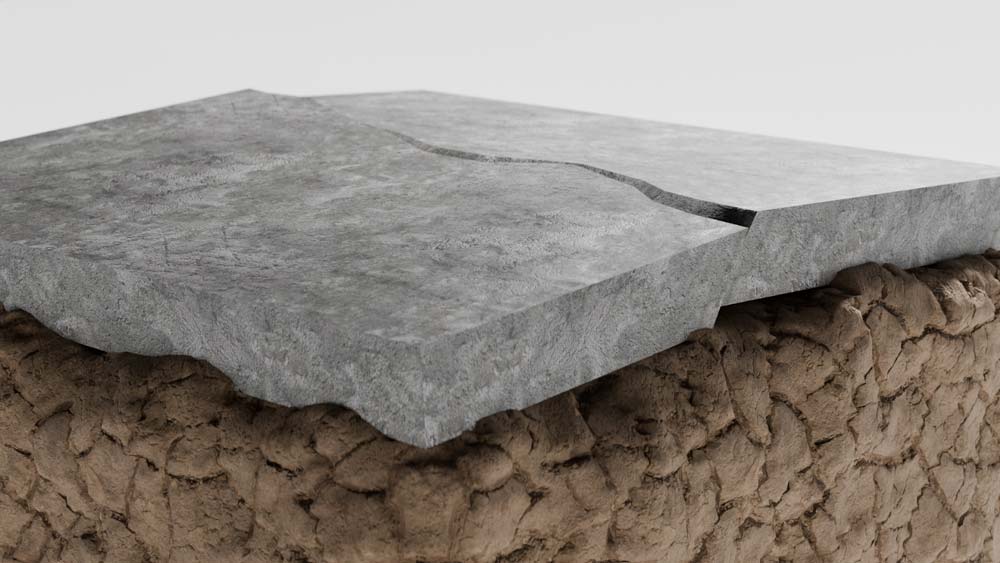
You've seen it everywhere in Houston. A driveway that was perfectly smooth five years ago now has a crack running diagonally across the middle. A backyard patio that's slowly lifting on one side. A sidewalk panel that's heaved up an inch above its neighbor. This isn't bad luck and it isn't cheap materials. In nearly every case, it's Houston's clay soil doing exactly what it was always going to do — and a slab that wasn't built to handle it.
At Gulf Reserve Landscape & Pools, concrete work is one of our most requested services across Houston. And the most common conversation we have with homeowners is the same one: why did the last pour fail, and what's different this time? The answer almost always comes back to soil preparation, drainage design, and base construction — the work that happens before a single yard of concrete is poured.
Here's a ground-level look at what Houston's clay soil actually does to concrete, and what proper concrete work in Houston looks like when it's done right.
Why Houston Clay Destroys Concrete — The Science Behind the Cracks
Houston's native soil is dominated by expansive clay — specifically a high-shrink-swell clay that absorbs water and expands significantly when wet, then contracts and cracks when it dries out. Engineers call this the shrink-swell cycle, and in Houston's climate — where the ground can swing between flood-saturated and bone dry within the same season — the cycle is aggressive.
When clay beneath a concrete slab expands, it pushes the slab upward. When it contracts, it pulls away, leaving voids under the slab. Concrete that was resting on solid ground is suddenly spanning an unsupported gap. Load-bearing foot traffic, vehicle weight, or simply the slab's own mass causes it to flex and crack. This process repeats every wet and dry cycle — which in Houston means it happens multiple times a year.
The problem is compounded in Houston's Inner Loop neighborhoods and established suburbs, where large live oaks and other tree species send roots under slabs in search of moisture. Root intrusion combined with clay movement is one of the most destructive combinations a concrete slab can face.
In newer developments across Katy, Pearland, and Sugar Land, a different but related problem occurs. Builders strip native topsoil during construction and backfill with material that is poorly compacted. Concrete poured over inadequately compacted fill settles unevenly as the fill material consolidates over time — sometimes years after the home is built. This is why so many Houston homeowners in newer suburbs see driveway and patio problems within the first five to seven years of ownership.
The Right Base Preparation for Houston Concrete — What Actually Matters
Getting concrete right in Houston starts well below the surface. Here is what proper base preparation looks like for Houston's specific ground conditions.
Subgrade evaluation and grading come before anything else. The existing soil needs to be assessed for moisture content, compaction level, and any areas of poor bearing capacity. In Houston, this almost always reveals zones of soft or loosely compacted clay that need to be addressed before base material goes down. Low spots that collect water need to be graded to redirect drainage away from the slab area — water pooling under or around a Houston slab accelerates clay movement dramatically.
Compaction to Houston standards means achieving a minimum of 95 percent Standard Proctor density on the subgrade before base material is placed. Many residential concrete jobs in Houston skip this step entirely or perform only surface compaction. Inadequate subgrade compaction is one of the primary reasons slabs settle unevenly within a few years of installation.
Base material depth matters more in Houston than most markets. A standard 4-inch gravel base is marginal for Houston's clay conditions. For driveways and patio slabs on Houston clay, a properly compacted crushed limestone base of 6 inches minimum — and 8 inches for driveways that carry vehicle loads — is the standard that holds up. Crushed limestone compacts tightly, drains well, and resists the lateral movement that Houston's clay generates during wet cycles.
Moisture barriers placed between the compacted base and the concrete slab help buffer the slab from ground moisture fluctuations — a significant factor in Houston given the region's humidity and frequent rain events. A 10-mil polyethylene vapor barrier is standard for Houston residential concrete work.
Rebar and Wire Mesh — What Houston Slabs Actually Need
One of the most common shortcuts in Houston concrete work is using wire mesh instead of rebar — or skipping reinforcement planning entirely and letting whoever pours the slab make the call on site. In most Houston applications this is inadequate.
Wire mesh provides minimal tensile reinforcement and frequently ends up sitting on the ground rather than centered in the slab thickness, rendering it nearly useless. For Houston residential driveways and patios, deformed steel rebar at No. 3 (3/8 inch) or No. 4 (1/2 inch) diameter, placed on chairs to maintain a centered position in the slab, provides genuine crack resistance when clay movement occurs.
Rebar spacing for Houston driveways should be 18 inches on center in both directions. For patios and walkways with lighter loads, 24 inches on center is acceptable. For any Houston concrete slab near large trees — where root pressure and clay heaving will be more intense — tighter spacing and thicker slab sections add meaningful protection.
Control joints — the intentional saw cuts or tooled grooves you see in concrete — need to be placed correctly for Houston conditions as well. Control joints give the concrete a predetermined place to crack, containing movement to inconspicuous lines rather than random fractures across the slab face. In Houston, control joints should be placed at intervals no greater than 10 feet in either direction for standard residential slabs, and closer for slabs in high-clay or high-tree-root zones.
Concrete Mix Design for Houston's Climate
Houston's heat and humidity affect concrete curing in ways that matter for long-term slab performance. Concrete placed in Houston's summer months — where ambient temperatures regularly exceed 95 degrees Fahrenheit and heat index values push well past 100 — can lose surface moisture so rapidly that the top layer cures before the interior, creating surface scaling and a weakened slab face.
For Houston summer pours, a water-to-cement ratio of 0.45 or lower produces a denser, more durable slab. Curing compounds applied immediately after finishing help retain surface moisture during the critical first 7 days. Some Houston contractors add a mid-range water reducer to the mix to improve workability without adding water — which would weaken the finished slab.
Concrete strength for Houston residential applications should be specified at a minimum of 3,000 PSI, with 3,500 to 4,000 PSI being a better target for driveways and areas subject to heavy vehicle loads. Higher strength mixes are denser, less permeable, and more resistant to the surface deterioration that Houston's wet-dry cycles accelerate over time.
Drainage Design Around Houston Concrete — The Step Most Contractors Skip
Even a perfectly poured Houston slab will eventually fail if water is allowed to pool against it, run under it, or saturate the clay below it repeatedly. Drainage design around the slab is as important as the slab itself.
Finished slab surfaces should slope a minimum of 1/8 inch per foot away from structures and toward areas where water can disperse into landscaping or drainage channels. In Houston's flat topography, achieving this often requires deliberate grading of the surrounding landscape, not just relying on the slab surface itself.
Downspouts discharging near driveways or patios are one of the most overlooked drainage problems in Houston. A single downspout discharging against the edge of a slab concentrates enormous volumes of water against the clay subgrade during Houston's frequent heavy rain events. Extending downspouts 6 to 10 feet away from any concrete edge — or routing them into underground drainage — is standard practice on any Gulf Reserve project.
For Houston properties with persistent drainage challenges, French drains or channel drains integrated into the concrete design redirect subsurface and surface water before it reaches the slab subgrade. These aren't premium add-ons — in Houston's drainage environment, they're often what separates a 5-year slab from a 25-year one.
How to Evaluate a Concrete Contractor in Houston
Houston has no shortage of concrete contractors, and pricing varies enormously. Here is what separates quality work from work that will need to be replaced in a few years.
Ask specifically what base depth they plan to install and how they will compact the subgrade. If the answer is vague or defaulting entirely to the homeowner's preference, that's a red flag. A qualified Houston concrete contractor knows what the soil requires and specifies it proactively.
Ask whether they use rebar or wire mesh, and how it will be positioned in the slab. Rebar on chairs centered in the slab thickness is the correct answer. Wire mesh laid directly on the ground is not.
Ask about drainage planning around the slab. A contractor who doesn't address how water will move away from the finished concrete is leaving the most important variable unresolved.
Ask about their concrete mix specification — PSI strength, water-to-cement ratio, and curing method. These details should not be treated as optional or left to the ready-mix driver's default.

If you are planning a driveway, patio, pool deck, or any concrete project on your Houston property, we'd like to walk the site and show you exactly what proper preparation looks like before a single form goes in the ground.
Request your free estimate at gulfreservelandscaping.com — and let's build it right the first time.


