




Houston Stone Work Maintenance and Repair — How to Keep Natural Stone Pathways, Walls, and Hardscape Performing in Gulf Coast Conditions
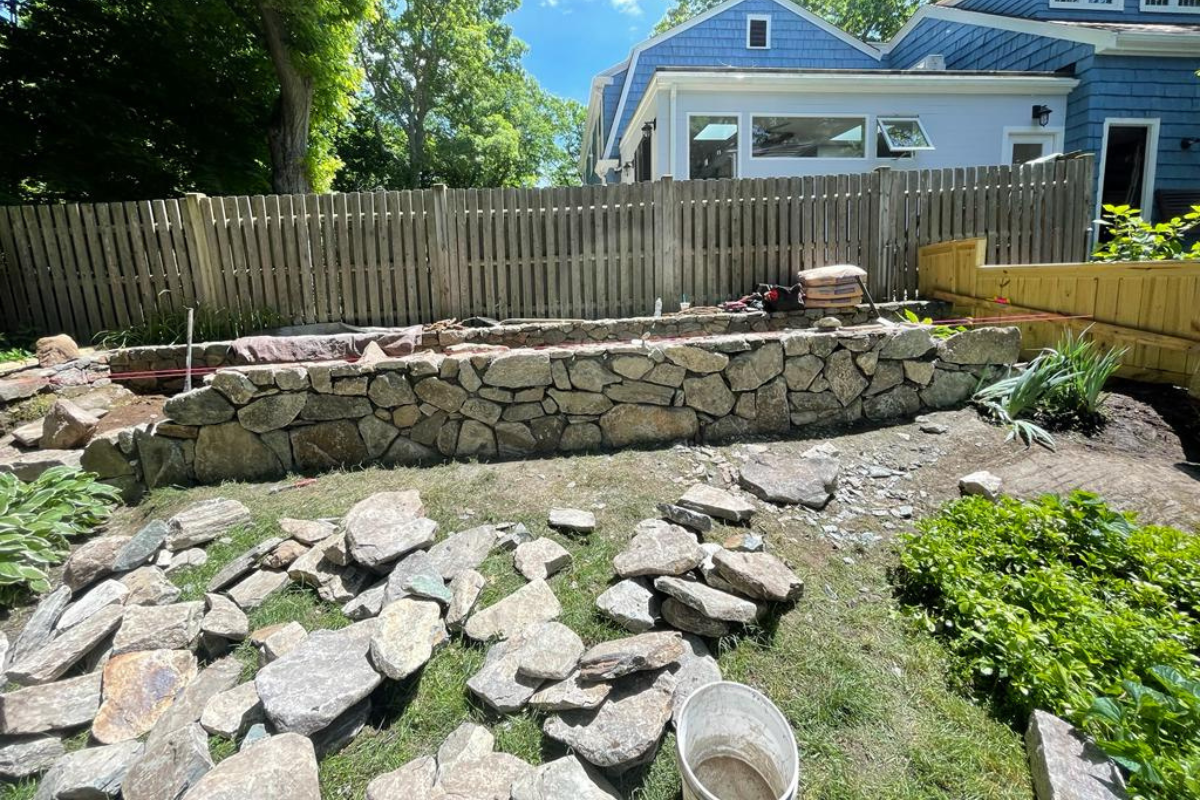
Is the natural stone work on your Houston property maintaining the appearance and structural integrity it had at installation — or are you noticing the mortar joint deterioration, biological growth staining, individual stone movement, and surface scaling that Gulf Coast conditions progressively produce on stone work that is not receiving the maintenance program its Houston environment demands? Natural stone on Houston properties ages more beautifully than any other hardscape material when it receives the maintenance that preserves its condition — and more rapidly than most homeowners expect when it does not. The difference between Houston stone work that looks better at 15 years than at installation and stone work that requires significant repair by year 8 is almost entirely in whether an appropriate maintenance program was established and executed consistently from the first year of the installation's life.
Houston's Gulf Coast conditions create specific stone work maintenance demands that generic stone care guidance — much of which is written for drier climates with harder winters — does not adequately address. The biological growth that Houston's year-round humidity enables colonizes stone surfaces faster than in drier markets. The calcium scale that Houston's hard municipal water deposits on irrigated stone surfaces accumulates at rates that Houston-specific maintenance programs need to address more frequently than national average recommendations suggest. The mortar joint deterioration that Houston's thermal cycling and occasional freeze events produce requires the inspection and repair frequency that Houston's conditions demand rather than the less frequent schedule that adequate in milder markets. Understanding what Houston's conditions specifically do to stone work — and what maintenance prevents the deterioration those conditions produce — is the starting point for a maintenance program that actually works.
At Gulf Reserve Landscape & Pools, stone work maintenance and repair is part of our stone work service across Houston's residential market. Here is what proper stone work maintenance and repair in Houston's specific conditions actually involves.
What Houston's Conditions Do to Natural Stone Work Over Time
Understanding the specific deterioration mechanisms that Houston's Gulf Coast environment creates for natural stone hardscape helps Houston homeowners identify what their maintenance program needs to address and what repair needs to be performed before deterioration progresses to the point of requiring more extensive intervention.
Biological growth colonization is the most visible and most consistently underaddressed stone work maintenance issue on Houston properties — the algae, lichen, and moss that colonize stone surfaces in Gulf Coast conditions at rates significantly faster than in drier markets. Houston's combination of year-round warmth, high humidity, frequent rainfall, and the shaded conditions that mature live oak canopy creates produces ideal biological growth conditions that affect every outdoor stone surface regardless of material type or orientation.
Algae colonization on Houston stone produces the greenish surface staining visible on north-facing and shaded stone surfaces — pathways under live oak canopy, stone walls on the north face of buildings, and any stone surfaces that stay moist for extended periods after Houston rain events. Algae staining in early stages is primarily aesthetic but creates the surface moisture retention that accelerates progression toward lichen colonization if not addressed.
Lichen colonization — the crusty, circular growth patterns in gray, orange, and black tones that develop on Houston stone surfaces after algae has prepared the surface — is significantly more difficult to remove than algae and penetrates stone surfaces with root-like structures that remain viable after the surface growth is removed. Houston stone surfaces with established lichen require the specific biocide treatments and mechanical scrubbing that algae removal does not demand — and the longer they are allowed to develop before treatment, the more aggressively the lichen structures penetrate the stone surface and the more difficult effective treatment becomes.
Moss growth on Houston stone pathway surfaces is both an aesthetic problem and a genuine safety hazard — wet moss on a stone pathway in Houston after rainfall is one of the most slippery surfaces in a residential landscape, and Houston's frequent rainfall means this hazard is present regularly through the year. Stone pathway surfaces in consistently shaded, moist Houston conditions develop moss colonization that requires the regular removal and preventive treatment program that safety-critical surfaces demand.
Mortar joint deterioration in Houston stone work results from the combination of thermal cycling that Houston's temperature range creates, the occasional freeze-thaw cycling that Houston's hard freeze events produce in water-saturated joints, and the carbonation process that gradually converts mortar's calcium hydroxide to calcium carbonate over time — reducing mortar strength and surface hardness progressively through the installation's service life. Houston's specific contribution to accelerated mortar deterioration is the thermal cycling between Houston's cold winter events and the 100-plus degree summer temperatures that exceeds the thermal range that standard mortar specification tolerates without progressive microcracking.
Failed mortar joints in Houston stone work allow water infiltration into the stone-to-base interface — the most consequential moisture pathway in a mortared stone installation because water at this interface contributes to both base deterioration and freeze-related stone displacement during Houston's occasional hard freeze events. Identifying and repairing failed mortar joints before water infiltration through them has been occurring for multiple seasons prevents the base damage that extended joint failure produces.
Calcium scale deposits on Houston stone surfaces from hard water irrigation overspray — the white mineral deposits that Blog 30 establishes as a systematic outcome of Houston's municipal water hardness — accumulate progressively on stone surfaces that receive regular irrigation contact. Stone pathways, pool coping, and garden walls adjacent to Houston irrigation zones develop the calcium scale deposits that reduce the stone's natural color visibility and that, on darker stone materials, create the white-speckled appearance that severely compromises the stone's aesthetic quality.
Houston Stone Work Maintenance Schedule
A defined maintenance schedule — rather than reactive response to visible deterioration — is the program structure that keeps Houston stone work in the condition that protects both its appearance and its structural integrity over its full service life.
Biannual biological growth treatment — applying appropriate biocide treatments to Houston stone surfaces at the beginning and end of the primary growing season — is the preventive maintenance intervention that most cost-effectively manages biological growth on Houston stone work. Preventive biocide treatment applied to clean stone surfaces before biological colonization establishes inhibits the growth cycle at its earliest stage rather than allowing colonization to develop to the point where removal requires more aggressive intervention. Houston stone surfaces treated preventively twice annually maintain consistently cleaner appearances and require less aggressive removal treatments than surfaces treated reactively after colonization is established.
The biocide products appropriate for Houston stone work biological growth management include sodium hypochlorite solutions at appropriate dilutions for algae and early lichen, quaternary ammonium compounds for broader spectrum biological control, and copper-based treatments for moss and established lichen. Product selection needs to account for the specific stone material being treated — some acid-containing products appropriate for granite biological growth removal can damage the more reactive limestone and travertine that are common in Houston stone work. Confirming product compatibility with the specific stone material before application prevents the surface damage that inappropriate product selection causes.
Annual mortar joint inspection — systematically examining every joint in mortared Houston stone work for cracking, loosening, and deterioration before the damage has progressed to the point where water infiltration through failed joints has been occurring for extended periods — is the maintenance inspection that catches joint failures at the repair threshold rather than after the consequences of infiltration have accumulated. Annual inspection timing in October — after Houston's hot summer has created the maximum thermal cycling stress on joints and before Houston's winter cold events test the joints under freeze conditions — identifies the joints that summer thermal cycling has compromised before winter freeze events exploit those compromises.
Tuckpointing — the repair of deteriorated mortar joints by removing the failed mortar and replacing it with fresh polymer-modified mortar — identified during annual inspection should be completed before the end of the year to prevent the freeze events that Houston's winter can deliver from finding the open joints that infiltration through them would damage. Tuckpointing completed in October or November addresses the annual inspection findings before the highest-risk freeze period arrives.
Sealer application and reapplication on Houston limestone stone work — applying penetrating sealer to clean, dry stone surfaces before the previous application has deteriorated to the point where the stone surface is unprotected — maintains the surface protection that reduces biological growth colonization and calcium scale penetration. Houston limestone outdoor applications typically require sealer reapplication every 2 to 4 years depending on exposure conditions — the higher-traffic, higher-irrigation-exposure surfaces requiring more frequent reapplication than protected or lightly used surfaces.
Sealer application on Houston stone work requires the dry stone surface and adequate drying time after application that Houston's humidity complicates — finding the consecutive dry days that allow stone surfaces to dry completely before sealer application and after application before rain exposure requires the scheduling consideration that is straightforward in drier climates but requires attention in Houston's year-round humid conditions.
Calcium scale cleaning on Houston stone surfaces that receive irrigation overspray — the periodic acid cleaning that removes mineral deposits before they accumulate to the thickness that requires more aggressive removal — is the maintenance task appropriate for stone surfaces adjacent to Houston irrigation zones. Dilute acid cleaning — white vinegar at full concentration for light deposits, dilute muriatic acid at appropriate concentration for heavier accumulation — applied with the contact time, agitation, and thorough rinsing that effective scale removal requires removes the calcium deposits that Houston's hard water creates on irrigated stone surfaces. Frequency depends on the specific irrigation exposure and water hardness at the property — typically once to twice annually for stone surfaces with regular irrigation contact in Houston's hard water zones.
Houston Stone Work Repair — What Needs Professional Assessment
Some Houston stone work deterioration conditions require professional assessment and repair rather than the homeowner maintenance program that biological growth treatment, sealer application, and calcium scale cleaning represent.
Individual stone displacement — stones that have moved from their original position in a pathway or wall surface, creating the uneven surface or visible gap that indicates the base or mortar system beneath them has failed — requires the assessment that distinguishes between isolated displacement from surface-level causes and systematic displacement that indicates base failure beneath the affected area. Isolated stone displacement from root intrusion, impact damage, or highly localized mortar failure can be repaired by removing the displaced stone, addressing the specific cause, and resetting the stone in fresh polymer-modified mortar. Systematic displacement across multiple adjacent stones typically indicates base failure that requires more extensive base repair before the surface stones can be correctly reset.
Retaining wall movement — the lean, cracking, or joint separation that indicates the wall is experiencing the foundation movement or drainage pressure that Blog 05 establishes as the primary causes of Houston retaining wall failure — requires professional structural assessment before repair decisions are made. Retaining wall lean that has developed progressively over several seasons indicates foundation movement that masonry repair alone cannot address — the foundation conditions that produced the movement need to be assessed and corrected before the wall face is repaired or the repaired wall will develop the same movement as the original.
Extensive mortar joint failure across large areas of Houston stone work — the systematic joint deterioration that indicates the mortar system has reached the end of its service life rather than isolated joint failures from localized causes — requires the assessment of whether the existing stone installation can be retained with comprehensive tuckpointing or whether the mortar system failure has progressed to the point where stone removal and reinstallation with fresh mortar and base preparation is the more durable repair.
When Houston Stone Work Needs Replacement Rather Than Repair
The decision between repair and replacement for Houston stone work that has deteriorated past routine maintenance is the assessment that determines whether the repair investment produces durable results or simply delays the replacement that the stone work's condition ultimately requires.
Base failure indicators — the systematic stone displacement, cracking, and settlement that indicate the base system beneath the stone has failed rather than simply the surface mortar — are the conditions that distinguish replacement from repair. Stone work with intact base that has surface mortar deterioration is a repair candidate. Stone work with failed base — the clay movement and drainage-caused base settlement that Houston's conditions produce on inadequately specified installations — is a replacement candidate because surface repair on a failed base produces repaired surfaces that develop the same movement and cracking as the original installation.
Extent of biological growth penetration into the stone surface determines whether cleaning and treatment restore acceptable appearance or whether the biological damage to the stone surface requires stone replacement for aesthetic restoration. Surface biological growth that has not penetrated the stone deeply can be removed with appropriate treatment to restore acceptable appearance. Biological growth that has penetrated the stone surface through extended colonization — the lichen root structures that remain viable after surface removal and that continue growing from within the stone — may have damaged the stone surface to the point where appearance restoration requires stone replacement rather than treatment.

Not sure whether the stone work on your Houston property needs maintenance, repair, or replacement? Gulf Reserve Landscape & Pools assesses every Houston stone work installation personally — evaluating mortar joint condition, base integrity, biological growth extent, and drainage performance before recommending maintenance scope, repair approach, or replacement — so the investment you make addresses what the stone work actually needs rather than what is most convenient to propose.
Get your free estimate at gulfreservelandscaping.com


