




Houston Patio Resurfacing Versus Replacement — How to Make the Right Decision and Avoid Wasting Money on the Wrong One
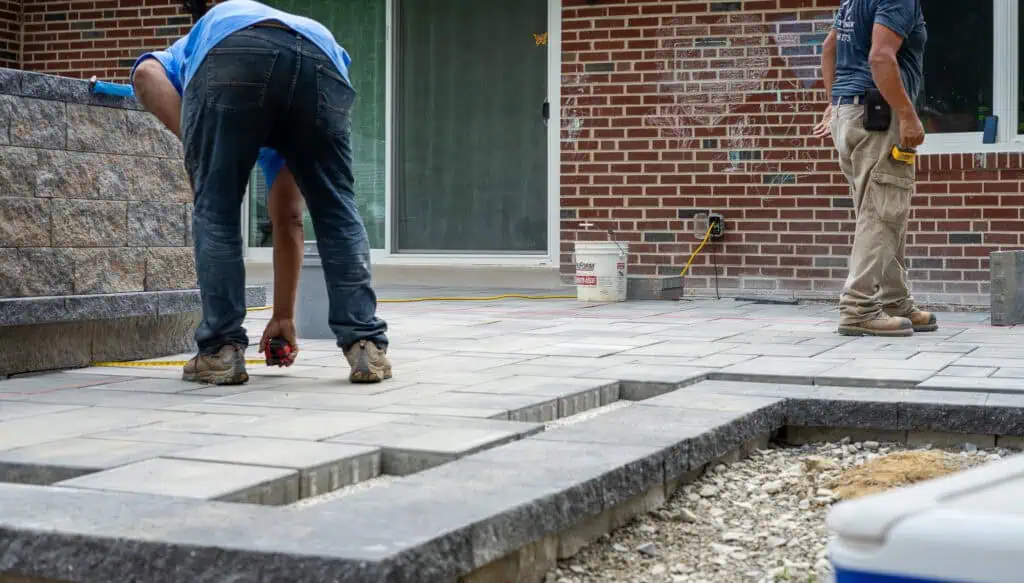
Is the concrete on your Houston patio at the point where something needs to be done — and are you trying to figure out whether resurfacing is the cost-effective solution or whether you are looking at a replacement project that resurfacing will only delay? This is one of the most common Houston outdoor improvement decisions homeowners face, and it is one where making the wrong call is expensive in both directions. Resurfacing a Houston patio that needs replacement produces a temporarily improved surface that cracks along the same lines as the concrete beneath it within 1 to 2 years — wasting the resurfacing investment and still requiring the replacement that the assessment would have indicated from the beginning. Replacing a Houston patio that could have been resurfaced spends significantly more than the situation requires.
The decision between resurfacing and replacement for Houston patios comes down to one fundamental question — is the base beneath the existing concrete structurally sound, or has the base failed? Everything else about the patio's condition is secondary to this question because it determines whether the existing concrete can serve as the foundation for a resurfaced system or whether it needs to be removed and replaced with new concrete on a properly prepared base.
At Gulf Reserve Landscape & Pools, concrete work assessment is one of the most common services we provide on Houston residential properties — and the assessment that most consistently saves Houston homeowners money by directing them toward the right solution rather than the one that feels less expensive in the moment. Here is how to make the resurfacing versus replacement decision correctly for your Houston patio.
Understanding What Resurfacing Actually Does — and Does Not Do
Before evaluating whether resurfacing is appropriate for a specific Houston patio, understanding what resurfacing accomplishes and what it cannot accomplish establishes the correct expectations for what the investment produces.
Resurfacing applies a new surface layer — typically a polymer-modified concrete overlay of 1/4 to 3/8 inch thickness — over the existing concrete surface. This new layer restores the surface appearance, improves the surface texture, and can introduce color and pattern options that the original concrete did not have. It bonds to the existing concrete through a chemical adhesion process that requires the existing surface to be clean, sound, and adequately rough for bond development.
Resurfacing cannot fix structural problems beneath the surface. A resurfaced concrete overlay bonds to the surface of the existing concrete — it does not connect to the base beneath it or provide any structural reinforcement to the slab it covers. Concrete that is cracking because the base beneath it is failing will continue cracking through the overlay — the new surface follows the movement of the concrete beneath it because it is adhered to that concrete rather than floating independently above it. The overlay that looks perfect on installation day cracks at the same locations as the underlying concrete as soon as the base movement that caused the original cracking continues.
This is the fundamental limitation that makes the resurfacing versus replacement decision about base condition rather than surface condition. A structurally sound Houston patio slab with surface scaling, discoloration, and worn texture — but with adequate base and no base failure cracks — is an excellent resurfacing candidate. The same slab with the diagonal cracking, differential settlement, and section rocking that base failure produces is a replacement candidate regardless of how good it might look with a fresh overlay applied.
The Houston Patio Assessment — How to Read What Your Concrete Is Telling You
Reading the condition of a Houston patio correctly requires understanding the difference between the surface deterioration that resurfacing can address and the structural deterioration that requires replacement — and knowing which indicators reveal which condition.
Surface deterioration that resurfacing can address includes the following conditions that reflect weathering, UV exposure, and surface wear rather than structural failure.
Surface scaling — the flaking and peeling of the top layer of concrete that Houston's UV exposure, thermal cycling, and the freeze-thaw events that Houston's occasional hard freezes create — is the most common surface deterioration condition on older Houston patios. Surface scaling that has not penetrated more than 1/4 inch into the slab thickness, that is limited to the surface layer rather than extending through the full depth, and that exists on a slab without structural cracks is a resurfacing candidate. The polymer-modified overlay that resurfacing applies bonds to the sound concrete below the scaled layer and creates a new surface that is more durable than the original mix design that the Houston conditions scaled.
Surface discoloration — the staining from organic debris, rust deposits, pool chemicals, and the biological growth that Houston's humidity enables on outdoor concrete — is purely aesthetic and is fully addressable through either cleaning and sealing or resurfacing depending on the depth of the staining and the desired surface outcome. Discolored Houston concrete that is structurally sound is an excellent candidate for resurfacing with a colored overlay that eliminates the original discoloration entirely rather than simply treating the stained surface.
Surface texture wear — the smooth, slippery surface that high-traffic Houston concrete develops as the original broom finish or exposed aggregate texture wears down — is resurfaceable with an overlay that reestablishes the slip resistance and surface texture that the worn original finish no longer provides.
Structural deterioration that requires replacement includes the following conditions that reflect base failure or slab-level structural damage rather than surface wear.
Diagonal cracking at re-entrant corners — the characteristic V-shaped cracks that develop at inside corners of patios where the concrete transitions around obstacles — indicates the shrinkage and thermal movement cracking that occurs in concrete without adequate control joints at these locations. Light diagonal cracking at re-entrant corners without displacement of one side relative to the other may be a resurfacing candidate if the crack width is less than 1/8 inch and there is no section movement. Wider diagonal cracks with differential displacement — where one side of the crack is higher or lower than the other — indicate base settlement that resurfacing will follow.
Section displacement — where adjacent concrete sections have moved to different elevations, creating the edge that catches feet and communicates settlement — is the definitive indicator of base failure that requires replacement. The clay soil movement that Blog 02 establishes as the primary cause of Houston concrete cracking produces this differential settlement when the base beneath different sections of the slab has consolidated unevenly — one section supported by more stable soil and another settling into the void that clay contraction creates. Resurfacing over section displacement produces an overlay that bridges the elevation difference at installation and develops the crack at that bridge point within one Houston wet-dry cycle as the differential movement continues.
Slab rocking — the movement of a concrete section when weight is applied at one edge — indicates a void beneath the slab that the rocking reveals. Houston concrete over clay soil that has contracted during a dry period develops these subslab voids as the clay pulls away from the concrete above it. A slab section that rocks when walked on is a slab section that will crack when the void beneath it is large enough that the slab's own weight or applied load causes it to flex and fail. This condition requires replacement — the void beneath the rocking section needs to be filled with new base material and new concrete placed above it.
The crack pattern diagnostic is the single most useful indicator for the Houston patio resurfacing versus replacement decision — because crack patterns reveal the cause of cracking in ways that allow the resurfacing versus replacement decision to be made before any probing or base investigation is required.
Control joint cracking — cracks that run along the tooled or saw-cut joints that were designed to control where the concrete cracks — indicates that the control joints functioned as intended. Control joint cracks that are uniform in width, without differential displacement between the sections they separate, and that exist in concrete without other structural cracking are resurfacing candidates. The overlay bonds across the control joint and the joint sealant beneath it — producing a surface that looks continuous while the joint below continues to perform its movement accommodation function.
Random cracking that does not follow control joints — the irregular, wandering cracks that appear in locations other than designed control points — indicates either that control joints were not placed at adequate intervals for Houston's thermal cycling conditions or that the cracking is driven by base movement rather than surface shrinkage. Narrow random cracks without displacement — less than 1/8 inch wide and level across the crack — may be resurfacing candidates with appropriate crack treatment before overlay application. Wide random cracks with displacement indicate base movement that resurfacing cannot durably address.
Houston-Specific Factors That Affect the Resurfacing Versus Replacement Decision
Houston's specific climate, soil, and construction conditions create factors that affect the resurfacing versus replacement decision in ways that generic concrete assessment guidance does not account for.
Houston's clay soil movement is the primary factor that makes the base condition assessment more critical for Houston patios than for patios in markets with more stable soil conditions. As Blog 02 establishes, Houston's expansive clay generates the shrink-swell forces that continue producing concrete movement for the full service life of the installation — not just during the initial settlement period that new construction patios experience. A Houston patio with base failure cracks will continue developing new cracks and expanding existing ones through every Houston wet and dry season — resurfacing that temporarily covers these cracks does not interrupt the clay movement that causes them.
Houston's thermal cycling range — the 100-plus degree Fahrenheit difference between Houston's peak summer temperatures and the occasional hard freeze events that Houston's winters produce — creates the thermal expansion and contraction that polymer-modified overlays need to accommodate without delaminating from the concrete beneath them. Quality polymer-modified overlays formulated for the thermal range that Houston's conditions create maintain bond integrity through this temperature variation. Generic concrete overlay products not formulated for Houston's thermal range develop the bond failure at the overlay-to-substrate interface that temperature cycling at Houston's scale creates for insufficiently flexible overlay systems.
Houston's hard water irrigation overspray on patio surfaces — the calcium scale deposits that Blog 30 establishes as a systematic outcome of Houston's hard municipal water irrigation — creates the surface contamination condition that resurfacing bond preparation needs to address before overlay application. Calcium scale on Houston patio surfaces that is not removed before resurfacing creates the bond failure between the overlay and the scale-contaminated substrate that insufficient surface preparation produces. Acid cleaning to remove calcium scale before surface profiling — the additional preparation step that Houston patio resurfacing requires relative to patios in softer water markets — is the preparation standard that quality Houston resurfacing contractors include in their scope.
What Houston Patio Resurfacing Costs Versus Replacement
Understanding the cost comparison between resurfacing and replacement for Houston patios — and the conditions under which the lower-cost option is the right choice — provides the financial framework that makes the decision correctly.
Houston patio resurfacing costs for a standard residential patio — polymer-modified overlay with surface preparation, crack treatment for eligible cracks, and sealing — typically range from 4 to 8 dollars per square foot installed. A standard 400-square-foot Houston residential patio resurfaces for approximately 1,600 to 3,200 dollars. Decorative overlay finishes — stamped patterns, custom colors, and texture treatments — add 3 to 8 dollars per square foot to this baseline, producing total resurfacing costs of 7 to 16 dollars per square foot for decorative overlay applications.
Houston patio replacement costs for a standard residential patio — demolition and disposal of the existing concrete, base preparation to Houston-specific standards, new concrete with appropriate reinforcement, and standard broom finish — typically range from 10 to 16 dollars per square foot installed. A standard 400-square-foot Houston residential patio replacement costs approximately 4,000 to 6,400 dollars with standard finish, increasing to 12 to 22 dollars per square foot with exposed aggregate or stamped concrete upgrades.
The cost comparison reveals the financial logic of the resurfacing versus replacement decision — resurfacing on appropriate candidates saves 6 to 8 dollars per square foot relative to replacement, a meaningful savings that makes resurfacing clearly the right choice when the base is sound. Resurfacing on inappropriate candidates — patios with base failure — wastes the 4 to 8 dollars per square foot resurfacing cost and still requires the replacement that the base condition made necessary from the beginning, producing a total cost of 14 to 24 dollars per square foot rather than the 10 to 16 dollars per square foot that replacement alone would have cost.
Making the Final Decision — The Assessment Process
The Houston patio resurfacing versus replacement assessment follows a defined process that produces a reliable recommendation rather than guesswork.
Step 1 — Visual crack pattern assessment identifies the crack types present and classifies them as control joint cracks, surface shrinkage cracks, or structural movement cracks based on the crack pattern, width, and displacement characteristics described above.
Step 2 — Edge and joint probing uses a screwdriver or similar tool to probe the concrete edges and crack faces — testing whether the concrete at these locations is sound or has the hollow, friable quality that surface deterioration without structural integrity produces.
Step 3 — Section rocking test applies weight at the edges of each concrete section and observes whether the section rocks — the definitive indicator of subslab voids that base failure produces.
Step 4 — Overall crack coverage assessment estimates the percentage of the patio area affected by structural cracks relative to surface-only deterioration — patios where more than 20 to 25 percent of the surface area has structural cracks are typically better replacement candidates than resurfacing candidates even when individual crack characteristics might otherwise suggest resurfacing eligibility.
Step 5 — Drainage assessment confirms whether the patio's drainage slope has been compromised by section settlement — patios where settlement has reversed the original drainage slope, creating water collection against the house foundation, need the grade restoration that replacement enables rather than the surface-only improvement that resurfacing provides.

Not sure whether your Houston patio needs resurfacing or replacement — and not wanting to spend money on the wrong solution? Gulf Reserve Landscape & Pools assesses every Houston patio personally — evaluating crack patterns, base condition, drainage performance, and the specific conditions that determine whether resurfacing or replacement is the right investment for your specific situation.
Get your free estimate at gulfreservelandscaping.com


