




Houston Irrigation Water Quality and Hard Water Effects — What Every Houston Homeowner With an Irrigation System Needs to Know
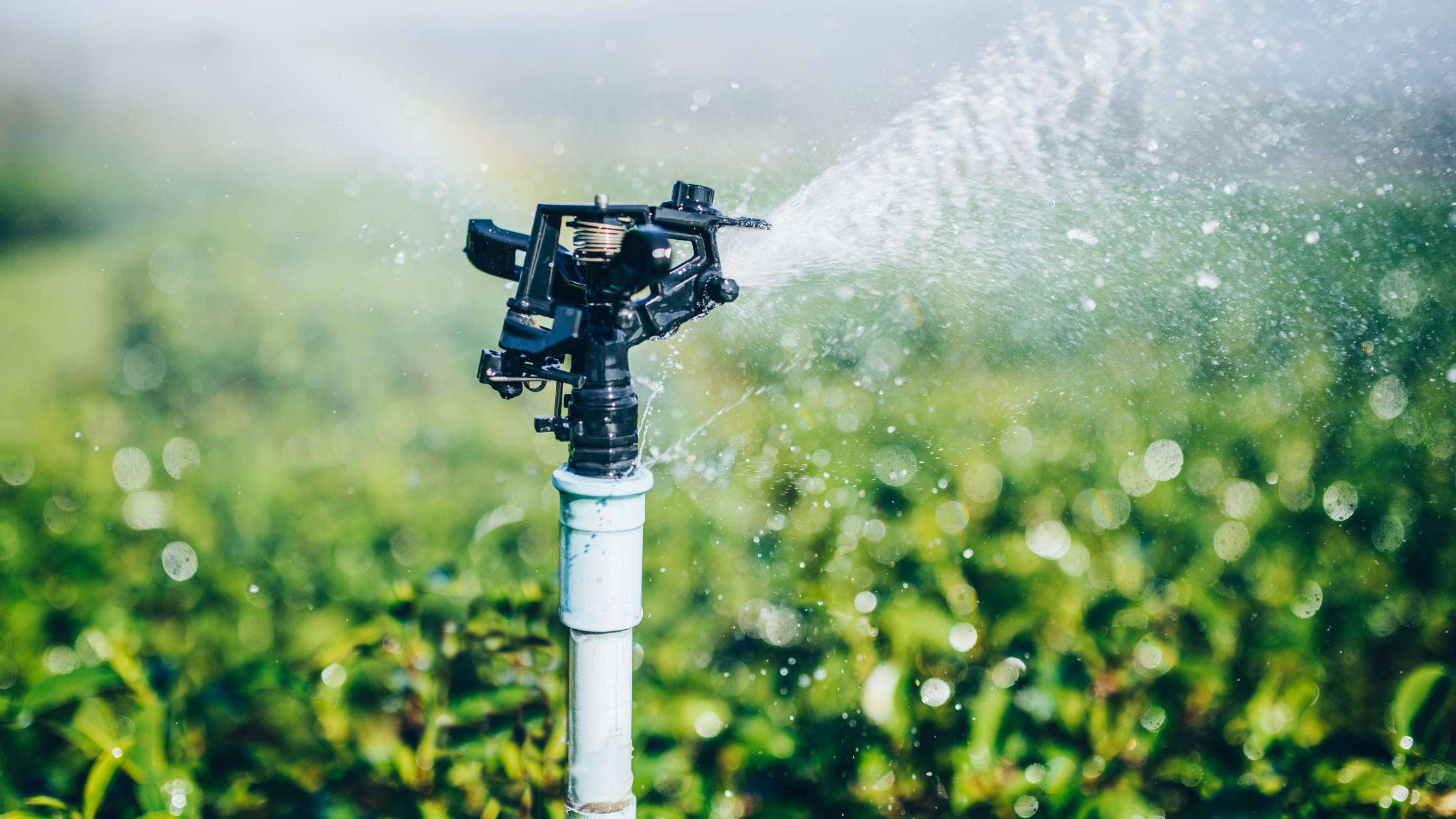
Is the water running through your Houston irrigation system working against the landscape it is supposed to support — depositing the mineral scale that clogs drip emitters, shifting soil pH toward more alkalinity with every watering cycle, and leaving the calcium deposits on stone and hardscape surfaces that Blog 79 establishes as one of the most consistently challenging maintenance issues on Houston outdoor surfaces? Houston's municipal water supply is among the hardest in major American cities — the combination of the aquifer sources and surface water that Houston's water utilities blend produces the 100 to 200 parts per million water hardness that creates specific, predictable, and manageable problems for Houston irrigation systems, Houston landscape soils, and Houston outdoor surfaces that receive regular irrigation contact.
Hard water is not a Houston-specific problem — it affects irrigation systems and landscapes across the American South and Southwest broadly. But Houston's specific hardness range, combined with the alkaline clay soil that Houston's native geology produces and the year-round irrigation season that Houston's climate requires, creates a compounding effect that makes hard water management more consequential for Houston landscape performance than in markets where only one or two of these factors are present. The hard water that shifts Houston's already alkaline soil further toward higher pH, that deposits scale in the drip emitters that precision irrigation requires, and that leaves the mineral staining that stone and concrete surfaces accumulate does all of these things simultaneously and continuously through Houston's 9 to 10 month active irrigation season.
At Gulf Reserve Landscape & Pools, hard water management is a consideration that informs every Houston irrigation system we design and maintain. Here is what Houston homeowners with irrigation systems need to know about hard water and how to manage its effects.
What Houston's Hard Water Contains and Why It Matters
Understanding the specific mineral content of Houston's municipal water — what hard water is at the chemical level and why it produces the effects it does in Houston landscape applications — establishes the foundation for understanding the management approaches that address those effects correctly.
Calcium and magnesium are the primary minerals that constitute water hardness in Houston's municipal supply — the dissolved minerals that the water picks up as it moves through the limestone and dolomite geology of the aquifer sources and surface water systems that Houston's water utilities draw from. Calcium concentration in Houston's municipal water typically ranges from 40 to 80 milligrams per liter. Magnesium concentration typically ranges from 10 to 25 milligrams per liter. Together, these concentrations produce the 100 to 200 parts per million total hardness that Houston water testing consistently documents.
Calcium and magnesium are not harmful to plants at the concentrations Houston's water contains — they are essential plant nutrients that adequate soil levels support rather than limit. The problem that calcium and magnesium in Houston's irrigation water create is not direct plant toxicity but the secondary effects of their accumulation in soil and on surfaces over time. Calcium carbonate — the compound that forms when calcium in irrigation water encounters the carbonate alkalinity that Houston's water also contains — is the specific chemical that accumulates in Houston soils to raise pH, deposits on drip emitters to reduce flow, and forms the white scale on stone and hardscape surfaces that Houston homeowners recognize as the persistent mineral staining that irrigation contact creates.
Bicarbonate alkalinity in Houston's municipal water is the chemical partner that makes calcium hardness produce the pH-raising soil accumulation that the calcium concentration alone would not create. Bicarbonate in irrigation water — typically 150 to 250 milligrams per liter in Houston's supply — reacts with soil calcium to form calcium carbonate that deposits in the soil rather than leaching through. This calcium carbonate accumulation is the specific mechanism that raises Houston soil pH progressively above the baseline that native clay presents — the accumulation that makes 20-year-old Houston lawn soil more alkaline than the same soil when the property was first irrigated and that makes long-established Houston properties require more aggressive pH remediation than new construction properties starting from native soil baseline.
Sodium in Houston's municipal water — present at lower concentrations than calcium and magnesium but relevant for soil structure management — contributes to the soil sodicity that reduces clay particle flocculation and worsens the drainage and structure problems that Houston's clay soil already presents. Sodium displaces calcium on clay particle exchange sites — replacing the calcium that maintains clay particle aggregation with the sodium that promotes clay particle dispersion into the single-particle suspension that seals soil pores and reduces infiltration. Houston's municipal water sodium concentrations are not severe enough to produce the acute sodicity problems that irrigation with saline water creates in arid regions, but the contribution of Houston's water sodium to the long-term soil sodicity of established properties that have been irrigated for decades without calcium management is a real cumulative effect that comprehensive soil management programs address alongside pH and organic matter.
Hard Water Effects on Houston Irrigation System Components
The specific effects that Houston's hard water produces on irrigation system components reflect the mineral deposition process that hard water creates in the confined flow passages, valve seats, and emitter orifices that irrigation systems use to control and distribute water.
Drip emitter clogging is the hard water effect that most directly and most visibly affects Houston irrigation system performance. As Blog 29 establishes for Houston drip irrigation design, drip emitters in Houston's hard water conditions accumulate the calcium carbonate scale that Houston's water deposits in the small orifices that control drip emitter flow rates. The 0.02 inch orifice of a standard 1.0 gallon per hour drip emitter is large enough for unrestricted flow when clean but small enough that calcium scale deposits significantly reduce flow as accumulation builds. Emitters that were installed as 1.0 gallon per hour devices deliver 0.6 or 0.7 gallons per hour after a season of operation in Houston's hard water without the filter maintenance and periodic acid flushing that maintains emitter performance. After two seasons without maintenance, the same emitters may deliver 0.3 or 0.4 gallons per hour — the reduced delivery that the planting they serve receives as inadequate irrigation rather than the designed delivery that the system was specified to provide.
Backflow preventer fouling from Houston hard water mineral accumulation affects the internal components of the backflow prevention devices that Blog 64 establishes as the most freeze-vulnerable and most maintenance-significant components of Houston irrigation systems. The check valve seats and relief valve assemblies inside Houston backflow preventers accumulate the calcium scale that reduces the sealing efficiency and operational reliability of these components over time. Backflow preventers in Houston's hard water service that receive the annual testing and internal cleaning that scale accumulation requires maintain reliable operation. Those that receive only the annual test certification without internal scale management develop the weeping relief valves and sticky check valves that Blog 61 identifies as the signs of backflow preventer deterioration in Houston's conditions.
Controller valve diaphragm fouling from Houston hard water mineral accumulation affects the thin rubber diaphragms in zone valves that flex open and closed in response to controller activation signals. Calcium carbonate deposits on valve diaphragm surfaces reduce the diaphragm's flexibility over time — contributing to the valve failures that eventually produce the stuck-open or stuck-closed zone conditions that Blog 61 establishes as the most consequential irrigation component failures on Houston properties. Regular valve maintenance that includes diaphragm inspection and the scale cleaning that Houston's water hardness makes necessary extends valve service life beyond what valves receiving only reactive replacement when they fail achieve.
Hard Water Effects on Houston Landscape Soils
The soil chemistry effects of Houston hard water irrigation — the pH elevation, calcium carbonate accumulation, and sodicity that years of hard water irrigation produce in Houston landscape soils — are the effects that most directly affect long-term landscape performance and that require the most comprehensive management program to address.
Soil pH elevation from Houston hard water irrigation is the most consequential long-term soil effect of hard water in Houston's landscape environment — the progressive pH increase that Blog 01 establishes as the primary driver of nutrient lockout in Houston lawns and ornamental beds. The mechanism is specific and predictable. Houston's irrigation water at pH 7.8 to 8.2 and 150 to 250 milligrams per liter bicarbonate alkalinity deposits calcium carbonate into the soil at a rate proportional to the irrigation volume applied. Houston's year-round irrigation season applies this deposit continuously rather than in the shorter season that cooler climates use. The cumulative calcium carbonate deposit over 5 to 10 years of irrigation in Houston's conditions produces the measurable pH increase above the native soil baseline that regular soil testing documents and that the sulfur management program corrects when it is applied consistently.
Calcium carbonate hardpan formation in Houston landscape soils under long-term hard water irrigation reflects the most advanced stage of calcium carbonate accumulation — the formation of a dense calcium carbonate layer at specific depths in the soil profile that restricts root penetration and water movement similarly to the compaction layer that mechanical loading produces. Houston landscape soils that have been irrigated with hard water for 20 or more years without pH and soil chemistry management occasionally develop the calcium carbonate hardpan at 6 to 12 inches below the surface that severely limits deep root development and drainage performance. The caliche layer that occurs naturally in South Texas caliche soils is the extreme version of the same calcium carbonate accumulation process that long-term hard water irrigation creates progressively in Houston soils — and the resemblance in effect, if not in magnitude, is relevant for understanding why some Houston established properties with long irrigation histories present root restriction and drainage limitation problems that soil pH management alone does not fully resolve.
Managing Houston Hard Water Effects — The Practical Program
Managing the effects of Houston's hard water on irrigation systems, soils, and outdoor surfaces requires a defined program rather than reactive responses to problems after they have developed — the proactive management that prevents the most consequential hard water effects from accumulating to the levels that create expensive remediation requirements.
Drip emitter maintenance program for Houston irrigation systems addresses the emitter clogging that hard water scale accumulation produces through a combination of inlet filtration, periodic acid flushing, and emitter inspection and replacement on a defined schedule rather than after the reduced flow that advanced clogging produces has already compromised plant water delivery.
The 150-mesh filter that Blog 29 establishes as the essential inlet component for Houston drip systems intercepts the mineral particles that Houston's water carries in suspension before they reach the emitter orifices where particle accumulation initiates the scale buildup that dissolved mineral deposition continues. Filter cleaning — quarterly at minimum on Houston properties where drip systems run daily during summer — maintains the filtration performance that a clogged filter cannot provide.
Periodic dilute acid flushing of Houston drip systems — running a dilute citric acid or white vinegar solution through the drip zone supply lines — dissolves the calcium carbonate scale that has accumulated in supply lines and emitter bodies between regular operation. Annual acid flushing at the end of the irrigation season, when Houston summer irrigation frequency has produced the maximum scale accumulation of the year, is the maintenance intervention that restores drip system flow performance before the scale accumulation that the season has produced hardens to the point where acid flushing cannot dissolve it.
Soil pH management program for Houston landscape soils receiving hard water irrigation addresses the pH elevation that continuous calcium carbonate deposition produces — through the elemental sulfur application program that Blog 01 establishes as the foundational pH management tool for Houston landscapes. The sulfur application rate that adequate pH management requires on established Houston properties with hard water irrigation histories reflects the pH level that testing documents and the calcium carbonate buffering capacity that the accumulated carbonate creates — the conditions that require higher sulfur rates and more frequent application than new construction soil amendment uses.
Acidifying fertilizer selection as a complement to elemental sulfur in Houston hard water irrigation management — specifically ammonium sulfate fertilization that provides both nitrogen and mild soil acidification with each application — maintains the pH management between the less frequent elemental sulfur applications that produce the more significant pH reductions. The combination of annual elemental sulfur application and ammonium sulfate fertilization throughout the growing season is the pH management program that sustains the soil pH range that Houston turf and ornamental plantings require against the continuous alkalinity input that hard water irrigation provides.
Outdoor surface maintenance for Houston stone, concrete, and hardscape surfaces that receive regular irrigation contact addresses the calcium scale deposits that hard water leaves on these surfaces — through the periodic acid cleaning that dissolves calcium carbonate scale before it accumulates to the thickness that requires more aggressive removal methods. As Blog 79 establishes for Houston stone work maintenance, dilute acid cleaning — white vinegar for light deposits, dilute muriatic acid for heavier accumulation — applied with appropriate contact time and thorough rinsing removes the mineral deposits that Houston hard water irrigation produces on outdoor surfaces. The frequency appropriate for Houston surface scale management depends on the irrigation exposure and the specific surface material — typically once to twice annually for surfaces with regular irrigation contact.

Has Houston's hard water been working against the irrigation system and landscape it is supposed to support on your property? Gulf Reserve Landscape & Pools assesses Houston irrigation systems and soil conditions personally — evaluating hard water effects on system components, soil chemistry, and outdoor surfaces before recommending the specific management program that your property's hard water exposure requires.
Get your free estimate at gulfreservelandscaping.com


