




Houston Irrigation Water Quality — How Municipal Water Hardness Affects Your Irrigation System, Your Lawn, and Your Landscape
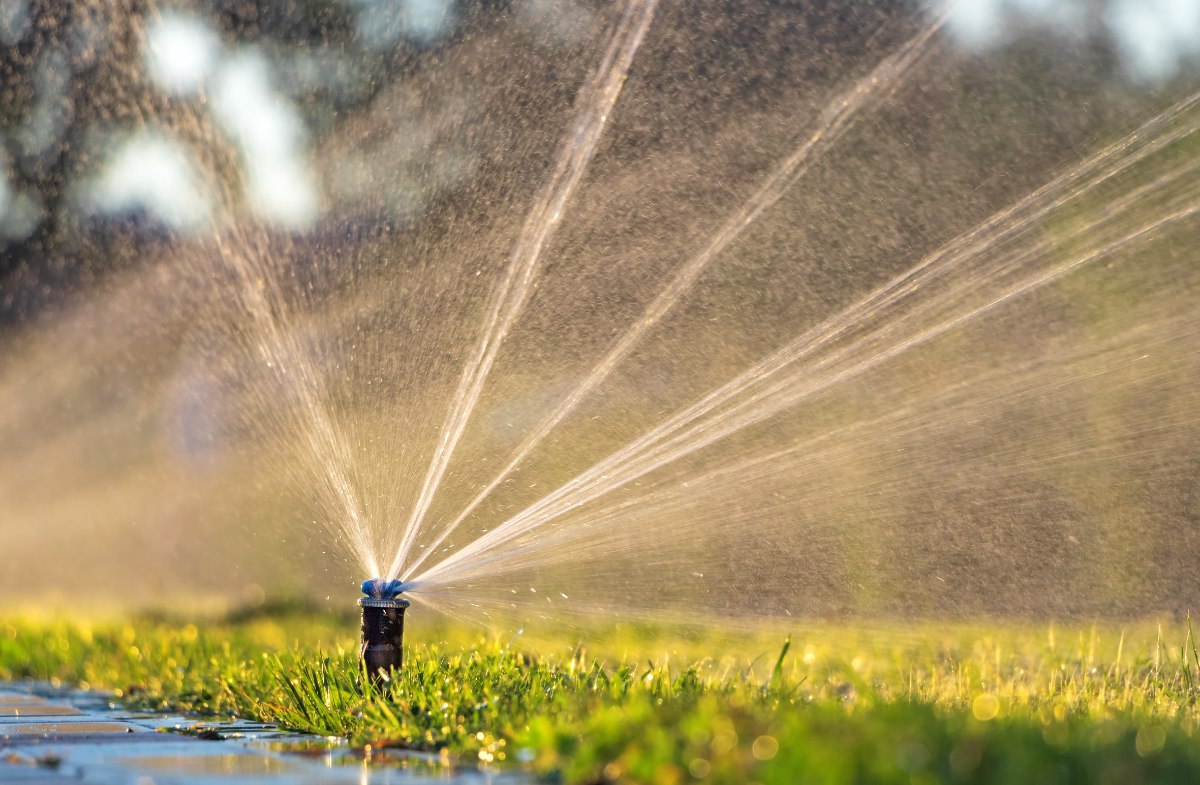
Most Houston homeowners think about irrigation in terms of how much water their lawn needs and when the system should run. Almost none think about what is in the water their irrigation system is delivering — and in Houston's case, that oversight has real consequences for irrigation system performance, soil chemistry, hardscape appearance, and the long-term health of ornamental plants that are already contending with Houston's alkaline clay soil.
Houston's municipal water supply is surface water drawn primarily from Lake Houston, Lake Livingston, and the Trinity River — sources with significant dissolved mineral content that reflects the geology of the watersheds they drain. The result is municipal water with hardness levels that range from approximately 100 to 200 parts per million across Houston's service areas depending on the source water blend at the time of measurement and the specific distribution zone the property is served by. For context, water above 120 parts per million is classified as hard by the Water Quality Association's standard scale. Most of Houston's residential water supply is in the hard to very hard category for at least part of the year.
This hardness — the dissolved calcium and magnesium that give Houston's water its mineral character — affects every component of an irrigation system that water passes through, every surface that irrigated water contacts and evaporates from, and the soil chemistry of every Houston landscape bed and lawn area that receives regular irrigation. Understanding these effects and managing them appropriately is the difference between an irrigation system that performs consistently for 15 to 20 years and one that requires frequent maintenance interventions and delivers inconsistent performance as mineral scale progressively reduces system capacity.
At Gulf Reserve Landscape & Pools, water quality is a factor we address in the design of every Houston irrigation system we install — because the system that ignores what is in the water will underperform relative to one that accounts for it from the beginning. Here is a comprehensive guide to Houston irrigation water quality, what it does to your system and landscape over time, and how to manage it effectively.
Understanding Houston's Water Supply — Where It Comes From and What Is In It
Houston's water supply is managed by the City of Houston's Houston Public Works department, which draws from multiple surface water sources and blends them at water treatment facilities before distribution. The primary sources and their general water quality characteristics are worth understanding because they affect what comes out of every outdoor faucet and irrigation system connection across the city.
Lake Houston — the reservoir on the San Jacinto River northeast of the city — provides a significant portion of Houston's municipal supply. The San Jacinto watershed drains the Piney Woods of East Texas, and the water it contributes to Lake Houston has moderate hardness — typically 80 to 120 parts per million total dissolved solids — with the organic color characteristic of surface water draining heavily forested watersheds.
Lake Livingston and the Trinity River supply the majority of Houston's municipal water through the Trinity River Authority's Lake Livingston reservoir. Trinity River water has higher mineral content than San Jacinto water, reflecting the more geologically diverse watershed the Trinity drains across North and Central Texas. Trinity-sourced water in Houston's supply can contribute hardness in the 150 to 200 parts per million range during periods when this source dominates the supply blend.
The blend ratio between these sources varies seasonally and in response to drought conditions that reduce availability from individual sources. This blending variation means that Houston's water hardness is not a fixed value — it changes through the year in ways that affect how aggressively mineral scale accumulates in irrigation system components and on irrigated surfaces during different periods.
Houston's groundwater — accessed through private wells in areas outside the municipal supply zone and occasionally through supplemental groundwater sources blended into the municipal supply — can have significantly higher mineral content than surface water sources in some Houston area locations. The Chicot and Evangeline aquifers that underlie the Houston area have groundwater with hardness levels ranging from 200 to 500-plus parts per million in some zones — hardness levels that create aggressive scale accumulation in irrigation components and significant soil chemistry effects when applied repeatedly to Houston landscape areas.
What Hard Water Does to Houston Irrigation System Components
Every component in a Houston irrigation system that water contacts is affected by the mineral content Houston's supply delivers. The effects accumulate over years of operation and progressively degrade system performance in ways that appear as irrigation problems rather than water quality problems to Houston homeowners and irrigation service technicians who are not looking at the water chemistry.
Spray nozzle and rotor orifice clogging is the most immediately visible effect of Houston water hardness on irrigation system components. The small orifices in spray nozzles and rotor heads — typically 0.5 to 2.0 millimeters in diameter in residential irrigation equipment — collect mineral scale deposits from the calcium and magnesium in Houston's water as it evaporates from the nozzle surface between irrigation cycles. These deposits accumulate at the orifice edges, progressively reducing the effective opening diameter and changing the spray pattern from the manufacturer's design specification.
A Houston spray head nozzle that has been operating for 3 to 5 years without cleaning in hard water conditions delivers a noticeably reduced and distorted spray pattern compared to the same nozzle when new — throwing less distance, distributing water less uniformly, and in advanced cases producing a misshapen pattern that leaves dry zones in what should be fully covered turf areas. Houston homeowners who notice their irrigation system gradually delivering less effective coverage over years — without any specific component failure — are often experiencing progressive nozzle orifice restriction from mineral scale accumulation.
Drip emitter clogging from Houston water hardness is an even more significant issue than spray nozzle clogging because drip emitter orifices are smaller — typically 0.3 to 0.8 millimeters — and more susceptible to restriction from small mineral deposits. A drip emitter with 50 percent orifice restriction from mineral scale delivers half its rated flow — potentially underwatering the Houston ornamental plant it serves while appearing to operate normally during visual inspection. Houston drip systems without upstream filtration and periodic flushing maintenance develop significant emitter restriction from mineral scale within 2 to 3 seasons of installation.
Valve diaphragm and solenoid scale accumulates inside zone valve bodies over years of Houston irrigation operation. The internal surfaces of solenoid valve bodies collect mineral deposits from the water passing through them — deposits that eventually affect valve operation by interfering with diaphragm movement. Houston irrigation zone valves that are slow to open, slow to close, or that develop partial closure issues — symptoms often attributed to electrical or mechanical failure — sometimes reflect mineral scale interference with valve internal components that cleaning or replacement resolves.
Backflow preventer scale in Houston irrigation systems accumulates in the check valve assemblies and relief valve components that backflow preventers use to protect the potable water supply from irrigation system contamination. Scale deposits on check valve seats and relief valve components affect the precision of backflow preventer operation — potentially causing relief valve weeping from scale preventing complete seat closure — and reduce the service life of these components below what they would achieve in softer water conditions.
Pipe and fitting interior scale is a long-term effect of Houston water hardness that reduces the effective interior diameter of irrigation system piping over decades of operation — the same phenomenon that affects plumbing in Houston homes. While residential irrigation pipe diameters are large enough that moderate scale accumulation does not significantly affect flow capacity for many years, Houston irrigation systems in operation for 15 to 20-plus years may show measurable capacity reduction from internal scale accumulation that contributes to reduced system performance.
What Houston Hard Water Does to Soil Chemistry
Beyond the irrigation system components themselves, the mineral content of Houston's irrigation water affects the chemistry of the soil it is applied to — and in Houston's already alkaline clay, these effects compound the pH challenges that make Houston landscape management more demanding than in most American markets.
Calcium accumulation from irrigation in Houston landscape areas reflects the ongoing addition of dissolved calcium — the primary component of Houston water hardness — with every irrigation cycle. Houston turf and ornamental beds that have been irrigated with municipal water for 10 to 20 years have received significant calcium additions from that irrigation history that contribute to the soil pH elevation above what native Houston clay alone produces. This irrigation-contributed calcium accumulation is one of the reasons that Houston landscape areas that were amended and pH-corrected years ago gradually trend back toward higher pH even with periodic elemental sulfur applications — the irrigation water is continuously adding calcium that the sulfur program has to offset.
Sodium in Houston's irrigation water — present in lower concentrations than calcium and magnesium but present nonetheless — has a specific soil chemistry effect that differs from calcium's. Sodium in irrigation water displaces calcium and magnesium from soil particle exchange sites, producing a deflocculation effect on clay soil structure — the clay particles that are naturally clumped together in aggregates separate into a dispersed, dense arrangement that reduces water infiltration and aeration. Houston clay that has received years of sodium-containing irrigation water may have worse drainage characteristics than the same clay receiving rainfall — contributing to the poor drainage that Houston landscape managers observe worsening over time on intensively irrigated properties.
Bicarbonate alkalinity in Houston's water — the dissolved bicarbonate ions that contribute to water alkalinity above and beyond simple hardness — raises the pH of irrigated soil with each application. Bicarbonate alkalinity in Houston's municipal water supply is significant — typically 100 to 150 parts per million as calcium carbonate equivalent — and its continuous addition to Houston landscape areas through irrigation contributes measurably to the soil pH elevation that makes iron chlorosis and micronutrient lockout persistent management challenges despite periodic soil amendment.
The cumulative soil chemistry effect of years of Houston hard water irrigation is a landscape management reality that the most technically sophisticated Houston irrigation and landscape professionals account for in their programs. Irrigation-contributed calcium, sodium, and bicarbonate alkalinity require ongoing monitoring and management — specifically more aggressive soil acidification programs than native Houston clay without irrigation history would require — to maintain the soil pH conditions that support vigorous, healthy turf and ornamental plant growth.
What Houston Hard Water Does to Hardscape and Ornamental Surfaces
The mineral deposits that Houston's hard water leaves on non-soil surfaces — the hardscape, ornamental plants, and landscape features that irrigation systems contact — are a visible and persistent maintenance challenge on Houston properties with overhead spray irrigation.
White mineral scale on concrete and stone hardscape is the most visible water quality effect on Houston landscape surfaces. When irrigation overspray lands on concrete driveways, pool coping, patio surfaces, and stone walls and then evaporates, the dissolved minerals remain as white calcium carbonate deposits on the surface. These deposits — called efflorescence when they emerge from within masonry and mineral scale when deposited from surface water — are difficult to remove once established and return rapidly after cleaning if the irrigation overspray source is not addressed.
Houston hardscape surfaces adjacent to spray irrigation zones accumulate these deposits progressively over irrigation seasons. Light deposits can be removed with dilute acid cleaning — muriatic acid solutions at appropriate dilution applied carefully to mineral deposits and then thoroughly rinsed — but this treatment requires appropriate safety precautions and should not be applied to all stone types without compatibility confirmation. Severe deposits that have accumulated over many seasons require professional cleaning interventions that exceed the scope of routine Houston landscape maintenance.
Mineral deposits on ornamental plant foliage from Houston overhead spray irrigation create the white spotting and surface residue visible on leaves and stems in Houston landscape beds that receive overhead irrigation. Beyond aesthetics, persistent mineral coating on plant foliage in Houston's conditions reduces photosynthetic efficiency by interfering with light absorption and creates an alkaline microenvironment on the leaf surface that affects the natural biological balance of plant surface communities. Converting Houston ornamental beds from overhead spray to drip irrigation — as covered in Blog 29 — eliminates this foliar mineral deposition entirely by removing foliage from the irrigation water contact pathway.
Scale on irrigation system riser pipes and head bodies accumulates from the combination of spray mist and evaporation that operates at every spray head in Houston's residential irrigation systems. While primarily aesthetic on exposed heads, severe scale accumulation on riser body threads and adjustment mechanisms can make routine maintenance — head height adjustment, nozzle replacement — more difficult and can eventually affect head retraction in pop-up head assemblies.
Managing Houston Water Quality Effects on Irrigation Systems
The irrigation system maintenance practices that specifically address Houston water hardness effects — beyond the standard maintenance applicable in all markets — protect system performance and extend component service life in Houston's hard water environment.
Nozzle and emitter cleaning frequency in Houston should be calibrated for the specific water hardness at the property rather than generic manufacturer recommendations developed for average water quality conditions. Houston properties in the harder zones of the distribution system — where hardness approaches 200 parts per million during peak Trinity River supply periods — may need nozzle cleaning and emitter flushing every 6 to 9 months to maintain rated performance. Properties in softer zones or during softer supply periods can extend cleaning intervals to 12 to 18 months without significant performance degradation.
Nozzle cleaning in Houston requires either physical removal and soaking in dilute acid solution — household white vinegar at full concentration is effective for moderate mineral scale deposits on Houston spray nozzles — or pressurized flushing with the nozzle removed from the riser to clear orifice deposits without acid exposure. For Houston drip emitters, end cap removal and zone pressurization flushes accumulated minerals from supply tubing and emitter bodies — a maintenance procedure that should be performed at the beginning of each Houston irrigation season to restore emitter performance degraded during the previous season's operation.
Filter cleaning at drip zone inlets requires more frequent attention in Houston's hard water environment than in softer water markets. Houston drip system filters should be cleaned at the beginning of each irrigation season and inspected mid-season — particularly during periods when Trinity River source water dominates Houston's supply blend and hardness levels are highest.
Acid injection systems — proportioning pumps that inject small quantities of dilute acid into the irrigation water supply — are used in Houston commercial and high-end residential irrigation applications to neutralize bicarbonate alkalinity and reduce the mineral deposition effects of Houston's hard water at the system level rather than managing the consequences of scale accumulation component by component. Citric acid and phosphoric acid injection systems sized for Houston residential and commercial irrigation applications are available through irrigation supply specialists and provide the most comprehensive approach to Houston water hardness management for properties where mineral scale accumulation is a significant ongoing maintenance issue.
Periodic soil acidification specifically to offset Houston's irrigation-contributed alkalinity — above and beyond the soil amendment program designed for native Houston clay pH — is the soil chemistry management intervention that the most sophisticated Houston landscape programs include. Properties with 15 to 20 years of intensive irrigation with Houston's municipal water may require more aggressive sulfur and acidifying fertilizer programs than properties being irrigated for the first season — reflecting the cumulative calcium and bicarbonate alkalinity that irrigation history has added to the soil chemistry the amendment program needs to address.
Houston Water Quality by Service Area — What to Expect Where You Are
Houston's water hardness is not uniform across the metro — it varies by distribution zone, by season, and by the source water blend in effect at the time. Understanding the general water quality characteristics of different Houston service areas helps property managers and homeowners calibrate their maintenance expectations.
Inner Loop Houston — the neighborhoods served directly by Houston Public Works distribution infrastructure — receives water from the full blend of Houston's source water portfolio. Hardness in Inner Loop Houston typically ranges from 120 to 160 parts per million through most of the year, increasing during dry periods when Trinity River contribution to the supply blend increases.
West Houston and Memorial service areas receive water through the same Houston Public Works infrastructure as the Inner Loop, with similar hardness characteristics. Properties in unincorporated Harris County west of the city limits may be served by smaller water supply corporations drawing from local surface or groundwater sources with water quality characteristics that differ from the municipal supply — confirmation of specific water quality data from the serving utility is appropriate before designing irrigation systems for these properties.
Katy and Fort Bend County suburban properties are served by a combination of municipal utilities — including the City of Katy's water system and various municipal utility districts — that draw from both surface and groundwater sources. Groundwater sources in the Katy area can have hardness levels significantly above Houston municipal supply levels — some private well water in the Katy area tests above 300 parts per million hardness. Houston suburban homeowners on groundwater wells should test their water hardness before designing irrigation systems, as the mineral management requirements for very hard groundwater are significantly more intensive than for Houston municipal supply.
The Woodlands is served by The Woodlands Water Agency, which draws from Lake Conroe and groundwater sources. Lake Conroe water is generally softer than Houston's Trinity River-influenced supply — hardness typically in the 80 to 120 parts per million range — which means The Woodlands properties generally experience less aggressive mineral scale accumulation on irrigation components than Houston properties served by higher-hardness municipal water.
Requesting a Water Quality Report for Your Houston Property
Every public water utility serving Houston area properties is required to publish an annual Consumer Confidence Report — also called a Water Quality Report — that provides measured data on the water quality characteristics of the supply serving their customers, including hardness, pH, total dissolved solids, and other parameters relevant to irrigation water management.
Houston Public Works publishes its annual Water Quality Report at the city's water utility website, with data that includes hardness measurements from multiple points in the distribution system. Reviewing this report before designing or retrofitting a Houston irrigation system provides the specific water quality data relevant to component selection, maintenance scheduling, and soil chemistry management rather than relying on general estimates of Houston water hardness.
For Houston properties served by municipal utility districts or smaller water supply corporations, requesting the annual Consumer Confidence Report directly from the utility is the appropriate approach — these reports are required to be provided to customers upon request and contain the water quality data relevant to irrigation system design and maintenance decisions.

Gulf Reserve Landscape & Pools designs and installs Houston irrigation systems that account for Houston's water quality conditions — with appropriate filtration, pressure regulation, and component specifications calibrated for the mineral content Houston's supply delivers. We integrate water quality considerations into the irrigation programs we design for Houston residential and commercial properties as a standard component of system design rather than an afterthought.
Request your free estimate at gulfreservelandscaping.com — and let's design a Houston irrigation system built for the water it will actually be running.


