




Houston Irrigation System Repair and Troubleshooting — How to Identify What Is Wrong and What Proper Repair Actually Involves
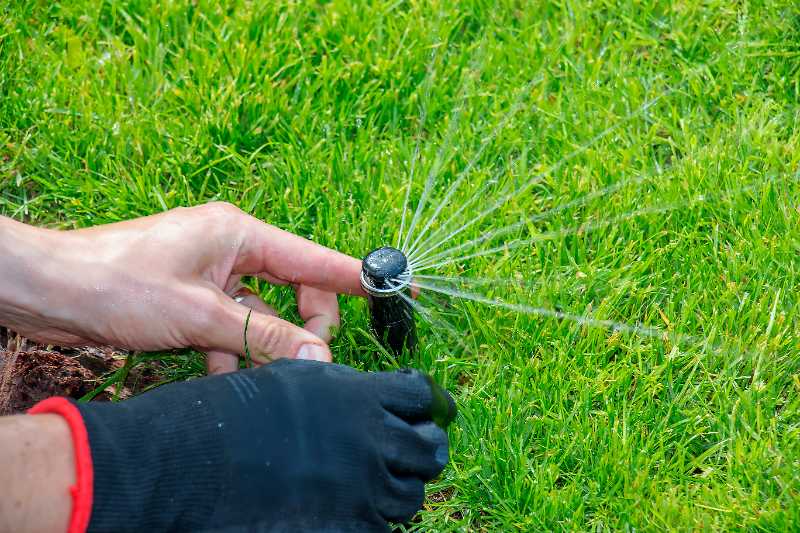
Is your Houston irrigation system not performing the way it should — dry spots appearing despite the system running, zones that do not activate, heads that spray in the wrong direction, or water bills that have climbed without explanation? Houston irrigation system problems follow predictable patterns that reflect the specific conditions Houston's clay soil, hard water, humidity, and UV environment create for irrigation infrastructure over years of operation. Understanding what these patterns look like and what causes them helps Houston homeowners identify what is wrong before calling a contractor — and evaluate whether the repair recommendation they receive addresses the actual problem or simply the visible symptom.
At Gulf Reserve Landscape & Pools, irrigation system repair and assessment is one of the most frequently requested services we provide across Houston's residential market — and the service where the most consistent gap exists between what homeowners think is wrong and what the system assessment actually reveals. A dry spot that looks like a broken head is sometimes a coverage gap from a misaligned head. A zone that does not activate is sometimes a controller programming issue rather than a valve failure. A climbing water bill is sometimes a stuck-open valve rather than a leak in the mainline. Getting the diagnosis right before the repair begins is the difference between fixing the problem and fixing the symptom.
Here is the Houston-specific irrigation system troubleshooting guide that helps homeowners understand what their system is telling them.
Dry Spots and Coverage Gaps — Houston's Most Common Irrigation Problem
Dry spots in Houston lawns despite running irrigation systems are the most common irrigation complaint across Houston's residential market — and the diagnosis that most frequently reveals a problem different from what the homeowner initially assumed.
Misaligned heads are the most common cause of dry spots in Houston irrigation systems. Heads that have been knocked off their correct spray angle by lawn mowing equipment — the most common cause of head misalignment in Houston — spray in directions that leave adjacent areas uncovered while overspraying areas that do not need the water. Houston irrigation heads operate in the path of mowing equipment weekly through the 9 to 10 month Houston growing season — the contact frequency that makes head misalignment a regular maintenance issue rather than an occasional problem. Identifying misaligned heads requires running each zone and observing where every head is actually spraying rather than where it should be spraying based on the system design.
Sunken heads in Houston turf develop as the clay soil around irrigation heads settles over years of wet-dry cycling — the same soil movement that affects Houston hardscape affects irrigation head positions. A head that was installed at the correct height relative to the turf surface develops as a below-grade head as the soil settles around it — producing a head that throws water at too low an angle to reach its intended coverage radius. Sunken heads in Houston turf are identified by the reduced throw distance and the low spray angle that is visible when the zone is running. Correction requires raising the head to the correct grade — either by extending the riser or replacing the head with a taller body — rather than simply adjusting the spray pattern.
Clogged nozzles from Houston's hard municipal water — the mineral scale accumulation that Blog 30 establishes as a systematic Houston irrigation maintenance issue — produce reduced flow and distorted spray patterns that create the dry spots and coverage inconsistencies that look like head failures until the nozzle is removed and inspected. Houston irrigation nozzles that have been in service for 3 to 5 years without cleaning accumulate the mineral deposits that reduce their effective orifice diameter and change their spray characteristics. Nozzle cleaning or replacement resolves this issue at minimal cost — the repair that is most frequently skipped because it requires removing and inspecting every nozzle rather than simply replacing visibly damaged heads.
Pressure problems across Houston irrigation zones produce coverage inconsistencies that look like head failures but reflect system hydraulic issues rather than individual head problems. Low pressure — from a partially closed supply valve, a mainline restriction, or excessive zone demand relative to available flow — reduces head throw distance across the entire zone rather than at individual heads. High pressure — from Houston's municipal supply pressure that often exceeds the 30 to 45 PSI that residential irrigation heads are designed to operate at — produces the misting and wind drift that reduces coverage uniformity across the zone. Pressure problems in Houston irrigation systems are identified by the systematic nature of the coverage issue — all heads in a zone affected rather than individual heads — and resolved through pressure regulation rather than head replacement.
Zone Activation Failures — When Houston Irrigation Zones Do Not Run
Zone activation failures — irrigation zones that do not run when commanded by the controller — are the second most common Houston irrigation system problem and the category with the widest range of possible causes.
Controller programming issues are the most frequently overlooked cause of zone activation failure in Houston irrigation systems. Controllers that have lost programming from battery failure, power interruptions from Houston's frequent storm outages, or accidental program changes produce zones that do not run on their intended schedule — not because the valve or the head is failed but because the controller is not commanding the zone to run. Before diagnosing any Houston irrigation zone activation failure as a hardware problem, confirming that the controller program is intact and correct is the first diagnostic step.
Valve solenoid failures are the most common hardware cause of zone activation failure in Houston irrigation systems. The solenoid — the electrical component that opens the zone valve when the controller sends an activation signal — fails in Houston irrigation systems from the combination of mineral scale accumulation on the solenoid plunger, moisture infiltration into the solenoid coil, and the thermal cycling that Houston's temperature range creates for electrical components. Solenoid failure is identified by the absence of the audible click that a functioning solenoid produces when the controller sends an activation signal — and confirmed by testing the solenoid's electrical resistance with a multimeter. Solenoid replacement is a straightforward repair that restores zone function in most cases where the valve body and diaphragm are intact.
Valve diaphragm failures in Houston irrigation systems produce either a zone that does not activate — from a diaphragm that does not flex correctly to open the valve — or a zone that does not shut off — from a diaphragm that does not seal the valve closed after the activation signal ends. Houston valve diaphragms deteriorate from the mineral scale accumulation in Houston's hard water that deposits on the diaphragm surface and from the UV and thermal degradation that affects rubber components over years of Houston's outdoor conditions. Diaphragm replacement — the repair that restores valve function when the solenoid is intact but the valve is not operating — requires opening the valve body and replacing the diaphragm assembly.
Wiring failures between the controller and zone valves produce zone activation failures that look identical to solenoid and valve failures until the wiring is tested. Houston irrigation system wiring — direct-buried low-voltage wire — is subject to the physical damage from landscape maintenance equipment that cuts through buried wire, root intrusion that breaks wire insulation, and the connection corrosion that Houston's soil moisture and mineral content creates at splice points. Wiring failures are identified by the absence of resistance at the valve solenoid when the wire is tested at the controller terminal — indicating an open circuit rather than the characteristic resistance of a connected solenoid. Wire repair or replacement restores zone activation when the valve hardware is intact.
Water Bill Increases — When Houston Irrigation Is Costing More Than It Should
Unexplained increases in Houston water bills on properties with irrigation systems are most commonly caused by one of three irrigation problems — each with a different repair approach and a different urgency level.
Stuck-open zone valves are the most consequential cause of irrigation water bill increases on Houston properties — the failure mode where a zone valve sticks in the open position and delivers water continuously rather than only during scheduled irrigation cycles. A single stuck-open zone valve on a Houston residential irrigation system delivers water at the zone's flow rate — typically 3 to 8 gallons per minute — continuously until the failure is identified and corrected. At Houston's residential water rates, a zone valve that sticks open for two weeks before it is noticed delivers 60,000 to 160,000 gallons of unintended water — a water bill impact that is immediately apparent when the bill arrives and that motivates the urgent repair that stuck-open valve failures deserve.
Stuck-open valve failures in Houston irrigation systems are identified by observing water flowing from heads in a zone when the controller is not commanding that zone to run — the visual confirmation that the zone valve is open when it should be closed. Correction requires either cleaning mineral scale from the valve seat that is preventing complete closure or replacing the valve diaphragm that has failed to seal the valve closed after activation.
Mainline leaks in Houston irrigation systems produce water loss that does not produce visible above-ground symptoms until the leak has been present long enough to saturate the soil around the leak point — which in Houston's clay soil can take weeks of continuous leakage. Houston mainline leaks from pipe joint failures, root intrusion damage, and the freeze-thaw cycle cracks that Houston's occasional hard freezes create in above-grade irrigation components are identified by the combination of unexplained water bill increases and the wet soil areas that persistent subsurface leaks eventually produce at the surface.
Controller over-programming — irrigation schedules that run more frequently or for longer durations than the landscape actually requires — produces water bill increases that reflect irrigation waste rather than system failure. Houston irrigation controllers that were programmed for summer peak demand and never adjusted for the cooler fall and winter months deliver summer-level irrigation volumes through periods when the landscape needs a fraction of that water. Identifying over-programming as the cause of Houston water bill increases requires comparing the controller's actual run times and frequencies against Houston's seasonal evapotranspiration requirements — the comparison that reveals whether the system is running correctly for current conditions or running on a schedule that was correct months ago and has never been updated.
Backflow Preventer Issues in Houston Irrigation Systems
Houston irrigation system backflow preventers — the devices that protect the potable water supply from irrigation system contamination — are subject to the specific failure modes that Houston's hard water, freeze events, and operating conditions create.
Backflow preventer weeping — the continuous drip or trickle from the relief valve on Houston residential backflow preventers — is one of the most common irrigation system issues that Houston homeowners notice and the one whose cause most frequently surprises them. Backflow preventer relief valve weeping in Houston irrigation systems typically results from mineral scale deposits on the relief valve seat that prevent complete seating — the same hard water scale accumulation that affects irrigation nozzles and emitters throughout the Houston irrigation system. Relief valve weeping in Houston backflow preventers is sometimes correctable through cleaning and sometimes requires relief valve replacement depending on the severity of scale accumulation on the valve components.
Post-freeze backflow preventer failures in Houston irrigation systems — the cracked bodies and damaged internal components that Houston's occasional hard freeze events produce in inadequately protected above-grade backflow preventers — are the most consequential and most preventable irrigation system failures that Houston homeowners experience. As established in Blogs 06 and 36, backflow preventers on Houston irrigation systems need insulation protection before hard freeze events — the foam wrap that prevents the water inside the preventer body from freezing and expanding to the point of cracking the brass body or damaging internal components. Post-freeze backflow preventer replacement requires either body replacement or complete preventer replacement depending on the extent of freeze damage.
When Houston Irrigation Repair Becomes Irrigation Redesign
Some Houston irrigation system problems are symptomatic of fundamental design limitations rather than component failures — and addressing them correctly requires irrigation redesign rather than component repair.
Systematic coverage failures across multiple zones that persist after head adjustment, nozzle replacement, and pressure correction reflect zone design limitations rather than maintenance issues. A Houston irrigation system where the zone layout consolidates areas with different water demand on the same valves — the full-sun front lawn and the shaded side yard on the same zone, for example — cannot be corrected through component repair because the problem is the zone design rather than any individual component. Correcting systematic coverage failures from zone design limitations requires zone addition and separation — redesign work that resolves the underlying cause rather than the symptoms that component repair addresses.
Controller capacity limitations that prevent adequate zone separation on Houston properties where the irrigation program has expanded beyond the original system's zone count — new planting areas added after the original installation, ornamental bed drip zones added to a system designed for turf only — require controller replacement with a unit that has adequate zone capacity for the current and anticipated future program. As established in Blog 41, controller capacity limitations on Houston new build systems are a common finding during irrigation assessment — the builder system's controller cannot accommodate the zone additions that adequate coverage of the expanded planting program requires.

Not sure what is wrong with your Houston irrigation system or whether it needs repair or redesign? Gulf Reserve Landscape & Pools assesses every Houston irrigation system personally — running every zone, observing head performance, testing valve operation, and reviewing controller programming before recommending any repair scope — so the work we do addresses the actual problem rather than the visible symptom.
Get your free estimate at gulfreservelandscaping.com


