




Houston Bayou Property Landscaping — What Erosion Control, Drainage Management, and Outdoor Transformation on Houston's Bayou Corridors Actually Requires
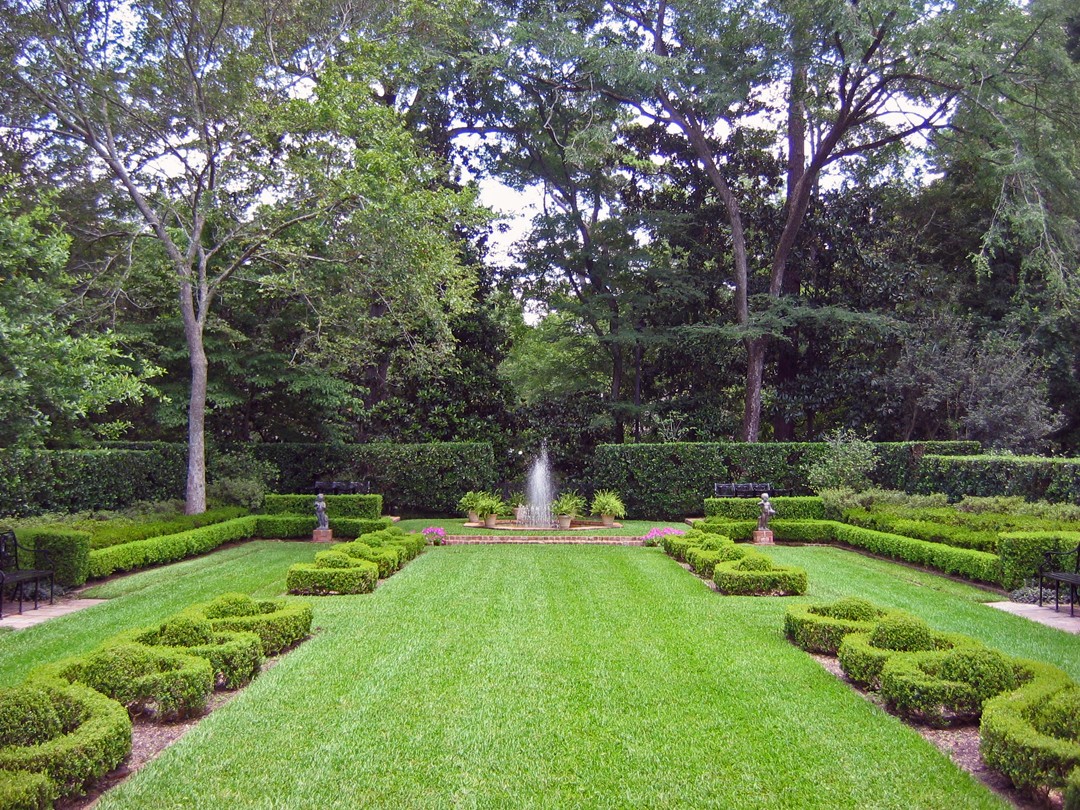
Does your Houston property back up to one of the city's bayou corridors — Buffalo Bayou, Brays Bayou, White Oak Bayou, Greens Bayou, or one of their many tributaries — and are you dealing with the erosion, flooding, and drainage challenges that bayou adjacency creates while also trying to develop the outdoor living quality that your property's unique natural setting makes possible? Bayou-adjacent properties in Houston present one of the most distinctive and most challenging landscape design contexts in the city — the combination of the erosion and flood risk management that bayou proximity requires and the genuine natural beauty that the bayou corridor setting provides creates the design opportunity that correctly approached bayou property landscaping captures rather than simply managing.
Houston's bayou system — the 2,500 miles of natural and engineered drainage channels that the Harris County Flood Control District manages through the city — creates the specific site conditions that bayou-adjacent property owners experience as both asset and liability. The mature trees along the bayou banks, the wildlife habitat that bayou corridors provide, and the natural character that bayou-adjacent properties possess are the assets. The periodic flooding during significant Houston rain events, the bank erosion that bayou water velocity creates during high water, and the vegetation and development restrictions that bayou corridor regulations impose are the liabilities that bayou property landscape design needs to address while preserving and enhancing the assets.
At Gulf Reserve Landscape & Pools, landscape design for Houston bayou-adjacent properties is part of our full landscape makeover and stone work services. Here is what proper bayou property landscape design in Houston actually requires.
Understanding Houston Bayou Property Site Conditions
Houston bayou-adjacent properties present site conditions that are fundamentally different from standard Houston residential properties — conditions that require specific assessment before any landscape design can reflect what the site actually needs.
Flood zone designations on Houston bayou-adjacent properties — the FEMA flood zone classifications that determine flood insurance requirements, development restrictions, and the design standards that structures and improvements on the property must meet — are the regulatory context that bayou property landscape design needs to address from the beginning. Properties in FEMA-designated Special Flood Hazard Areas — the 100-year flood zones that Houston's bayou corridors include — have specific restrictions on fill placement, structure elevation, and the types of improvements that are permissible within the flood zone. Landscape improvements on bayou-adjacent Houston properties that are within or partially within FEMA flood zones need to be designed with the regulatory context that governs what is permissible rather than designed without it and then discovered to be non-compliant after installation.
Harris County Flood Control District easements on Houston bayou-adjacent properties — the drainage easements that HCFCD maintains along bayou corridors for access, flood control operations, and vegetation management — create the development setback that limits what can be built or planted within the easement boundary. HCFCD easements on Houston bayou-adjacent properties typically extend 25 to 50 feet from the top of the bayou bank — a significant portion of some smaller bayou-adjacent lots that this easement restriction affects. Landscape improvements within HCFCD easements require HCFCD permit approval and must be consistent with the flood control and drainage access requirements that the easement protects.
Bayou bank erosion conditions on Houston properties reflect the velocity and frequency of bayou flow during Houston rain events — the high-velocity flow during significant storms that erodes unprotected bayou banks and that progressively consumes the bayou-adjacent property that it undermines. Houston properties with unprotected bayou banks — bare soil or declining vegetation at the bank face — are losing property to erosion with every significant storm event that produces high bayou flow. The bank protection program that stabilizes the eroding bank — whether through bioengineering approaches, stone riprap, or engineered retaining structures — is the foundational intervention that prevents continued property loss before landscape improvements in the area above the bank are made.
Seasonal flooding patterns on Houston bayou-adjacent properties — the frequency, depth, and duration of inundation that the specific property's elevation relative to the bayou creates during Houston's rain events — determines what landscape improvements can be used in the areas subject to periodic flooding. Plants, hardscape, and outdoor structures installed in areas that flood periodically need to be selected and specified for tolerance of the specific flooding conditions the site creates — not the general flood tolerance that broad plant categories provide but the specific duration, depth, and timing of inundation that the property's flood history reveals.
Bank Stabilization — The Foundational Bayou Property Landscape Investment
Bank stabilization on Houston bayou-adjacent properties — the erosion control program that protects the bayou bank from the progressive erosion that unprotected banks experience during high-flow events — is the foundational landscape investment that all other bayou property improvements depend on. Investing in landscape improvements on the property above the bayou bank while the bank itself continues eroding is investing in improvements whose foundation is being removed by the erosion that bank stabilization would prevent.
Bioengineering approaches to Houston bayou bank stabilization — using native plants, root systems, and organic materials to stabilize the bank face through biological means rather than hard armoring — are the bank stabilization methods that HCFCD typically prefers for bayou bank treatments within its easements and that produce the most aesthetically natural results when they are appropriate for the specific bank's erosion conditions. Native wetland species — giant cutgrass, river bulrush, and the native emergent plants that colonize Houston bayou banks naturally — provide the root mass and stem density that reduces flow velocity at the bank face and stabilizes the soil against the erosive forces that high bayou flow generates.
Bioengineering approaches are most appropriate for Houston bayou banks with moderate erosion rates — banks where the erosion is gradual rather than catastrophic, where the bank slope is manageable for plant establishment, and where the flow velocities during storm events do not exceed the velocities that plant root systems can resist. Banks with severe active erosion, steep or unstable slopes, or exposure to the highest-velocity flow sections of the bayou may require the hard armoring that bioengineering alone cannot provide.
Stone riprap bank protection — the angular stone revetment that protects Houston bayou banks from the erosive forces that high-flow events generate — is the hard armoring approach appropriate for bayou banks where flow velocities, bank slopes, or active erosion rates exceed what bioengineering can address. Natural stone riprap on Houston bayou banks — angular limestone or granite in sizes appropriate for the specific flow velocities and bank conditions — provides the mass and interlock that resists the hydraulic forces that erode unprotected banks while creating the naturalistic appearance that engineered stone revetment achieves more successfully than concrete alternatives.
Stone riprap installation on Houston bayou banks within HCFCD easements requires HCFCD permit approval and must meet the dimensional and material specifications that HCFCD's bank protection standards require. The permitting and design process for Houston bayou bank stone riprap — obtaining the HCFCD permit, designing the stone size and gradation for the specific flow conditions, and installing with the geotextile filter fabric that prevents the fine soil migration that undermines stone revetment without it — is the regulatory and technical process that properly permitted and designed bank protection follows.
Natural stone retaining walls at the top of Houston bayou banks — the structural walls that stabilize the bank transition between the active bayou corridor and the usable property above it — create both the erosion control that prevents progressive bank loss and the landscape design feature that defines the outdoor room character of the bayou-adjacent property. As Blog 65 establishes for Houston natural stone retaining walls generally, bayou bank retaining structures need the foundation depth, drainage design, and material specification that Houston's clay soil and the bayou corridor's periodic flooding create as specific engineering requirements.
Flood-Tolerant Planting for Houston Bayou-Adjacent Properties
Planting design for Houston bayou-adjacent properties needs to address the periodic flooding that properties in or near the bayou corridor's flood zone experience — specifying species that tolerate the specific flooding conditions the site creates rather than the general Houston plant palette that is appropriate for well-drained upland conditions.
Native riparian species — the plants that naturally colonize Houston bayou corridors and their adjacent areas — are the planting foundation for bayou-adjacent Houston properties because their natural distribution on these sites reflects their evolved tolerance for the specific flooding, soil saturation, and high-water-table conditions that bayou adjacency creates. As Blog 11 establishes for Houston native plants generally, native species in appropriate site conditions require minimal irrigation, minimal fertilization, and minimal pest management after establishment — the low-maintenance planting that bayou-adjacent properties benefit from because the maintenance access that flooding periodically interrupts makes high-maintenance planting programs impractical.
Bald cypress — the defining tree of Houston's bayou corridors — is the most appropriate canopy tree for Houston bayou-adjacent properties in flood-zone areas. Its tolerance for periodic and even extended inundation, its dramatic form with the knees that emerge from the soil around established trees, and its exceptional fall color in Houston's mild autumn make it the bayou-adjacent specimen tree that no other Houston species can match for the combination of functional performance and aesthetic quality in these specific conditions. Water oak, overcup oak, and swamp chestnut oak are the large-scale upland species that tolerate the wet conditions of bayou-adjacent sites without the full flood tolerance that bald cypress provides — appropriate for the areas above the flood zone line that periodically wet but not inundated conditions characterize.
Transition zone planting — the planted composition that bridges the native riparian zone at the bayou bank and the more conventional landscape at the upper property — creates the visual and ecological connection between the natural bayou corridor and the managed residential landscape that the most successful Houston bayou property designs achieve. American beautyberry, buttonbush, swamp rose, and the native shrubs that occupy the transition zone between wetland and upland in Houston's natural plant communities create the planting composition that belongs in this transition zone both ecologically and aesthetically.
Outdoor Living Design for Houston Bayou-Adjacent Properties
The outdoor living program on Houston bayou-adjacent properties should leverage the property's unique natural asset — the bayou view, the mature tree canopy, and the natural character that bayou corridor adjacency provides — as the organizing principle of the outdoor living design rather than treating the bayou as simply a boundary condition.
View orientation in Houston bayou-adjacent outdoor living space design — positioning patios, seating areas, and outdoor living rooms to face the bayou view rather than away from it — is the primary design decision that makes the most of the property's distinctive asset. The Houston property with a bayou view that positions its primary outdoor living area with the house between the living area and the bayou, or that orients the patio away from the bayou toward the street, is a property that is not using its most valuable landscape asset as the backdrop for outdoor living.
Elevated terraces on Houston bayou-adjacent properties where the relationship between the property's grade and the bayou corridor creates the level change opportunity — the stone or concrete terrace at the top of the bayou bank that positions outdoor living above the flood zone while providing the elevated view across the bayou corridor — is the hardscape design approach that creates outdoor living quality while addressing the flood zone constraints that limit what can be installed at lower elevations.
Pathway connection to the bayou bank — the garden path from the upper property outdoor living area to the water's edge — is the landscape design element that makes the bayou-adjacent property's most distinctive asset directly accessible and experienceable rather than simply visible from a distance. The path that descends from the upper terrace through the transition zone planting to the bank stabilization area at the water's edge creates the bayou experience that Houston properties in the interior of the city's residential neighborhoods cannot offer.
Regulatory Compliance for Houston Bayou Property Landscape Work
Houston bayou-adjacent property landscape improvements are subject to a regulatory framework that combines FEMA flood zone requirements, HCFCD easement restrictions, and City of Houston or applicable municipal code requirements — a multi-agency framework that landscape design needs to navigate correctly before work begins.
HCFCD permit requirements for work within HCFCD drainage easements — the permit that authorizes specific improvements within the easement boundary — need to be obtained before any work within the easement area begins. HCFCD permit applications for bayou bank improvements require site plans, engineering calculations for structural bank protection, and confirmation that the proposed improvements do not impair HCFCD's access and flood control operations within the easement. Gulf Reserve coordinates HCFCD permit applications as part of the project planning process for Houston bayou-adjacent clients — managing the regulatory submission that the landscape design requires rather than leaving the homeowner to navigate a permitting process unfamiliar to most residential property owners.
FEMA flood zone development requirements for improvements within Special Flood Hazard Areas on Houston bayou-adjacent properties — specifically the fill restrictions, the requirements for structures to be elevated above the Base Flood Elevation, and the limitations on the types of development permissible within the floodway — create the design constraints that outdoor living hardscape and structures on flood-affected portions of bayou-adjacent Houston properties need to be designed within.

Wondering how to make the most of your Houston bayou-adjacent property's outdoor potential while addressing the erosion, flooding, and regulatory conditions that bayou adjacency creates? Gulf Reserve Landscape & Pools assesses every Houston bayou-adjacent property personally — evaluating bank conditions, flood zone designations, HCFCD easement boundaries, and the specific outdoor living opportunities the property's natural setting provides before recommending any scope of work.
Get your free estimate at gulfreservelandscaping.com


