




Harris County Landscape and Hardscape Permits — What Houston Homeowners Need to Know Before They Build
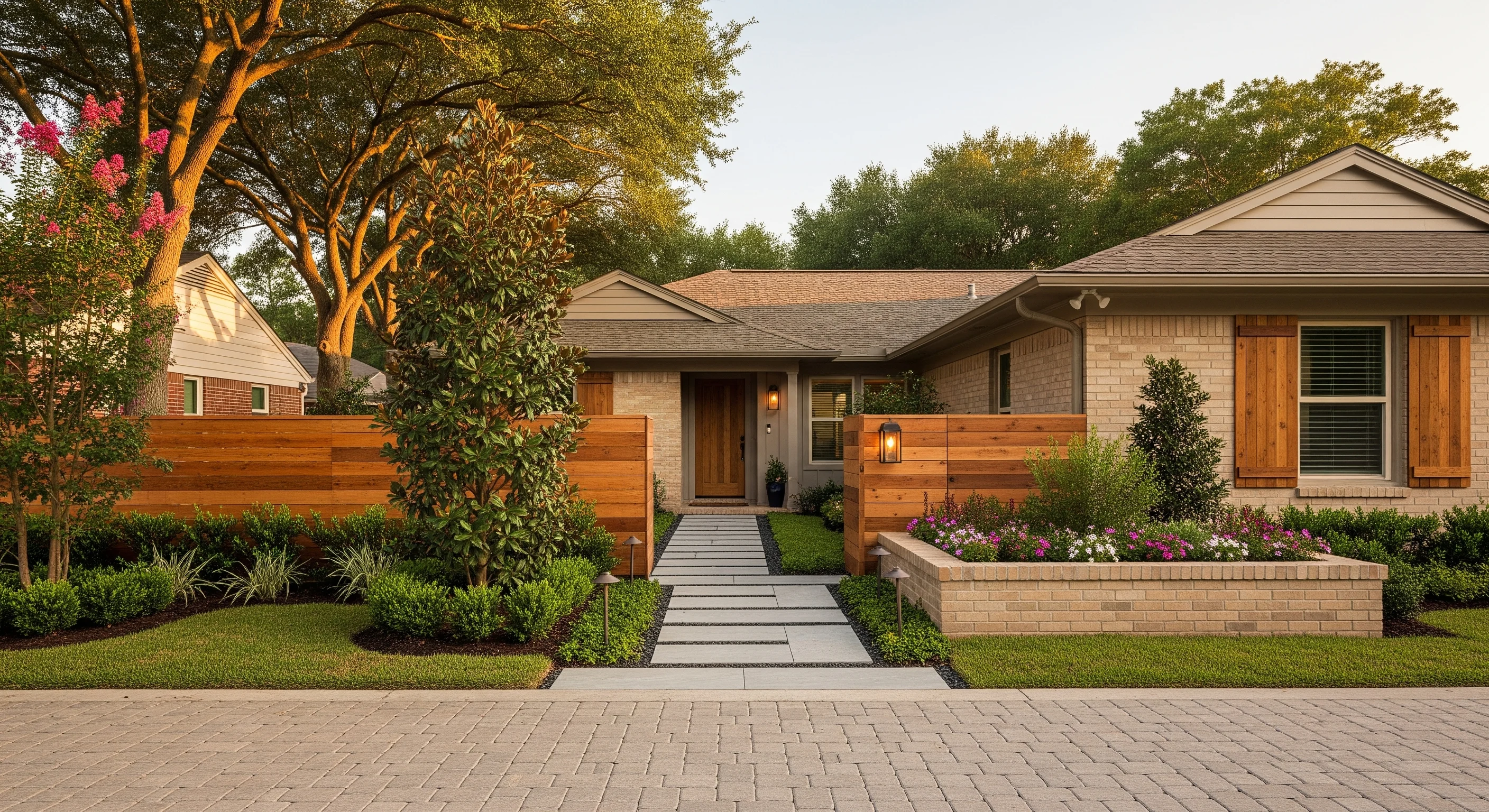
One of the most consistent sources of frustration and unexpected cost in Houston landscape and hardscape projects is permit requirements that neither the homeowner nor the contractor anticipated before work began. A retaining wall that needed a permit and didn't get one. A drainage structure installed in an easement without the required approval. An irrigation backflow preventer that failed inspection because it wasn't the approved device type for the municipality. A pergola that required a building permit because it exceeded the size threshold the homeowner didn't know existed.
These situations are not rare. They happen regularly across Houston's residential and commercial landscape market — and when they do, the consequences range from inconvenient to genuinely expensive. Stop-work orders halt projects mid-construction. Unpermitted work may need to be demolished and rebuilt to code. Property sales can be delayed or complicated when unpermitted structures are discovered during inspection. And in some cases, work done in drainage easements or floodplains without required approvals creates liability that follows the property owner regardless of who did the work.
The landscape and hardscape permit landscape in Houston and Harris County is genuinely complex — not because the regulations are designed to be difficult, but because the jurisdictional structure of the Houston metro means that different rules apply depending on whether your property is in the City of Houston, an incorporated suburb like Katy or Sugar Land, an unincorporated Harris County area, or a municipality in an adjacent county like Fort Bend or Brazoria. Understanding which rules apply to your specific property and your specific project is the starting point for doing landscape and hardscape work correctly in Houston.
At Gulf Reserve Landscape & Pools, permit navigation is part of how we manage every project that triggers regulatory requirements. We handle the permitting process as a standard part of project management — not as an add-on service — because work done without required permits creates problems for homeowners that outlast the project itself. Here is a comprehensive guide to what triggers landscape and hardscape permits in Houston and Harris County, how the process works, and what happens when work is done without required approvals.
The Jurisdictional Structure of Houston — Why Permit Requirements Vary
Houston's permitting environment is unusual compared to most American cities because of the city's historically limited zoning and the complex jurisdictional patchwork of the Houston metro area. Understanding the basic structure of who regulates what in Houston helps explain why permit requirements differ significantly across the metro.
The City of Houston has its own permitting requirements administered through the Houston Permitting Center. Properties within the city limits are subject to City of Houston building codes, floodplain regulations, and the specific permit thresholds that the city has established for various types of construction and improvement work. The City of Houston does not have traditional zoning but does have deed restrictions that function similarly in many established neighborhoods and that can impose requirements beyond what city code requires.
Incorporated suburbs — Katy, Sugar Land, Pearland, The Woodlands Township area municipalities, League City, Friendswood, and others — have their own permit requirements that may differ meaningfully from City of Houston requirements. A retaining wall that does not require a permit in the City of Houston may require one in Sugar Land. An irrigation system backflow device that meets City of Houston requirements may not meet Pearland's specifications. Homeowners in incorporated suburbs need to check with their specific city's permit office rather than assuming City of Houston rules apply.
Unincorporated Harris County areas — the portions of the county outside any incorporated city — are regulated by Harris County rather than a municipal authority. Harris County has its own floodplain management regulations and some structural requirements, but generally has fewer permit requirements for residential landscape and hardscape work than incorporated municipalities. The trade-off is that unincorporated areas also have less infrastructure support and fewer protections, which is why drainage and floodplain regulations in Harris County are taken seriously.
Municipal Utility Districts — the MUDs that provide water, sewer, and drainage services to much of Houston's suburban development — have their own regulatory authority over anything affecting the drainage infrastructure they manage. Work near or affecting MUD drainage infrastructure, detention ponds, or drainage easements requires MUD approval regardless of whether a municipal building permit is also required.
What Triggers a Landscape and Hardscape Permit in Houston
The permit triggers most relevant to Houston residential landscape and hardscape projects fall into several categories. Understanding which category your project falls into is the first step toward knowing what approvals are required.
Retaining walls are one of the most common landscape permit triggers in Houston and Harris County. The threshold height at which a retaining wall requires a permit varies by jurisdiction — the City of Houston generally requires permits for retaining walls exceeding 4 feet in height measured from the bottom of the footer to the top of the wall. Some Houston suburbs have lower thresholds. Walls within drainage easements or in floodplain areas may require permits regardless of height.
The rationale for retaining wall permitting is structural — a wall holding back a significant grade change imposes loads on adjacent soil and properties that, if the wall fails, can cause significant damage. Permitted retaining walls in Houston require engineering review for walls above certain heights and inspection at defined construction milestones. The permit process is not simply bureaucratic friction — it is the mechanism that ensures walls holding back significant soil masses in Houston's expansive clay conditions are designed and built to actually hold.
Structures — pergolas, gazebos, shade structures, outdoor kitchens with roofing, and similar permanent outdoor construction — trigger building permits in most Houston area jurisdictions above certain size thresholds. The City of Houston generally requires permits for accessory structures exceeding 200 square feet. Attached structures — pergolas attached to the house — may trigger permits at lower thresholds because they connect to the primary structure. Freestanding structures that are open on the sides are treated differently than enclosed structures in most Houston jurisdictions, but the specific thresholds vary and should be confirmed with the relevant permit authority before construction begins.
Drainage alterations — French drains, channel drains, regrading that changes the direction or volume of drainage leaving a property, and connections to municipal storm drainage infrastructure — may require permits or approvals depending on the jurisdiction and the scope of the work. In Harris County, any work that affects drainage leaving a property and potentially affecting neighboring properties or drainage infrastructure is subject to review. Connections to municipal storm sewer systems require specific approvals in most Houston area jurisdictions. Work within drainage easements — the strips of property reserved for drainage infrastructure that run through many Houston residential lots — requires easement holder approval regardless of whether a building permit is also required.
Irrigation system backflow preventers are subject to specific permit and inspection requirements across most Houston area municipalities. Texas state law requires backflow prevention on all irrigation systems connected to potable water supplies, and the specific device type, installation configuration, and annual inspection requirements are regulated at the municipal level. Most Houston area municipalities require a permit for new irrigation system installation and inspection of the backflow prevention device. Irrigation systems without permitted and inspected backflow preventers create both code compliance and property sale complications that are significantly more difficult to resolve after the fact than if the permit was obtained at installation.
Work in FEMA floodplains — which affects a meaningful percentage of Houston area properties given the city's flat topography and extensive flood zone coverage — is subject to floodplain management regulations that go beyond standard building permit requirements. The City of Houston and Harris County both participate in the National Flood Insurance Program and administer floodplain development regulations accordingly. Substantial improvements to structures in special flood hazard areas may trigger elevation requirements. Fill placement in floodplains is regulated because it displaces flood storage and can affect flood levels on neighboring properties. Any significant landscape or hardscape work on Houston properties within FEMA-designated flood zones should be reviewed against applicable floodplain regulations before construction begins.
Deed restrictions in Houston's established neighborhoods — particularly the deed-restricted neighborhoods of River Oaks, Memorial, West University, and similar areas — impose requirements beyond city code that are enforced by civic clubs or property owner associations rather than by government authorities. Landscape work visible from the street, fence installation, and hardscape modifications may require civic club approval in deed-restricted Houston neighborhoods regardless of whether a city permit is required. The consequences of violating deed restrictions in Houston's most established neighborhoods range from required removal of non-compliant work to legal action by the civic club — and the deed restriction review process is separate from and in addition to any required city permits.
The Houston Permitting Process — How It Works in Practice
For Houston landscape and hardscape projects that do require permits, understanding the permitting process reduces the anxiety and delay that homeowners who have never navigated it experience.
Pre-application research is the first step and the one that prevents the most problems. Before any work begins on a Houston landscape or hardscape project, confirming the applicable jurisdiction — City of Houston, specific incorporated suburb, or unincorporated Harris County — and contacting the relevant permit office to confirm what permits are required for the specific scope of work takes the uncertainty out of the process. Most Houston area permit offices have online resources and permit technicians who can answer scope-specific questions about whether a particular project requires permits.
Permit application for Houston landscape and hardscape projects typically requires a site plan showing the property boundaries, existing structures, and the proposed work in relationship to property lines, easements, and existing drainage features. For permitted retaining walls in Houston, engineering drawings showing the wall design, footer specifications, drainage provisions, and load assumptions may be required above certain wall heights. For structures, architectural drawings showing dimensions, materials, and connection details are typically required. The level of documentation required scales with the complexity and potential impact of the work.
Plan review timelines in Houston vary significantly by jurisdiction and by current permit office workload. The City of Houston Permitting Center processes residential permit applications on timelines that range from same-day for simple over-the-counter permits to several weeks for projects requiring engineering review. Houston suburbs vary widely — some have faster turnaround than the city, others are slower. Building permit timelines into the project schedule before construction begins prevents the schedule disruptions that result from discovering permit requirements after work is already planned to start.
Inspections at defined construction milestones are required for most permitted Houston landscape and hardscape work. Retaining wall inspections typically occur at footer excavation, before concrete is poured, and at completion. Structure inspections occur at foundation, framing, and final completion stages. Irrigation inspections focus on the backflow prevention installation. The inspection process ensures that the work matches the approved permit drawings and that the construction quality meets code requirements — which for Houston landscape and hardscape work is the mechanism that catches base preparation, reinforcement, and drainage deficiencies that affect long-term performance.
Certificate of occupancy or completion issued after final inspection creates the documentation that the work was permitted, inspected, and approved — documentation that is relevant for insurance purposes, for property sales, and for any future modifications or additions that need to relate to the permitted work.
What Happens When Houston Landscape Work Is Done Without Required Permits
The consequences of unpermitted landscape and hardscape work in Houston range from minor inconvenience to significant financial impact, depending on the nature of the work, how it is discovered, and what the applicable jurisdiction requires as a remedy.
Stop-work orders are issued when permitted work is discovered in progress without required permits. A stop-work order halts all construction activity on the project until permits are obtained and the work is reviewed by the permitting authority. If work has already been done that was required to be inspected before being covered — footer concrete poured before footer inspection, for example — the inspector may require that the work be exposed for inspection, which means demolishing completed work to verify what is beneath it.
After-the-fact permits — permits obtained for work that was already completed without permits — are available in most Houston jurisdictions but come with complications. The permit authority may require as-built drawings documenting exactly what was built. Inspections of completed work may require exposing portions of the construction to verify compliance. If the completed work does not meet code requirements, modifications or demolition and reconstruction may be required as a condition of permit issuance. The cost and disruption of after-the-fact permitting almost always exceeds what proper upfront permitting would have cost.
Property sale complications arise when unpermitted structures or improvements are discovered during the buyer's due diligence process or during the buyer's inspection. In Texas, sellers are required to disclose known defects and material conditions affecting the property. Unpermitted work that should have been permitted is a disclosure item. Buyers may require permits to be obtained, work to be brought into compliance, or price reductions to account for the cost of remediation. In the worst cases, discovery of significant unpermitted work can derail Houston property sales entirely.
Insurance complications occur when unpermitted work is involved in an insurance claim. A homeowner's insurance policy typically covers the property as permitted and approved — structures or improvements that were not permitted may not be covered under the policy for loss or damage, and the insurer may use the unpermitted status of work as a basis for claim denial or coverage limitation.
How Gulf Reserve Manages the Permit Process
At Gulf Reserve Landscape & Pools, permit management is built into how we approach every project that requires regulatory approval — not as a separate service but as part of how responsible landscape and hardscape contracting works.
Before we begin design on any Houston project, we confirm the applicable jurisdiction and identify any permit requirements based on the project scope. We prepare the permit applications and supporting documentation, manage the submission and review process, coordinate inspections at required construction milestones, and ensure that the completed work has the documentation it needs for the homeowner's records.
Houston homeowners should be cautious of landscape and hardscape contractors who either are unaware of applicable permit requirements or who suggest proceeding without required permits to avoid the time and cost of the permitting process. Both situations create exposure for the homeowner that outlasts the contractor's involvement in the project. A contractor who does not know that a proposed retaining wall requires a permit in the applicable Houston jurisdiction is not someone who should be building that wall. A contractor who knows permits are required but suggests skipping them is asking the homeowner to assume the full risk of that decision.
The permit process adds time and some cost to Houston landscape and hardscape projects. It also adds the assurance that the work was designed and built to the standards that protect its long-term performance — and that the documentation exists to demonstrate that assurance to insurers, future buyers, and anyone else with a legitimate interest in the property.

Gulf Reserve Landscape & Pools manages the full permit process for every Houston landscape and hardscape project that requires regulatory approval — across Houston, River Oaks, Memorial, Katy, Sugar Land, Pearland, The Woodlands, and surrounding areas. We handle the paperwork, the submissions, the inspections, and the documentation so the project is compliant from start to finish.
Request your free estimate at gulfreservelandscaping.com — and let's build your Houston landscape project correctly from the ground up.


