




Drip Irrigation for Houston Vegetable Gardens and Raised Beds — What Gulf Coast Food Growing Actually Requires From Irrigation Design
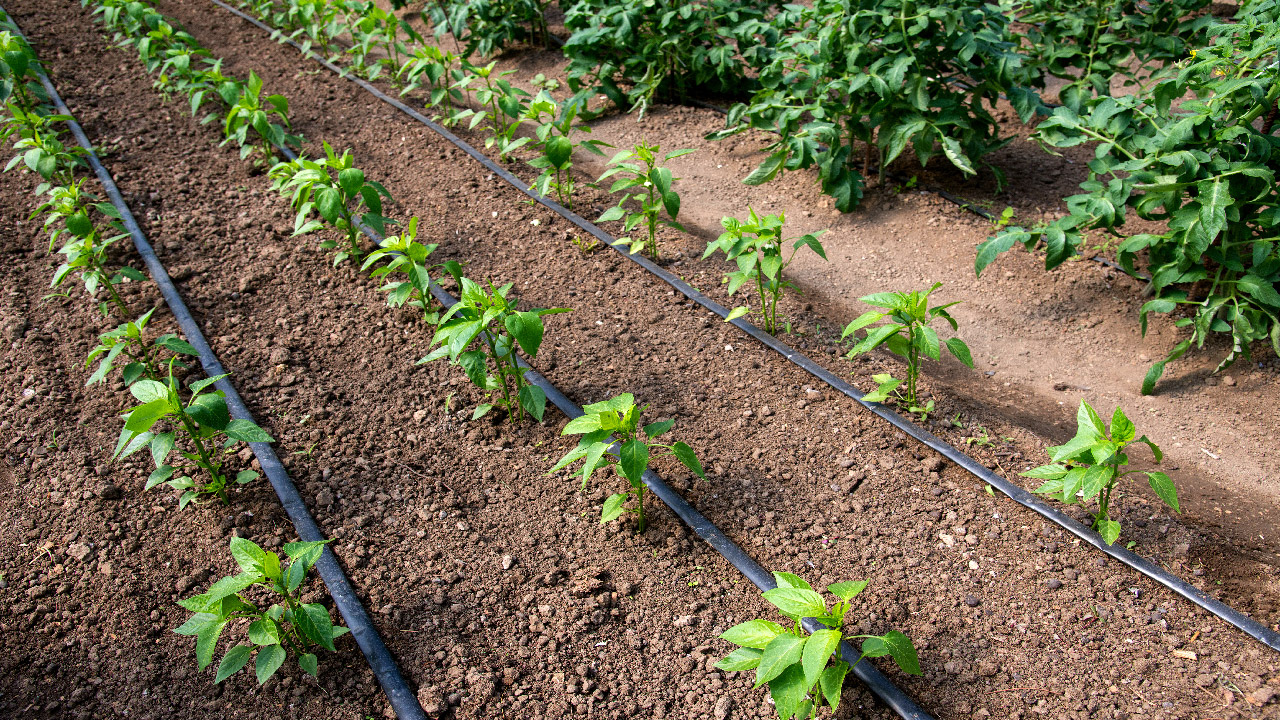
Is the irrigation on your Houston vegetable garden or raised bed system actually supporting the productive food growing that Houston's year-round growing season makes possible — or are you managing hand watering that is inconsistent enough to affect crop production, overhead spray that promotes the fungal diseases that Houston's humidity makes consequential for vegetable plants, or a garden that goes unwatered during Houston's busy summer weeks because the irrigation commitment it requires exceeds what a consistent schedule allows? Houston's vegetable growing season — one of the longest in the country, with productive growing possible from February through November with the right crops and management — creates the irrigation commitment that drip systems are specifically designed to make manageable rather than burdensome.
Houston's specific conditions create vegetable garden irrigation requirements that generic drip irrigation guidance — most of which is written for the drier climates where drip irrigation was first adopted at scale — does not adequately address. The combination of Houston's clay soil with its slow infiltration rate, the Gulf Coast humidity that makes foliar wetness from overhead spray consequential for vegetable disease management, the hard municipal water that Houston drip systems need to manage through appropriate filtration, and Houston's specific seasonal planting calendar that creates dramatically different irrigation demand at different times of year all create the Houston-specific drip design requirements that this blog addresses.
At Gulf Reserve Landscape & Pools, irrigation system design for Houston vegetable gardens and raised beds is part of our irrigation systems service. Here is what drip irrigation for Houston food gardens actually requires.
Why Houston Vegetable Gardens Need Drip Rather Than Overhead Irrigation
The case for drip irrigation in Houston vegetable gardens is even stronger than the general Houston ornamental bed drip case that Blog 29 establishes — because vegetable plants are more susceptible to the specific problems that overhead irrigation creates in Houston's conditions than most ornamental species.
Fungal disease pressure on Houston vegetable plants from overhead irrigation — the foliar wetness that spray irrigation deposits on leaves, stems, and fruit in Houston's already-humid conditions — is the primary reason that drip is the correct irrigation approach for Houston food gardens. Houston's combination of warm temperatures and high humidity creates ideal conditions for the fungal pathogens that cause tomato early blight and late blight, squash powdery mildew, cucumber downy mildew, and the soil-borne diseases that splash from wet soil onto lower leaves during overhead irrigation events. Drip irrigation that delivers water to the root zone without wetting foliage eliminates the moisture source that these fungal diseases exploit — a disease management benefit that is far more consequential for vegetable production in Houston's conditions than for most ornamental plantings.
Fruit quality and production in Houston vegetable gardens is affected by overhead irrigation through two mechanisms that drip delivery avoids. Direct water contact with developing fruit — tomatoes, squash, peppers, and the other fruiting vegetables that Houston's growing season accommodates — promotes the fungal rots and skin damage that reduce fruit quality and storability. Inconsistent soil moisture from overhead irrigation that wets the surface zone but dries between applications — the wet-then-dry cycling that Houston's evapotranspiration between irrigation events creates in shallow-rooted raised bed soil — produces the blossom end rot in tomatoes and tip burn in lettuce that consistent root zone moisture through drip prevents.
Water efficiency in Houston raised beds — where the imported growing medium that most Houston raised bed programs use is significantly more permeable than native Houston clay — creates the irrigation efficiency opportunity that drip delivers more effectively than overhead spray. Raised bed growing medium with adequate organic matter and good drainage structure absorbs water efficiently from drip emitters without the runoff that overhead spray creates when application rate exceeds infiltration capacity. The water that overhead spray deposits on the soil surface of a Houston raised bed and immediately runs off the side of the bed — particularly in the intense application rates that standard spray heads deliver — is water that drip emitters delivering directly to the root zone would have made available to the plants.
Houston's Vegetable Growing Calendar and Irrigation Demand Variation
Houston's vegetable growing calendar — the specific seasons when different crops are productive in USDA Zone 9a — creates irrigation demand variation through the year that drip system design and programming need to account for.
Spring growing season in Houston — the February through May window when warm-season crops including tomatoes, peppers, squash, cucumbers, and beans produce their primary crop before summer heat reduces production — is the highest-irrigation-demand period for Houston vegetable gardens. Spring temperatures climbing from the mild 60s of February into the 90-plus degrees of May create rapidly increasing evapotranspiration rates that drip system programming needs to respond to with increasing run times as the season progresses. Tomatoes and peppers in Houston raised beds during April and May — the peak production window before summer heat stress reduces fruit set — need consistent soil moisture that the manual watering many Houston gardeners rely on cannot consistently deliver through busy spring schedules.
Summer growing season in Houston — the June through August period when heat-tolerant crops including okra, southern peas, sweet potatoes, and certain pepper varieties continue producing — creates the highest irrigation demand of the Houston vegetable growing year. Houston summer temperatures exceeding 95 degrees Fahrenheit with heat index values above 105 drive evapotranspiration rates that raised bed growing medium with good drainage structure can require daily irrigation to maintain — a frequency that drip automation makes manageable and that hand watering makes burdensome enough that Houston gardeners often let summer gardens go underwatered.
Fall growing season in Houston — the September through November window when both cool-season crops and a second planting of warm-season crops can be productive — creates the declining irrigation demand as temperatures moderate from summer peak into fall. Fall drip programming in Houston should reduce run times and frequency as temperatures drop through September and October — the same seasonal adjustment principle that Blog 06 establishes for Houston lawn irrigation applies to vegetable garden drip systems.
Winter growing season in Houston — the cool-season vegetable production that Houston's mild winters make possible from October through February with crops including leafy greens, root vegetables, brassicas, and herbs — creates the lowest irrigation demand of the Houston vegetable growing year. Cool temperatures, shorter days, and Houston's winter rainfall mean that most cool-season Houston vegetable garden crops need minimal supplemental irrigation in most years — the drip system that has been running daily during summer may need to run only 2 to 3 times per week or less through winter depending on rainfall and evapotranspiration conditions.
Drip System Design for Houston Raised Beds
Drip system design for Houston raised beds follows the principles Blog 29 establishes for ornamental bed drip generally — with the specific modifications that vegetable growing requirements and raised bed construction create.
Emitter selection for Houston raised beds needs to balance the flow rate that maintains adequate soil moisture in the raised bed growing medium with the infiltration rate that prevents surface ponding. Raised bed growing medium with good drainage structure — the quality compost, aged bark, and perlite blends that most Houston raised bed programs use — has significantly higher infiltration rates than native Houston clay, accommodating higher emitter flow rates without the surface ponding that Blog 29 establishes as the limiting factor for Houston clay drip design. Standard 1.0 gallon per hour emitters in Houston raised beds typically deliver water within the growing medium's absorption capacity — allowing adequate water delivery without the surface ponding that exceeds the medium's infiltration rate.
Emitter spacing in Houston raised beds needs to create the overlapping wetted zones that keep the full root zone of the raised bed adequately moist rather than the point-source delivery that widely spaced emitters create in containers and beds without the lateral water movement that native soil provides. The 12 to 18 inch emitter spacing that Blog 29 establishes for Houston ornamental bed drip is appropriate for raised beds — modified by the specific crop being grown. Dense plantings of leafy greens and root vegetables benefit from closer emitter spacing — 8 to 12 inches — that maintains consistent moisture throughout the densely rooted zone. Larger-spaced plantings of tomatoes, peppers, and cucumbers can be served by individual emitters positioned at each plant's drip line with supplemental emitters added as the plant's root zone expands.
Soaker hose integration as an alternative or complement to point-source emitters for Houston raised beds — the porous rubber or plastic tubing that weeps water along its entire length rather than at specific emitter positions — provides the continuous moisture zone that dense raised bed plantings benefit from. Houston raised beds planted in rows — the traditional raised bed layout that maximizes production in limited space — benefit from soaker hose rows that run parallel to each planting row at 6 to 8 inch spacing, creating the continuous moisture zone that the densely planted bed requires without the emitter count that providing equivalent coverage with point-source emitters would need.
Pressure regulation for Houston raised bed drip systems — the pressure regulator that Blog 29 establishes as essential for maintaining drip emitter performance within rated specifications — is particularly important for raised beds because the elevated position of the bed above grade creates the pressure variation that unregulated systems experience. Raised beds on legs or elevated frames have a lower elevation than the supply line — creating slightly higher pressure at the emitters than grade-level installations experience from the same supply pressure. Pressure regulation at the zone inlet maintains the consistent 15 to 25 PSI that drip emitters need to operate at their rated flow regardless of the supply pressure variation that Houston's municipal distribution produces.
Houston Water Quality Management for Vegetable Garden Drip
Houston's hard municipal water creates specific management requirements for vegetable garden drip systems that the mineral scale accumulation that Blog 30 establishes as a systematic Houston irrigation issue produces with particular impact on the small-orifice components of drip systems.
Filtration at the vegetable garden drip zone inlet — the 150-mesh filter that intercepts mineral particles before they reach the drip emitters and soaker hoses — is essential for Houston vegetable garden drip systems that will be running daily or near-daily during Houston's summer growing season. The mineral particle load that Houston's municipal water delivers to drip system components at daily irrigation frequency accumulates significantly faster than on systems running 2 to 3 times per week — making filter cleaning more frequent and emitter flushing more important for Houston vegetable garden drip systems than for ornamental bed systems with lower run frequency.
Food safety consideration for edible crops in Houston — the question of whether Houston's hard municipal water affects the quality of the vegetables grown with it — is relevant for the specific minerals that Houston water contains at its tested concentrations. Houston municipal water at 100 to 200 parts per million hardness delivers calcium and magnesium to vegetable garden soil with every irrigation cycle — minerals that are beneficial plant nutrients at the concentrations Houston water provides rather than harmful accumulations. The pH management that Blog 01 establishes as important for Houston soil chemistry applies to raised bed growing medium as well — the alkalinity that Houston water irrigation adds to raised bed soil over time benefits from the same periodic acidification that garden bed soil management requires.
Seasonal Programming for Houston Vegetable Garden Drip Systems
Programming Houston vegetable garden drip systems for the seasonal variation in crop water demand — the dramatically different irrigation frequencies and run times appropriate for summer production versus winter cool-season crops — requires the seasonal adjustment that Blog 06 establishes for all Houston irrigation systems.
Summer vegetable programming for Houston raised beds during peak growing season — June through August — typically requires daily irrigation of 15 to 30 minutes per zone depending on emitter flow rates, bed size, and the specific crops being grown. Tomatoes and peppers in Houston raised beds during peak summer need the consistent soil moisture that daily drip delivers — the moisture level that prevents the blossom end rot that inconsistent watering produces in calcium-sensitive fruiting vegetables in Houston's summer heat.
Transitional season programming for Houston vegetable gardens during spring and fall — February through May and September through November — requires the intermediate irrigation frequency that seasonal evapotranspiration conditions create between summer peak demand and winter minimum. Starting at 2 to 3 times per week in early spring and increasing to daily as temperatures rise through April and May, then reducing from daily back to 2 to 3 times per week as temperatures moderate through September and October — the seasonal progression that matches irrigation delivery to actual crop demand rather than a fixed schedule.
Winter vegetable programming for Houston cool-season crops — October through February — typically requires 1 to 3 irrigation events per week at reduced run times reflecting the lower evapotranspiration demand of Houston's cool season. Houston's winter rainfall frequently supplements or replaces drip irrigation during this period — the rain sensor that suspends drip irrigation after adequate rainfall events prevents the waterlogging that Houston's winter clay drainage challenges create when irrigation continues through wet periods.
Installing Drip Irrigation on Houston Raised Beds — What the Process Looks Like
Installing drip irrigation on Houston raised beds is straightforward enough that many Houston gardeners install their own systems — but the connection to the property's irrigation infrastructure, the pressure regulation and filtration components, and the programming that serves the vegetable growing calendar correctly benefit from the professional assessment and installation that ensures the system performs correctly from the first growing season.
Connection to existing irrigation infrastructure — tapping into the property's existing irrigation mainline or creating a dedicated connection from the domestic water supply — is the installation component that most directly affects how the vegetable garden drip system operates relative to the property's other irrigation zones. A dedicated vegetable garden drip zone on the property's irrigation controller allows the garden zone to be programmed independently from lawn and ornamental bed zones — the zone separation that makes the daily summer vegetable garden irrigation possible without running the lawn zones at equivalent frequency.
Timer and controller options for Houston vegetable garden drip systems span from simple battery-powered hose bib timers — appropriate for small raised bed gardens where the simplicity and independence from the property's existing irrigation system is an advantage — to dedicated zones on the property's smart irrigation controller — appropriate for larger vegetable garden programs where the seasonal programming flexibility and ET-based adjustment that smart controllers provide produces the most efficient and most productive irrigation management.

Wondering whether your Houston vegetable garden or raised bed system needs a properly designed drip irrigation program? Gulf Reserve Landscape & Pools assesses Houston vegetable garden and raised bed irrigation as part of our irrigation systems service — evaluating the current irrigation approach, the specific crop program and growing calendar, and the connection options to the property's existing irrigation infrastructure before recommending a drip design that supports productive Houston food growing.
Get your free estimate at gulfreservelandscaping.com


