




Drip Irrigation for Houston Landscape Beds — Why Overhead Spray Is the Wrong Approach and What Drip Actually Delivers
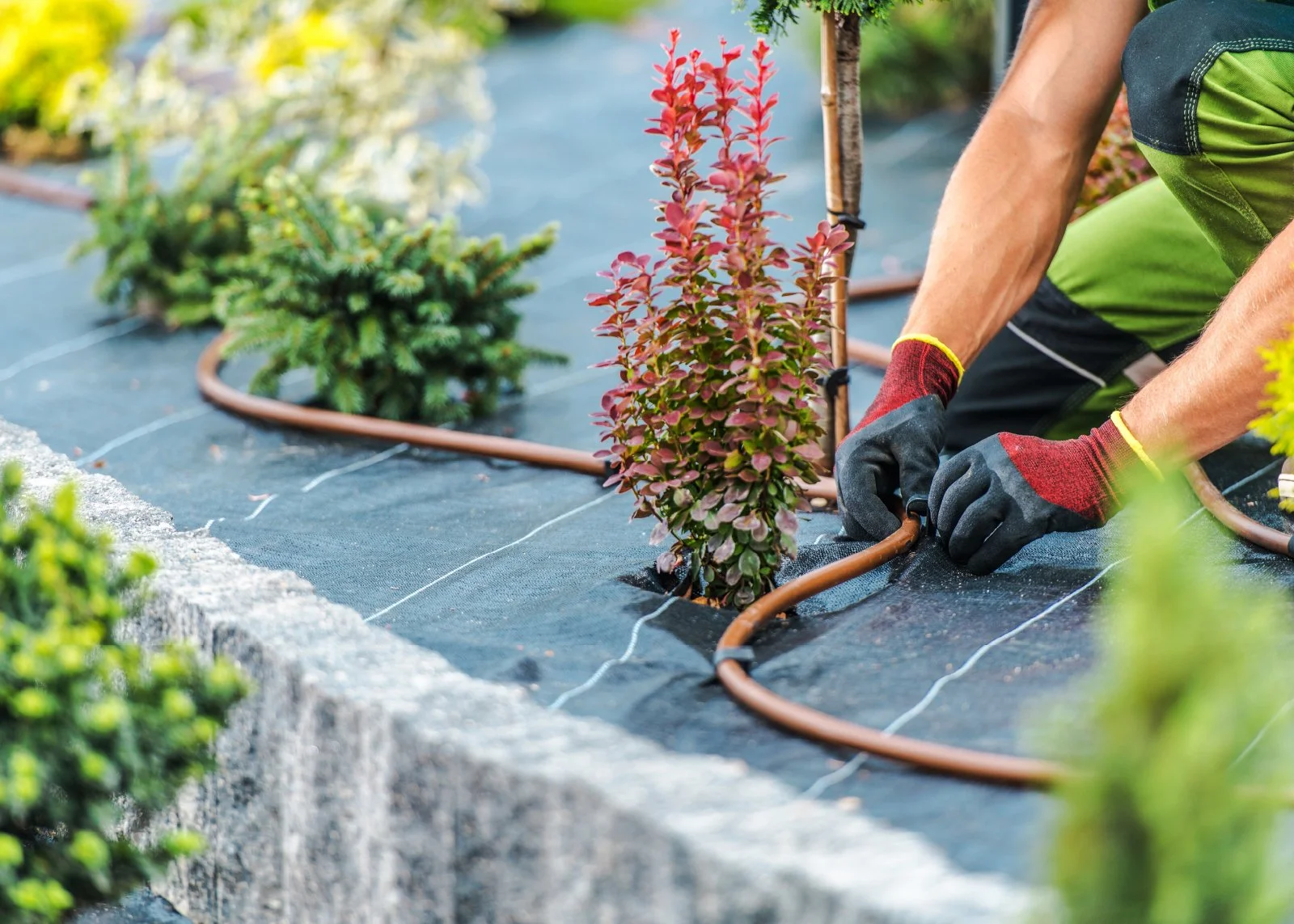
Are the ornamental beds on your Houston property being served by the same overhead spray irrigation that covers the adjacent lawn areas — and are you seeing the fungal disease pressure, inconsistent plant health, and water waste that overhead spray in Houston ornamental beds consistently produces? The irrigation approach that serves Houston lawns adequately is the wrong approach for Houston ornamental beds — not because overhead spray cannot deliver water to plants in beds but because the way it delivers water creates specific problems in Houston's conditions that drip irrigation avoids by design.
Houston's Gulf Coast conditions make the difference between overhead spray and drip irrigation in ornamental bed applications more consequential than in drier climates where the humidity that foliar wetness promotes is less persistent and the disease pressure it enables is less constant. In Houston's year-round warm humidity, wet foliage from overhead spray irrigation is not simply an aesthetic issue — it is an active disease promotion mechanism that creates the conditions for the fungal pathogens that Houston's ornamental plants face throughout the growing season. Drip irrigation that delivers water to the root zone without wetting foliage eliminates this disease promotion at its source rather than managing the diseases that overhead spray helps create.
At Gulf Reserve Landscape & Pools, drip irrigation for Houston ornamental beds is a standard component of every comprehensive irrigation system we design and install. Here is what properly designed drip irrigation for Houston landscape beds actually involves.
Why Overhead Spray Fails Houston Ornamental Beds
The specific ways that overhead spray irrigation fails Houston ornamental bed applications follow from Houston's conditions rather than from general irrigation principles — understanding the Houston-specific failure modes makes the drip case more compelling than the generic water efficiency arguments that national drip irrigation guides lead with.
Fungal disease promotion is the most consequential overhead spray failure in Houston ornamental beds. Houston's combination of warm temperatures above 70 degrees Fahrenheit for most of the year and relative humidity consistently above 70 percent creates the environment that fungal pathogens thrive in when the foliage wetness that overhead spray adds to naturally humid air gives them the moisture source they need to germinate and colonize. Rose black spot, powdery mildew on crepe myrtles, cercospora leaf spot on gardenias, and the soil-borne Phytophthora root rot diseases that splash from wet soil onto lower leaves during overhead irrigation events are the specific disease pressures that Houston ornamental bed overhead spray promotes and that drip irrigation eliminates at the source.
The irrigation schedule that responsible overhead spray management requires to reduce foliar disease risk in Houston — morning-only irrigation that gives leaves time to dry before evening — conflicts with the irrigation frequency that Houston's summer heat demands for ornamental beds in heat-stressed conditions. Beds that need watering every day during Houston's July heat cannot be effectively managed with a morning-only overhead spray schedule when the irrigation system is also serving lawn zones that have their own timing requirements. Drip irrigation eliminates this scheduling conflict entirely by removing the foliage from the irrigation delivery path.
Evaporation loss in Houston's summer heat from overhead spray irrigation — the water that evaporates before reaching the soil in Houston's combination of high temperatures, low relative humidity at the soil surface during heat events, and the air movement that carries spray droplets past their targets — represents a significant component of the total water delivered by overhead spray that never reaches the root zone it was directed toward. Drip delivery to the soil surface eliminates the evaporation loss component of overhead spray because the water is placed at the soil surface rather than projected through the air where evaporation acts on it.
Coverage inefficiency in ornamental beds with irregular planting arrangements — the beds where plant spacing, mature plant sizes, and the varied geometry of naturalistic plantings create the gaps and obstacles that uniform spray patterns cannot efficiently serve — produces the systematic coverage inconsistency that some plants receive too much water and others too little within the same zone. Drip emitters placed at each plant position deliver water to the specific location each plant occupies regardless of the spacing, size, or geometry variation that makes uniform coverage with overhead spray impractical.
How Drip Irrigation Works in Houston Landscape Beds
Drip irrigation delivers water through small-orifice emitters at low flow rates directly to the soil surface at each plant position — the delivery method that eliminates the evaporation, disease promotion, and coverage inefficiency that overhead spray produces in Houston ornamental bed applications.
Emitter types for Houston landscape bed drip applications span from the standard pressure-compensating point-source emitters that deliver a rated flow regardless of the pressure variation across the drip system to the inline drip tubing that delivers water along its length for dense groundcover and mass planting applications. Pressure-compensating emitters are the correct specification for Houston landscape bed drip systems because Houston's residential irrigation supply pressure varies enough between zones, between properties, and across the system during irrigation cycles that non-compensating emitters deliver inconsistent flow that defeats the water delivery precision that drip installation is supposed to provide.
Emitter flow rates for Houston landscape bed drip applications reflect the balance between delivery rate and the soil infiltration rate that Houston's clay soil provides. Standard 1.0 gallon per hour emitters deliver water within Houston clay's infiltration capacity of 0.1 to 0.2 inches per hour for the typical emitter spacing used in ornamental beds. Higher flow rate emitters — 2.0 gallon per hour and above — can exceed Houston clay's infiltration capacity at typical spacing and produce the surface ponding that demonstrates water is being delivered faster than the soil can absorb it. The flow rate selection that matches delivery rate to Houston clay infiltration rate at the specified emitter spacing is the hydraulic design judgment that prevents ponding waste.
Emitter spacing for Houston landscape bed drip applications positions emitters to create overlapping soil wetted zones that keep the full root zone of each plant adequately moist rather than the point-source delivery that single emitters at each plant position create as the only moisture source. Standard spacing of 12 to 18 inches between emitters in Houston ornamental bed applications creates the wetted zone overlap that maintains consistent moisture across the bed area between irrigation cycles. Large-canopy shrubs and small trees benefit from multiple emitters positioned around the drip line of the plant rather than a single emitter at the base — the delivery distribution that matches the root zone distribution of established plants rather than the concentrated delivery that single base emitters provide.
Drip System Components for Houston Landscape Beds
A properly designed Houston landscape bed drip system includes the filtration, pressure regulation, and backflow prevention components that make the system perform correctly in Houston's specific water quality and supply pressure conditions.
Filtration at the zone inlet is essential for Houston drip systems because Houston's municipal water hardness deposits the mineral particles that clog drip emitter orifices over time without the filter that intercepts them before they reach the emitters. A 150-mesh filter at the beginning of each Houston drip zone removes the mineral particles that Houston's 100 to 200 parts per million water hardness carries through the supply line. The filter needs to be cleaned periodically — the frequency depending on the specific water quality at the property and the run frequency of the drip zone — to maintain the filtration performance that prevents emitter clogging.
Pressure regulation at the zone inlet maintains the consistent operating pressure that drip emitter performance depends on. Houston's residential irrigation supply pressure varies between 40 and 80 PSI at most properties — a range that exceeds the 15 to 25 PSI that most drip emitters are designed to operate at for their rated flow. Unregulated drip systems in Houston operating at 60 to 70 PSI supply pressure produce the misting and emitter wear that high pressure creates when drip emitters designed for low-pressure operation receive supply pressures several times their rated operating range. A pressure regulator set to the manufacturer-specified operating pressure at each drip zone inlet produces the consistent drip emitter performance that rated flow specifications assume.
Supply tubing for Houston landscape bed drip systems uses polyethylene tubing in appropriate diameters for the zone flow rate and the lateral run lengths the system requires. Half-inch supply tubing serves most Houston residential ornamental bed drip zones adequately for runs up to 200 feet. Quarter-inch micro-tubing connects individual emitters to the half-inch supply tubing at each plant position — the flexible connector that allows emitter positioning at the precise plant location regardless of the supply tubing routing that the bed layout determines.
Mulch coverage of Houston landscape bed drip tubing — the standard 2 to 3 inch mulch depth that ornamental bed maintenance maintains — protects drip tubing from the UV degradation that exposed tubing experiences in Houston's direct sun and from the mechanical damage that maintenance activities create when tubing is visible rather than mulch-covered. Drip tubing installed beneath mulch in Houston ornamental beds typically achieves service lives of 10 to 15 years before UV and thermal degradation require tubing replacement. Drip tubing left exposed in Houston's direct sun requires replacement in 3 to 5 years as UV degradation makes the tubing brittle and failure-prone.
Programming Houston Landscape Bed Drip Systems
Programming drip zones for Houston landscape bed applications requires the scheduling approach that delivers water within Houston clay's infiltration capacity while meeting the actual water demand of the specific plants in each zone.
Run time calculation for Houston landscape bed drip zones starts from the soil infiltration rate, the emitter flow rate, and the spacing — producing the run time that delivers the target application depth within the soil's capacity to absorb it. For standard Houston clay soil with 0.1 inch per hour infiltration rate, 1.0 gallon per hour emitters at 12-inch spacing, and a target application depth of 0.3 inches per cycle, the calculated run time is approximately 30 minutes — the time required for the emitters to deliver the target volume within the soil's absorption capacity at the specified emitter spacing.
Frequency for Houston landscape bed drip zones reflects the water demand of the specific plants being served and the seasonal evapotranspiration conditions at the time of irrigation. Established native and adapted species in Houston ornamental beds may need drip irrigation only 2 to 3 times per week during peak summer and less frequently in fall and winter. Newly installed plants in their first establishment season need more frequent drip irrigation — daily or every other day during Houston's peak summer heat — until their root systems develop the access to soil moisture reserves that reduces dependence on frequent irrigation. New plantings during establishment and mature plantings during peak summer should use different schedules and ideally separate zones where the establishment needs and maintenance needs can be served independently.
Seasonal adjustment for Houston landscape bed drip zones follows the same principles that Blog 73 establishes for lawn irrigation seasonal management — reducing frequency and run times as Houston's fall temperatures moderate the evapotranspiration demand that summer peak conditions created, and increasing them again as spring warming raises demand toward the summer peak. Smart controllers with ET-based scheduling apply these adjustments automatically to drip zones along with lawn zones — the zone-level adjustment capability that makes smart controller investment produce proportionally greater savings on drip zones than on lawn zones because drip zone demand variation through the year is larger than lawn zone demand variation.
Converting Houston Landscape Beds From Spray to Drip
Converting existing Houston landscape bed zones from overhead spray to drip irrigation is one of the most cost-effective irrigation improvements available on Houston properties where ornamental beds are currently served by spray heads — the conversion that simultaneously reduces water use, reduces disease pressure, and improves the precision of water delivery to ornamental plantings.
The conversion process for Houston landscape beds from spray to drip involves capping the existing spray heads in the bed zones, installing the zone inlet filtration and pressure regulation components, routing the half-inch supply tubing through the bed area beneath existing mulch or along the edges of the bed where it can be covered, connecting quarter-inch micro-tubing and emitters at each plant position, and reprogramming the zone controller for the drip run time and frequency that the specific plant community requires.
The cost of converting a standard Houston residential ornamental bed zone from spray to drip — typically 300 to 600 dollars per zone depending on bed size and the number of plants being served — is recovered through water use reduction within 1 to 2 seasons at Houston's water rates. The additional benefit of reduced fungal disease pressure — less frequent disease treatment, fewer plant replacements from disease-caused decline, and the improved ornamental quality that disease-free plants provide — is the return that the water savings do not capture but that compounds through every growing season the drip system operates.

Has the irrigation on your Houston ornamental beds been producing the disease pressure, inconsistent plant health, and water waste that overhead spray creates in Gulf Coast conditions? Gulf Reserve Landscape & Pools assesses every Houston irrigation system personally — evaluating bed zone coverage, programming, and the specific conversion or new installation scope that your property's ornamental bed irrigation requires.
Get your free estimate at gulfreservelandscaping.com


