




Concrete Work for Houston Outdoor Living Spaces — What Patios, Pathways, and Hardscape Actually Require in Gulf Coast Conditions
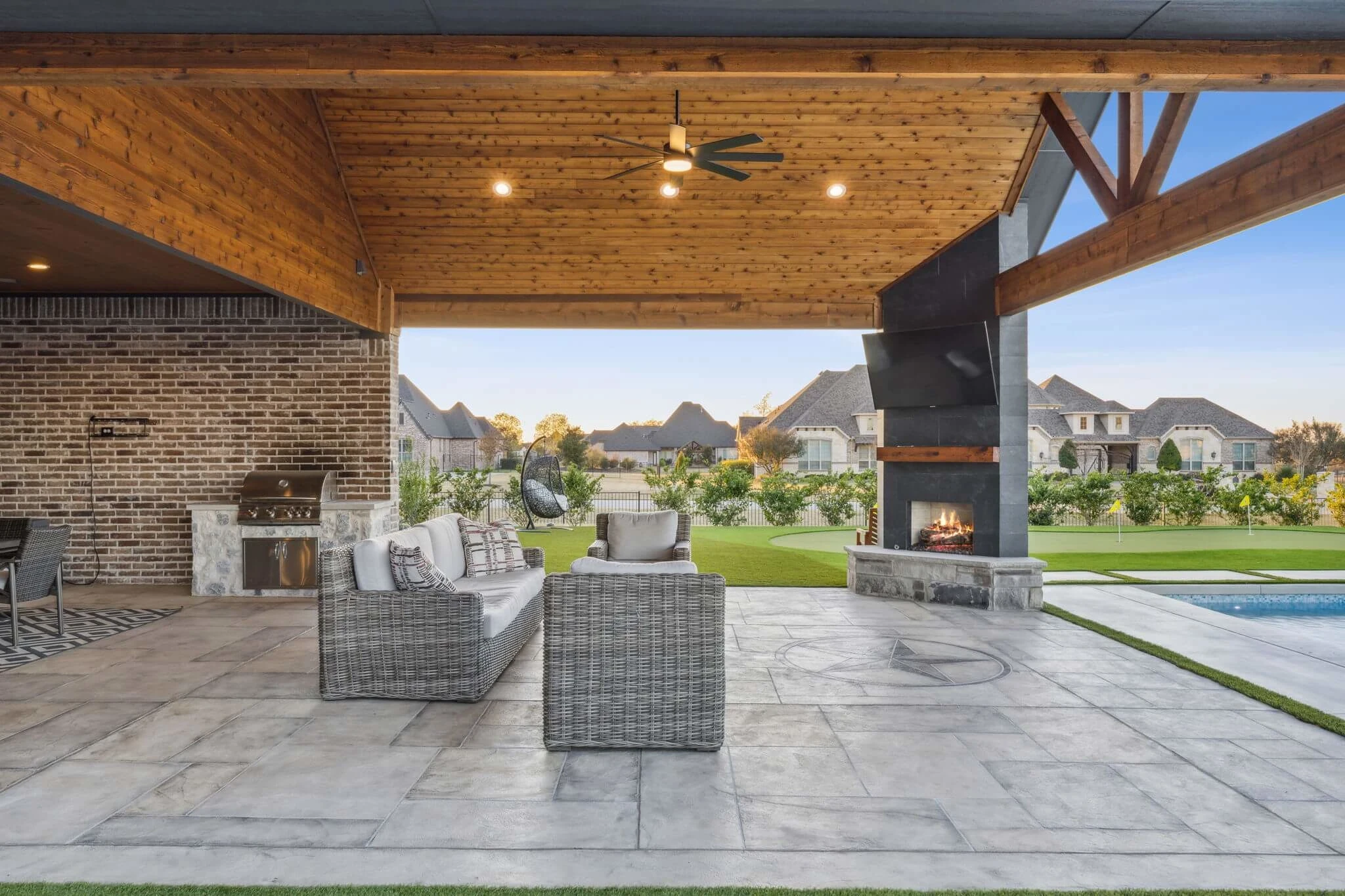
Is the concrete in your Houston outdoor living space performing the way it should — or are the cracks, surface scaling, and drainage problems that inadequate specification produces creating the maintenance issues and safety concerns that properly specified Houston concrete prevents? Concrete is the foundational hardscape material in most Houston outdoor living environments — the patio surface that connects the indoor and outdoor living spaces, the pathway that moves people through the garden, the pool surround that frames the primary outdoor amenity, and the driveway that establishes the property's quality from the street. Getting it right determines whether the outdoor living environment delivers its intended quality for 20 to 25 years or requires significant repair and remediation within a decade.
Houston outdoor living concrete faces a more demanding environment than most national concrete guidance addresses. The expansive clay soil that generates the shrink-swell forces that crack inadequately based slabs. The 50-plus inches of annual rainfall that concentrates against and beneath concrete surfaces and accelerates the clay movement that adequate drainage design prevents. The UV intensity that degrades surface finishes, concrete sealers, and the color that surface treatments provide at rates that temperate climate products are not designed to match. And the thermal cycling between Houston's summer peak temperatures and the occasional hard freeze events that create the expansion and contraction range that control joint design needs to accommodate.
At Gulf Reserve Landscape & Pools, concrete work for Houston outdoor living spaces is one of our core services. Here is what properly specified Houston outdoor living concrete actually requires.
The Foundation That Determines Everything Else
Every Houston outdoor living concrete decision — surface finish, reinforcement, control joints, drainage slope — matters less than the base preparation beneath the concrete because everything above the base is only as good as what supports it. This is the component that most Houston homeowners cannot see after installation, that most low-bid contractors specify inadequately, and that determines whether a Houston patio looks as good at year 15 as at installation or requires significant repair by year 8.
Subgrade preparation on Houston outdoor living concrete projects addresses the native clay conditions that the concrete will be placed over — the evaluation and correction of the soil that forms the ultimate foundation for the entire installation. Houston clay subgrade for outdoor living concrete needs to be assessed for compaction, moisture content, and bearing capacity before base material is placed above it. Soft, unconsolidated, or high-moisture clay identified during subgrade assessment gets corrected through additional compaction, stabilization, or the lime treatment that reduces Houston clay's expansive behavior before base material is placed over it.
Base material specification for Houston outdoor living concrete follows the 6-inch minimum compacted crushed limestone standard that Blog 02 establishes for Houston residential concrete. The 6-inch depth is the minimum that resists Houston's clay movement forces over a realistic outdoor living concrete service life of 20 to 25 years. The 2 to 4 inch base depths that production concrete economics default to are the base depths that produce the cracking, settlement, and surface deterioration that Houston homeowners see on their patios at years 5 to 10 and wonder why their new concrete looks so much worse than older concrete they have seen in other markets.
Crushed limestone base material needs to be placed in lifts and compacted to 95 percent Standard Proctor density at each lift rather than placed full depth and surface-compacted. The compaction method that achieves uniform density through the full 6-inch base depth produces the consistent bearing capacity that resists differential settlement. Surface compaction of a full-depth base placement produces the dense surface over loosely placed material beneath it that differential settlement exploits.
Reinforcement specification for Houston outdoor living concrete follows the No. 4 rebar at 16 inches on center on chairs centered in the slab. This is the reinforcement that provides genuine tensile resistance against the flexural forces that Houston clay movement creates in the concrete above it. Wire mesh on the ground at the slab bottom provides negligible crack resistance in the locations where Houston's clay movement creates the tensile stress that reinforcement is supposed to resist. The rebar specification costs more than wire mesh and produces concrete that maintains its integrity through the clay movement cycles that Houston's wet and dry seasons generate across the slab's service life.
Surface Finish Options That Work in Houston's Environment
The surface finish on Houston outdoor living concrete determines the thermal performance, slip resistance, aesthetic quality, and maintenance requirements of the surface that household members and guests interact with daily. Selecting the right finish for the specific application and the specific property requires understanding how Houston's conditions affect each finish option over time.
Exposed aggregate is the surface finish that Gulf Reserve most consistently recommends for Houston outdoor living concrete applications where thermal performance, slip resistance, and durability are the primary criteria. The light-colored rounded aggregate that Houston exposed aggregate installations use stays meaningfully cooler than smooth concrete in Houston's direct summer sun — the thermal performance advantage that makes the difference between a patio surface that is comfortable barefoot during Houston's summer afternoons and one that is genuinely too hot to cross without footwear.
The aggregate selection for Houston outdoor living exposed aggregate concrete matters significantly for both thermal performance and aesthetic quality. White quartz aggregate stays coolest in Houston's direct sun and produces the brightest, most reflective surface character. Warm buff river pebble provides the softer, more naturalistic appearance that complements traditional Houston residential architecture and the natural stone hardscape elements that luxury outdoor living programs incorporate. Premium aggregate blends in specific color combinations — created to complement particular stone materials, architectural styles, or personal preferences — produce the custom appearance that distinguishes project-specific design from the standard aggregate that production concrete installations default to.
Brushed concrete with refined detailing is the finish appropriate for Houston outdoor living applications where a cleaner, more architectural surface character suits the design intent better than the textural variety of exposed aggregate. Properly executed brushed concrete on Houston outdoor living applications includes consistent brush direction across the full surface, integral color in the warm neutral tones that complement Houston residential architecture and reduce thermal absorption, and the border and inlay detailing that distinguishes quality Houston outdoor living concrete from the generic broom finish that production concrete delivers at standard pricing.
Stamped and colored concrete provides the pattern variety and design character that other concrete finishes cannot offer — the flagstone, cobblestone, and tile patterns that give Houston outdoor living concrete the appearance of more expensive materials at a lower installed cost. The maintenance commitment that Houston stamped concrete requires is the consideration that most directly determines whether this finish is appropriate for the specific homeowner and application. Houston's UV intensity degrades the sealer that maintains stamped concrete color vibrancy at rates that require resealing every 2 to 3 years to maintain the appearance that attracted the homeowner to the finish initially. Homeowners committed to this maintenance program get a finish that maintains its quality. Those who defer sealing discover the color fade and surface vulnerability that unsealed stamped concrete in Houston's conditions produces within a few seasons.
Drainage Design That Protects Houston Outdoor Living Concrete
Drainage design for Houston outdoor living concrete is the specification component that most directly affects service life and that most consistently receives inadequate attention at installation. The concrete that looks correctly specified in every other dimension but drains incorrectly concentrates water in the locations that accelerate clay movement beneath the slab and against the foundation — producing the differential settlement and cracking that adequate drainage design prevents.
Surface drainage slope for Houston outdoor living concrete needs to direct rainfall from every surface area toward defined collection points away from the home foundation and away from adjacent planting beds and lawn areas. The minimum 1 percent slope that most concrete specifications reference as adequate for drainage is the minimum that prevents ponding on a perfectly flat surface — it is not adequate for Houston's rainfall intensity when multiple impervious surfaces contribute flow to the same collection area. Houston outdoor living patios on properties where roof drainage, adjacent driveway surfaces, and natural grade contribute flow to the patio area need steeper slopes than the 1 percent minimum to prevent the temporary ponding that Houston's intense rainfall events create on minimally sloped surfaces.
Perimeter drainage collection at Houston outdoor living patio edges — the channel drains that intercept surface runoff before it leaves the patio area and concentrates against adjacent foundation walls, planting beds, or lawn areas — is the drainage infrastructure that most consistently distinguishes Houston outdoor living concrete installations that protect the surrounding landscape from those that damage it. A 400-square-foot Houston patio without perimeter drainage collection routes every rainfall event's runoff to the edges of the patio where it concentrates against whatever is adjacent. A patio with channel drains at its perimeter collects this runoff and routes it through drainage infrastructure to appropriate discharge points rather than allowing it to concentrate against adjacent structures and landscape.
Subsurface drainage beneath Houston outdoor living concrete on properties where high seasonal water tables or persistent subsurface moisture create the hydrostatic pressure conditions that drainage design needs to address addresses the moisture source that surface drainage alone cannot manage. Properties in lower-lying areas of Houston's residential market where seasonal water table rise affects foundation and slab conditions benefit from the sub-base drainage provisions that prevent hydrostatic pressure buildup beneath outdoor living concrete from the subsurface water conditions that surface grading and perimeter drains cannot control.
Control Joints That Accommodate Houston's Thermal Range
Control joint design for Houston outdoor living concrete addresses the thermal expansion and contraction range that Houston's climate creates for concrete flatwork — the range from Houston's summer peak temperatures exceeding 100 degrees Fahrenheit to the occasional hard freeze events below 28 degrees Fahrenheit that create the maximum thermal cycling stress that control joint spacing needs to accommodate without allowing random cracking to develop between the joints.
Control joint spacing for Houston outdoor living concrete follows the rule of thumb that joint spacing in feet should not exceed 2 to 3 times the slab thickness in inches — producing 8 to 12 foot maximum spacing for a 4-inch slab. Houston's thermal cycling range justifies the closer end of this spacing range rather than the maximum. Outdoor living concrete poured in Houston's summer with maximum thermal cycling exposure ahead benefits from 8-foot control joint spacing rather than the 12-foot maximum that moderate climate installations use.
Re-entrant corner protection at inside corners of Houston outdoor living patio layouts — the diagonal control joints that prevent the diagonal cracking that Houston's thermal movement creates at re-entrant corners without directed relief — is the control joint detail that most consistently prevents the first visible cracks that Houston outdoor living concrete develops after installation. Every inside corner in a Houston patio layout is a potential diagonal crack origin. Control joints that direct cracking to the joint rather than through the slab face at re-entrant corners prevent the visible random cracking that Houston homeowners discover at years 2 to 4 on patios without this detail.
Integrating Outdoor Living Concrete With Adjacent Landscape Components
Outdoor living concrete on Houston properties does not exist in isolation — it is one component of the outdoor living environment that needs to be correctly coordinated with the adjacent landscape components that share the space and that drainage design, grade relationships, and construction sequencing connect.
Grade coordination with adjacent sod is the integration detail that determines whether the transition between Houston outdoor living concrete and adjacent lawn areas reads as intentional or imprecise. Setting the prepared soil grade 0.5 to 0.75 inches below the adjacent concrete edge before sod installation allows the sod mat to finish flush with the concrete edge rather than sitting above it. Sod that finishes above adjacent concrete edges creates the overhang that mowing cannot cleanly address and that the homeowner lives with for the service life of the installation.
Integration with natural stone components in Houston outdoor living environments — the limestone pathway borders, the stone step elements, and the natural stone features that complement concrete patio surfaces in premium outdoor living installations — needs to be designed and coordinated before concrete is poured rather than added after the concrete is established. Stone borders and inlay elements set into the concrete formwork before the pour become integral components of the finished surface. Stone borders added after concrete is poured sit on top of the concrete surface rather than being flush with it — producing the raised edge that reads as an afterthought rather than a designed detail.

Not sure whether the concrete in your Houston outdoor living space is meeting the standard your property deserves — or whether new outdoor living concrete will be specified correctly for Houston's conditions? Gulf Reserve Landscape & Pools assesses every Houston property personally before recommending any concrete scope — evaluating subgrade conditions, drainage requirements, and the specific finish and specification that your outdoor living environment requires.
Get your free estimate at gulfreservelandscaping.com


