




Concrete Work for Houston New Home Builds — What Builder Standard Misses and What Proper Installation Actually Delivers
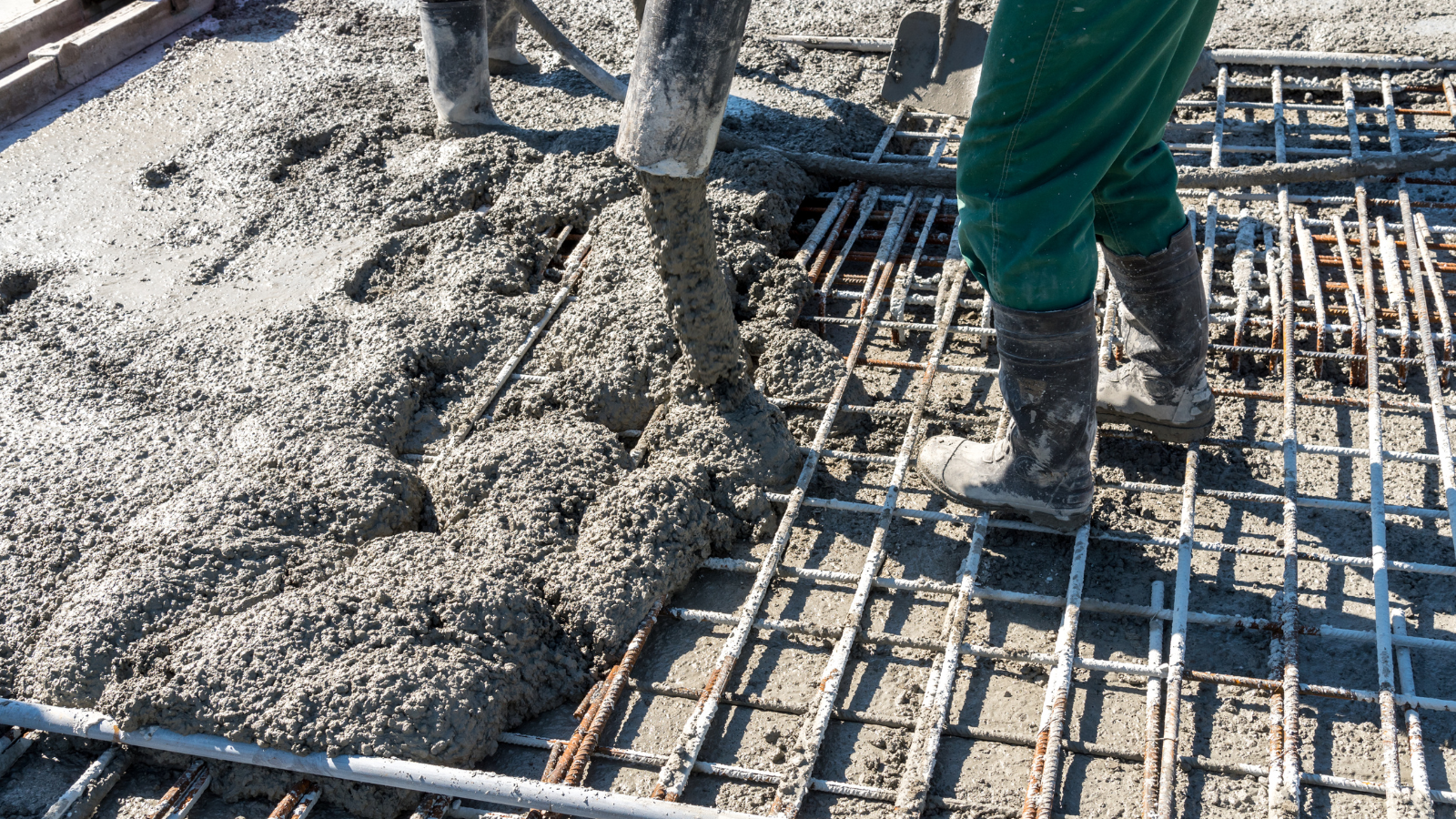
Is the concrete on your Houston new build performing the way it should — or are you already seeing the hairline cracks, edge chipping, and surface scaling that signal concrete installed without the base preparation, reinforcement, and mix design that Houston's clay soil conditions actually demand? Builder-standard concrete on Houston new construction properties is one of the most consistently underspecified components of the new build package — and one of the most expensive to address after the fact when the consequences of inadequate specification become visible in the first few years of ownership.
The concrete that comes with a Houston new build — the driveway, the front walkway, the back patio slab, and any other flatwork included in the builder's standard package — was specified and installed to meet the contract requirement at the lowest cost consistent with the builder's warranty obligations. It was not specified to perform optimally in Houston's expansive clay soil conditions, to provide the base depth that resists clay movement forces over a 20 to 30 year service life, or to include the reinforcement that keeps Houston concrete intact through the hundreds of wet-dry cycles that Houston's climate generates across the concrete's lifetime.
At Gulf Reserve Landscape & Pools, concrete work on Houston new construction properties — upgrading, extending, and replacing builder-standard concrete with installations properly specified for Houston's conditions — is one of our most consistently requested services across the suburban new build market. Here is what builder concrete on Houston new builds typically delivers, what proper concrete work looks like, and what the difference means for Houston homeowners planning outdoor improvements on new construction properties.
What Builder-Standard Concrete on Houston New Builds Typically Delivers
Understanding the specific shortcomings of builder-standard concrete on Houston new construction properties is the starting point for understanding what improvement is required and why it matters for long-term performance.
Base preparation on Houston new build concrete typically reflects the minimum specification that production building economics allow — 2 to 4 inches of base material compacted to whatever density the schedule permits rather than the 6-inch minimum compacted crushed limestone base that Houston's clay soil conditions demand for residential concrete flatwork. The subgrade beneath builder concrete on Houston new builds is frequently the same compacted fill material that was placed during site construction — material of variable quality and compaction that provides inconsistent bearing capacity for the concrete placed above it.
The consequences of inadequate base preparation on Houston new build concrete are not immediately visible at installation — the concrete looks acceptable and performs adequately for the first year or two while the soil beneath it is still relatively undisturbed. The consequences become visible over the first 3 to 7 years as Houston's wet-dry cycles move the inadequately supported clay beneath the slab, creating the voids and bearing capacity loss that produce cracking, settlement, and the separation between adjacent concrete sections that is visible on Houston new build driveways and patios across every suburban development in the city.
Reinforcement specification on Houston new build concrete frequently uses wire mesh rather than rebar — the less expensive reinforcement option that provides minimal tensile strength in the finished slab and that, as established in Blog 02, typically ends up at the bottom of the slab rather than centered where it can actually resist the flexural loading that Houston's clay movement creates. Wire mesh on the ground in the bottom third of a Houston concrete slab is essentially decorative — it does not prevent cracking because it is not positioned to resist the tensile forces that clay movement generates in the middle and upper portions of the slab cross-section.
Mix design for Houston new build concrete reflects production concrete economics — the standard residential mix that provides adequate strength for most conditions and that is delivered at whatever water-to-cement ratio the ready-mix driver maintains during the pour. Houston's summer heat conditions demand more careful water-to-cement ratio management than production concrete delivery typically provides — excess water added at the truck to improve workability in Houston's heat reduces the final concrete strength and increases the permeability that allows Houston's moisture cycling to accelerate surface deterioration.
Control joint placement on Houston new build concrete reflects installation speed rather than engineering — control joints placed by eye at whatever intervals the installation crew considers standard rather than at the calculated intervals that Houston's thermal cycling range and clay movement forces actually require for adequate crack control. Undersized or misplaced control joints on Houston new build concrete produce the random diagonal cracks — particularly at re-entrant corners and across wide concrete sections — that are visible on Houston new build driveways and patios within the first few years of installation.
When to Address Houston New Build Concrete — Before or After Move-In
The timing question for Houston new build concrete work — whether to address inadequate builder concrete before or after move-in — has a clear answer in most situations: before move-in when the work involves significant demolition and replacement, and as soon as the specific problem is identified when the work involves extensions or additions to the existing concrete.
Driveway replacement or extension before move-in takes advantage of the unrestricted equipment access that an unoccupied property provides — concrete trucks, demolition equipment, and compaction equipment can operate across the lot without the access constraints that established landscaping and an occupied household create. Driveway concrete that is clearly inadequate — too narrow for comfortable vehicle use, too short for the property's parking needs, or installed without the base preparation that Houston's conditions demand — is most efficiently addressed before the landscape and household are established around it.
Patio replacement or addition before move-in follows the same logic — the outdoor living space that the Houston homeowner wants is most efficiently built before furniture, plantings, and household occupancy complicate the construction access. A builder patio that is too small for the homeowner's outdoor living program, in the wrong location relative to the house and yard, or simply inadequate in material quality is better replaced as part of the pre-move-in landscape program than after the household has settled around it.
Walkway additions connecting the existing builder walkway system to new landscape features — the pathway from the patio to the pool area, the walk from the garage to the rear yard — are most efficiently installed when the landscape areas they run through are still clear rather than after ornamental planting has established in the areas the walkway routes need to traverse.
Concrete Work Standards for Houston New Home Builds
The concrete work standards that Gulf Reserve applies to Houston new home build projects follow the Houston-specific specifications established in Blog 02 and Blog 39 — with the additional consideration that new build projects provide the opportunity to establish correct specifications from the beginning rather than correcting inadequate specifications after installation.
Subgrade evaluation before base material placement on Houston new build concrete projects assesses the compaction, bearing capacity, and moisture content of the fill material that new construction lots present — confirming that the subgrade can support the concrete loads it will carry before base material is placed above it. Soft, unconsolidated, or high-moisture fill material identified during subgrade evaluation is addressed through additional compaction, stabilization, or replacement before base material placement rather than being covered with base material and concrete that will settle as the inadequate subgrade consolidates beneath it.
Base material specification for Houston new home build concrete follows the minimum standard of 6 inches of compacted crushed limestone for residential driveways and patio slabs — increased to 8 inches on Houston properties in Pearland, League City, and other areas with particularly expansive Lake Charles clay fill material conditions. The crushed limestone base is placed in lifts and compacted to 95 percent Standard Proctor density at each lift rather than placed full depth and surface-compacted — the compaction method that actually achieves uniform base density through the full 6-inch depth rather than the dense surface over loosely placed material beneath that surface compaction produces.
Reinforcement specification for Houston new home build concrete follows No. 4 rebar at 16 inches on center in both directions, placed on chairs that maintain a centered position in the slab thickness — the specification that provides genuine tensile reinforcement for Houston's clay movement forces rather than the wire mesh that builder-standard concrete frequently includes. For Houston new build driveways near significant trees where root pressure and clay heaving will be more aggressive, No. 4 rebar at 12 inches on center with a 5-inch slab thickness provides the additional crack resistance that these specific Houston conditions demand.
Mix design for Houston new build concrete specifies a minimum 3,500 PSI compressive strength mix at a water-to-cement ratio of 0.45 or lower — the mix density that resists the surface scaling, permeability, and deterioration that lower-strength mixes show in Houston's UV and moisture cycling conditions. Curing compounds applied immediately after finishing retain the surface moisture that Houston's summer heat would otherwise draw out of the fresh concrete before adequate hydration occurs — preventing the surface weakness that rapid moisture loss creates in Houston summer concrete pours.
Concrete Finish Options for Houston New Home Builds
The surface finish selection for Houston new home build concrete follows the same principles established in Blog 39 — with the additional consideration that new build projects provide the opportunity to select the finish that best serves the homeowner's long-term priorities rather than accepting the builder-standard broom finish that production concrete economics default to.
Exposed aggregate concrete is the finish that Gulf Reserve most consistently recommends for Houston new home build driveways and patio areas — the finish that provides the best combination of thermal performance, slip resistance, aesthetic quality, and biological growth resistance for Houston's conditions. The light-colored rounded aggregate that Houston exposed aggregate installations specify stays meaningfully cooler than smooth concrete in Houston's summer sun, providing the thermal comfort that makes the driveway approach and patio surfaces genuinely usable through Houston's peak summer heat.
Stamped and colored concrete on Houston new home builds provides the aesthetic variety and design character that production builder concrete cannot offer — from the flagstone and cobblestone patterns that complement traditional Houston residential architecture to the large-format contemporary patterns that suit modern Houston new build design. The maintenance commitment that Houston stamped concrete requires — resealing every 2 to 3 years in Houston's UV environment — needs to be factored into the finish selection decision by Houston new build homeowners who want quality surface appearance without ongoing refinishing maintenance.
Natural stone integration — combining concrete base areas with natural stone borders, steps, and feature elements — is the upgrade that most effectively elevates the aesthetic quality of Houston new home build concrete from builder-standard to luxury residential character. A Houston new build driveway in exposed aggregate concrete with natural limestone border and motor court feature elements reads as genuinely premium against the architectural character of the home — and delivers the material quality that the Houston homeowner's investment in the property deserves.
Coordinating Concrete Work With Other New Build Landscape Improvements
Concrete work on Houston new home builds is most efficiently executed as part of a coordinated landscape improvement program — where the sequence of drainage, soil amendment, concrete, irrigation, and planting work follows the logical dependencies that produce the best result at the lowest total cost.
Drainage before concrete is the dependency that prevents the most expensive post-installation problem — discovering after concrete is poured that drainage from adjacent surfaces concentrates against the new concrete edges or beneath the new slab in ways that accelerate clay movement damage. French drains and grade corrections that manage drainage away from new concrete areas are most efficiently installed before concrete placement when the areas are accessible and the routing of drainage infrastructure can be coordinated with concrete layout rather than working around it.
Concrete before adjacent planting is the dependency that protects plant material from the equipment traffic and soil disturbance that concrete installation generates. Ornamental planting installed in areas adjacent to planned concrete work will be damaged or destroyed when the concrete base preparation, forming, and placement equipment operates in those areas. Sequencing concrete before adjacent planting protects the planting investment and avoids the replanting cost that construction damage creates.
Concrete before irrigation lateral routing in areas where irrigation laterals and concrete flatwork share the same landscape zones ensures that irrigation infrastructure is installed below finished grade before concrete is placed above it rather than being surface-routed around concrete that was installed without accommodating the irrigation infrastructure the landscape requires.

Not sure whether the concrete on your Houston new build meets the spec Houston's conditions demand? Gulf Reserve Landscape & Pools assesses every Houston new build property personally — evaluating existing concrete condition, subgrade conditions, and drainage before recommending repair, extension, or replacement — so you get an honest picture of what your property needs rather than a default recommendation for the most comprehensive option.
Get your free estimate at gulfreservelandscaping.com


