



Commercial Landscape Makeover in Houston — What Aging Office Parks, Retail Centers, and Multifamily Properties Need and What the Investment Actually Delivers
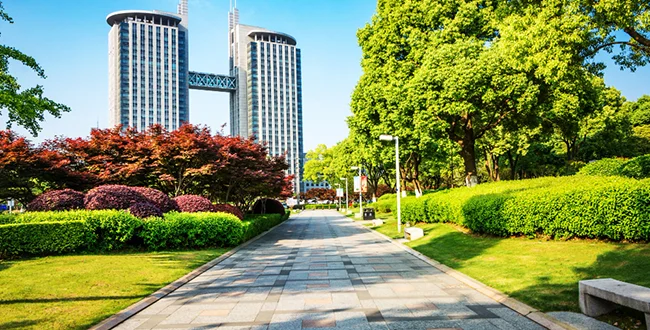
Is your Houston commercial property's landscape communicating the quality standard your tenants, customers, and potential buyers expect — or is it sending a different message every time someone approaches the building? The landscape of a Houston commercial property is not a neutral feature. It actively contributes to or actively detracts from the property's market positioning, tenant retention, and the first impression that determines whether a prospective tenant schedules a second visit or moves on to the next property on their list.
Houston commercial landscapes age in ways that are gradual enough to be missed by property managers who see the property every day but visible enough to be immediately apparent to anyone approaching it with fresh eyes. The entry planting that looked full and intentional at the property's original development has become a collection of overgrown shrubs obscuring signage and windows. The concrete walkways and entry approaches have developed the cracking and settlement that Houston's clay soil movement produces over 10 to 15 years without adequate base preparation. The irrigation system is running on a schedule set years ago that overwatered through last fall and winter while underwatering during this summer's peak demand. And the turf areas that were dense and uniform at installation are now a patchwork of thin, weed-invaded grass interrupted by bare spots from coverage gaps that were never identified and corrected.
At Gulf Reserve Landscape & Pools, commercial landscape makeovers are a core component of our commercial maintenance contract and full landscape makeover services across Houston's office, retail, multifamily, and medical campus market. Here is what a Houston commercial landscape makeover actually involves and what the investment delivers.
Why Houston Commercial Landscapes Deteriorate and Why It Matters
Houston commercial landscape deterioration follows predictable patterns rooted in the same soil conditions, drainage challenges, and climate demands that affect residential landscapes — but with the additional dimension that commercial landscape decline is visible to a much larger audience and has more direct financial consequences than residential landscape deterioration.
Deferred soil management on Houston commercial properties produces the iron chlorosis, nutrient lockout, and compaction that make commercial turf and ornamental plantings look chronically stressed despite regular maintenance spending. Houston commercial properties where fertilization programs have not been calibrated for the city's alkaline soil conditions — where standard balanced fertilizers have been applied without pH management for years — develop the persistent yellow cast and thin coverage that standard maintenance cannot correct because the underlying soil chemistry has not been addressed.
Irrigation system neglect on Houston commercial properties produces the systematic coverage failures covered in Blog 35 — the head failures, coverage gaps, and scheduling drift that cause some turf areas to be chronically overwatered while others are chronically underwatered. The visible result is the patchy, inconsistent turf appearance that undermines the commercial property's landscape quality regardless of how good the mowing and edging maintenance is. A perfectly mowed Houston commercial lawn with systematic irrigation coverage failures looks worse than a less precisely maintained lawn with consistent coverage — because coverage drives the density and color that define lawn quality, and no amount of mowing precision compensates for inadequate water delivery.
Hardscape deterioration on Houston commercial properties reflects the same clay soil movement and inadequate base preparation that causes residential hardscape failure — but at a scale and visibility that makes it more consequential for the commercial property's market positioning. Entry walkways with multiple cracks, parking area approaches with settled sections, and deteriorated curbing and edging communicate deferred maintenance to every visitor in a way that interior property improvements cannot fully offset.
Ornamental planting overgrowth and decline on Houston commercial properties accumulates over years of maintenance programs that prune for size control rather than design intent — producing the rounded, uniform shrub shapes that result from mechanical trimming without design consideration, and the gaps and declines that result from plant material that was not appropriate for Houston's conditions being maintained through its decline rather than replaced with appropriate alternatives.
What a Houston Commercial Landscape Makeover Addresses
A Houston commercial landscape makeover addresses the accumulated deterioration of the commercial landscape as a unified program — correcting the underlying soil, drainage, and irrigation conditions that drive the visible decline rather than managing the symptoms with maintenance programs that cannot overcome structural deficiencies.
Entry and approach landscape renovation is typically the highest-priority component of a Houston commercial landscape makeover — because the entry sequence is what every tenant, customer, and visitor experiences first, and its condition sets the quality expectation for everything that follows. Entry renovation covers the removal of overgrown or declined ornamental plantings, soil amendment and drainage correction in the planting areas, installation of appropriately sized replacement plantings in a design that reflects the property's positioning and architectural character, and seasonal color installation that maintains the entry's visual quality through Houston's full calendar year.
The plant selection for Houston commercial entry renovation follows the same Houston-specific performance principles established in Blog 11 — native and adapted species with proven performance in Houston's alkaline clay and Gulf Coast climate, sized at installation to provide immediate visual impact rather than the 2 to 3 year establishment period that small container plantings require on a commercial property where presentation matters from day one.
Turf renovation on Houston commercial properties addresses the soil conditions, coverage failures, and weed pressure that have produced the thin, patchy turf appearance that deferred maintenance generates. Turf renovation for Houston commercial makeovers follows the soil remediation, drainage correction, irrigation assessment, and sod installation sequence established across multiple blogs in this library — with the commercial-scale consideration that turf areas on Houston commercial properties are typically larger and more visible than residential lawns, making the preparation and installation quality more consequential for the finished result.
Hardscape repair and replacement addresses the cracked, settled, and deteriorated concrete and paving that Houston's clay soil movement has produced on aging commercial properties. The approach — repair where the base is adequate and deterioration is limited, replace where base failure has produced the cracking and settlement that repair cannot durably address — follows the same principles as residential hardscape assessment but at commercial scale and with the higher appearance standard that commercial properties require.
Irrigation system renovation corrects the zone design, head placement, controller programming, and backflow prevention compliance issues that deferred irrigation maintenance has allowed to develop. As established in Blog 35, Houston commercial irrigation systems that have not received regular professional assessment accumulate the coverage failures, scheduling drift, and component deterioration that renovation addresses comprehensively — producing a system that supports the renovated landscape rather than undermining it.
Lighting renovation on Houston commercial properties that have outdated or inadequate landscape lighting upgrades the nighttime presentation of the property to match the daytime quality that the landscape makeover establishes. Houston commercial properties where the landscape lighting system is either absent, using obsolete technology, or delivering inadequate coverage miss the opportunity to present the property at its best during the evening hours when prospective tenants and customers are forming impressions from parking lots and approaches that lighting quality directly affects.
The Return on Houston Commercial Landscape Makeover Investment
The financial return on a Houston commercial landscape makeover investment is measurable across multiple dimensions — tenant retention, lease rates, vacancy periods, and property value — that collectively justify the investment on most Houston commercial properties where the landscape has deteriorated to the point of affecting market positioning.
Tenant retention on Houston commercial properties is directly affected by the quality of the common area landscape — the environment that tenants' employees, customers, and visitors experience daily. Houston office tenants consistently cite exterior appearance among the factors that affect their renewal decisions — a commercial landscape that communicates deferred maintenance and declining quality creates a lease renewal conversation that starts from a weaker position than one where the exterior presentation matches the interior quality the tenant expects.
Lease rate support from quality Houston commercial landscapes is most visible in the gap between comparable properties where exterior presentation differs. Houston commercial properties with recently renovated, professionally maintained landscapes command lease rates that support the investment when compared to comparable properties with aging, deteriorated landscapes — the landscape quality communicates the property management quality that prospective tenants use to evaluate whether the asking rate reflects the value the property delivers.
Vacancy period reduction from improved Houston commercial landscape quality reflects the first impression effect — prospective tenants who drive by a Houston commercial property before scheduling a tour form an initial quality impression from the landscape and exterior presentation that determines whether they pursue the property further. A renovated Houston commercial landscape that communicates quality and care generates more tour requests and reduces the vacancy period that deferred landscape maintenance prolongs.
Property value contribution from quality Houston commercial landscaping is recognized by commercial real estate appraisers and investors who evaluate commercial properties in Houston's market. The cost to remedy — the estimated cost to bring a deteriorated commercial landscape to market standard — is a deduction from the property's value in appraisal and acquisition due diligence that a renovated landscape eliminates. Houston commercial property owners who invest in landscape renovation before a sale or refinancing event capture this value directly in the transaction rather than seeing it deducted from the asset's assessed value.
Houston Commercial Landscape Makeover vs. Enhanced Maintenance — Knowing Which Is the Right Approach
Not every Houston commercial property with a declining landscape needs a complete makeover — and understanding the threshold between enhanced maintenance and comprehensive renovation helps Houston property managers allocate their landscape improvement budgets correctly.
Enhanced maintenance — increasing mowing frequency, adding seasonal color rotations, correcting irrigation programming, and addressing individual plant replacements — is the appropriate approach when the landscape's underlying infrastructure is sound, the soil conditions are manageable within a maintenance program, and the decline reflects maintenance quality rather than structural conditions that maintenance cannot address.
Comprehensive renovation is the appropriate approach when the soil conditions have deteriorated beyond what a maintenance program can correct within a reasonable timeframe, when hardscape deterioration reflects base failure rather than surface wear, when the irrigation system has fundamental design limitations that prevent adequate coverage regardless of maintenance quality, or when the overall landscape composition no longer reflects the property's current positioning and requires redesign rather than maintenance to restore market competitiveness.
The assessment that distinguishes between these two conditions is the starting point for every Houston commercial landscape conversation Gulf Reserve has with property managers and owners — because recommending the right approach for the specific property and its specific conditions is more valuable than recommending the most comprehensive option regardless of whether the conditions warrant it.

Wondering whether your Houston commercial property's landscape needs enhanced maintenance or a complete makeover? Gulf Reserve Landscape & Pools assesses Houston commercial properties personally — evaluating soil conditions, irrigation performance, hardscape integrity, and overall landscape condition before recommending anything — so you get an honest picture of what the property needs and what it will cost.
Get your free estimate at gulfreservelandscaping.com


